Phobos Insight: Stickney Crater Topology Revealed
New imaging data highlights the Stickney Crater, the most prominent geological feature on the Martian moon Phobos. Spanning nearly 10 kilometers, the impact site offers a unique window into the structural integrity of this small, battered satellite.
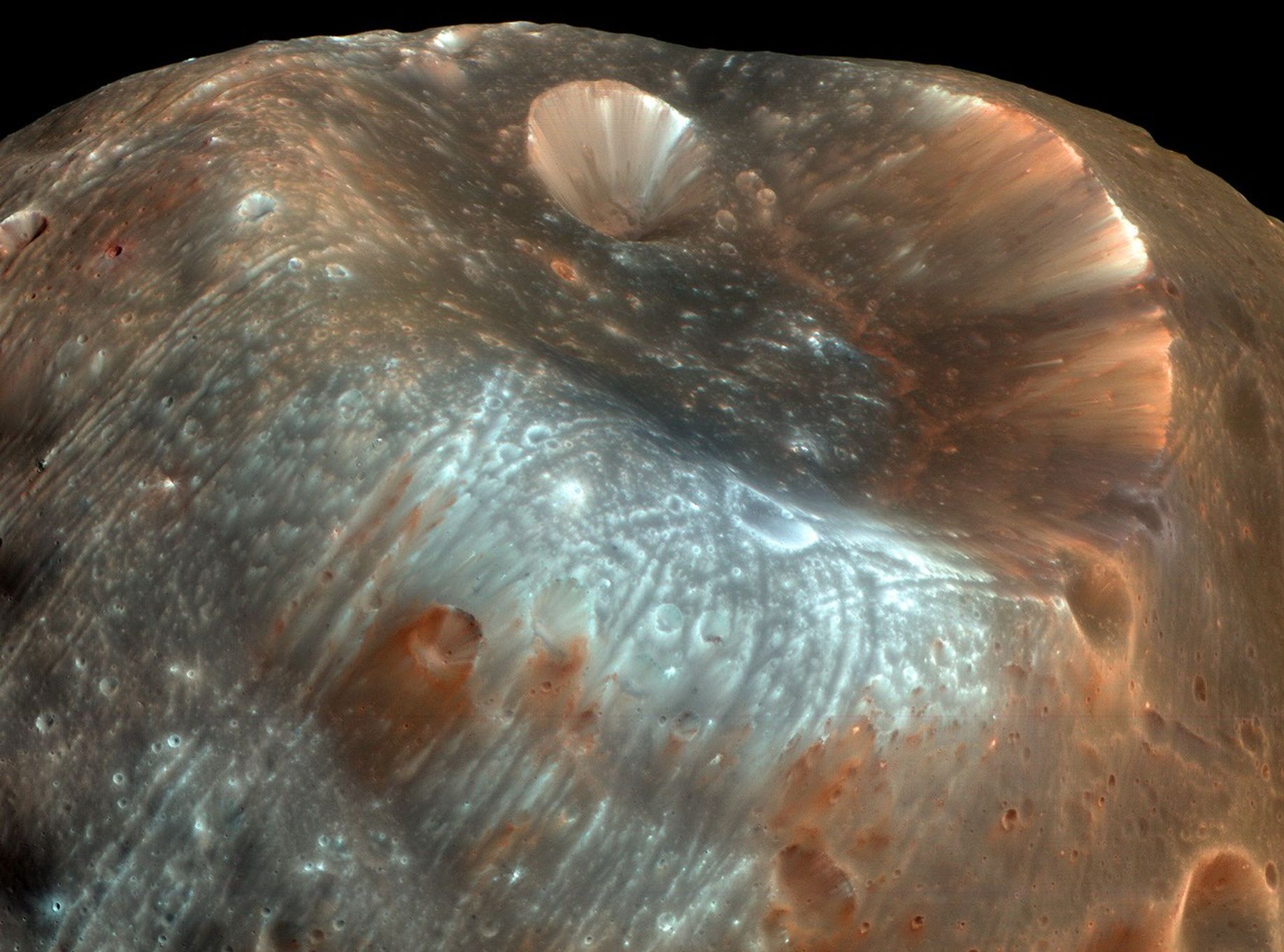
Terminal Data: Phobos Surface Reconnaissance
According to NASA Breaking News, the latest imaging data focuses on Stickney Crater, the dominant topographical feature of Phobos. The largest crater on the Martian moon measures approximately 9 kilometers in diameter—a significant proportion of the 22-kilometer-wide satellite. The impact required to create Stickney was nearly catastrophic, likely vibrating the moon to its core and creating the distinctive grooves and streaks visible across the Phobosian surface.
Geological Significance
Analysis of the crater’s interior reveals a complex layering of debris. Unlike planetary craters, Stickney’s low-gravity environment allows for unusual landslide patterns. Small boulders within the crater appear to have rolled down its steep slopes, leaving distinct tracks. The sheer scale of the crater in relation to the moon’s total mass suggests that Phobos is a highly porous body, potentially a "rubble pile" held together by a thin crust and gravity rather than a solid monolithic rock.
Mission Context
This data arrives as international interest in the Martian system intensifies. Understanding the composition of Stickney is critical for future sample-return missions. While NASA continues its deep-space skywatching and lunar base planning for late 2026, the study of Phobos remains a primary objective for determining the origin of Martian satellites—whether they are captured asteroids or remnants of a massive impact.
Monitoring of the Phobosian orbital decay continues; the moon is currently spiraling toward Mars at a rate of 1.8 meters every century, ensuring that Stickney will eventually meet a destructive end.