Perseverance Surveys Turquoise Bay: Mars Margin Unit Analysis Complete
NASA’s Perseverance rover has finalized an 818-image natural-color panorama of Turquoise Bay, providing high-resolution geological data on the Margin Unit within the Jezero Crater.
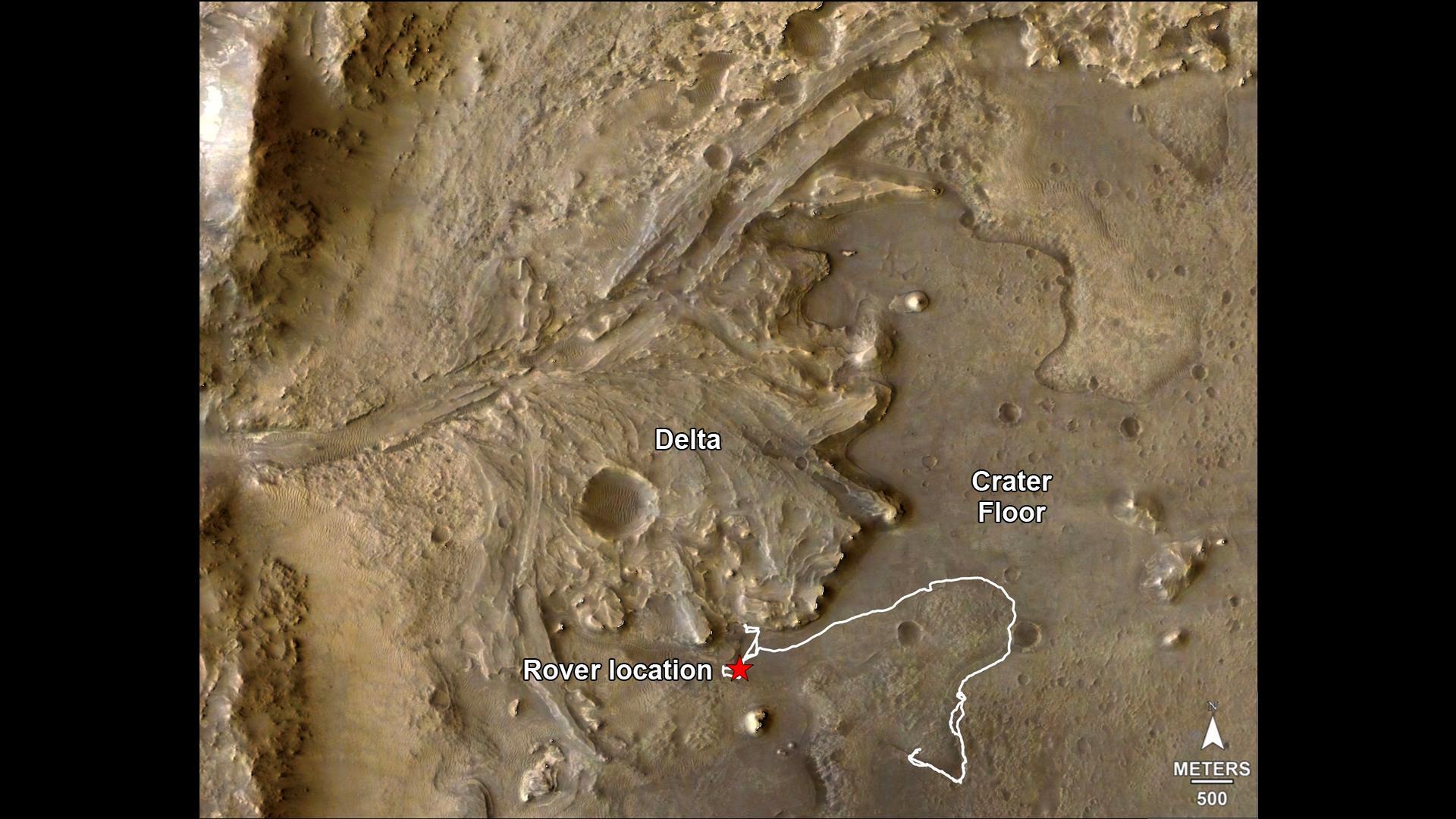
Surveillance Update: Jezero Sector
NASA’s Perseverance rover has successfully transmitted a comprehensive 360-degree visual data set of the geological site designated as "Turquoise Bay." Situated within the "Margin Unit" of the Jezero Crater, this region represents a critical point of interest for planetary geologists analyzing the ancient hydrological history of Mars.
Technical Specifications
According to NASA Breaking News, the natural-color panorama is a composite of 818 individual images captured by the rover’s Mastcam-Z system. The acquisition phase spanned Sol 933 to Sol 944, roughly corresponding to the period between October 5 and October 16, 2023. By stitching these high-resolution captures, mission controllers have generated a seamless reconstruction of the terrain, revealing the carbonate-rich signatures characteristic of the Margin Unit.
Geological Context
The site, Turquoise Bay, provides a unique vantage point to study the interface between the crater floor and its surrounding rim. The Margin Unit is hypothesized to contain carbonates—minerals that often form in shallow, liquid water environments. Perseverance’s primary mission objective remains the search for ancient microbial biosignatures; documenting the stratification and mineral distribution at Turquoise Bay is essential for selecting future samples for the Mars Sample Return (MSR) mission.
This imagery confirms the structural integrity of the Jezero rim and provides the necessary telemetry for the rover’s continued ascent toward the crater's edge. Data sets from this survey are currently being cross-referenced with orbital spectrometry to refine our understanding of Martian paleoclimatology.