Pacific Orbital Surveillance: Three Tropical Cyclones Detected Simultaneously
Atmospheric monitoring assets have identified a rare convergence of three tropical cyclones—Gilma, Hone, and Shanshan—active across the Pacific basin, prompting intensive data acquisition by NASA Earth Observatory.
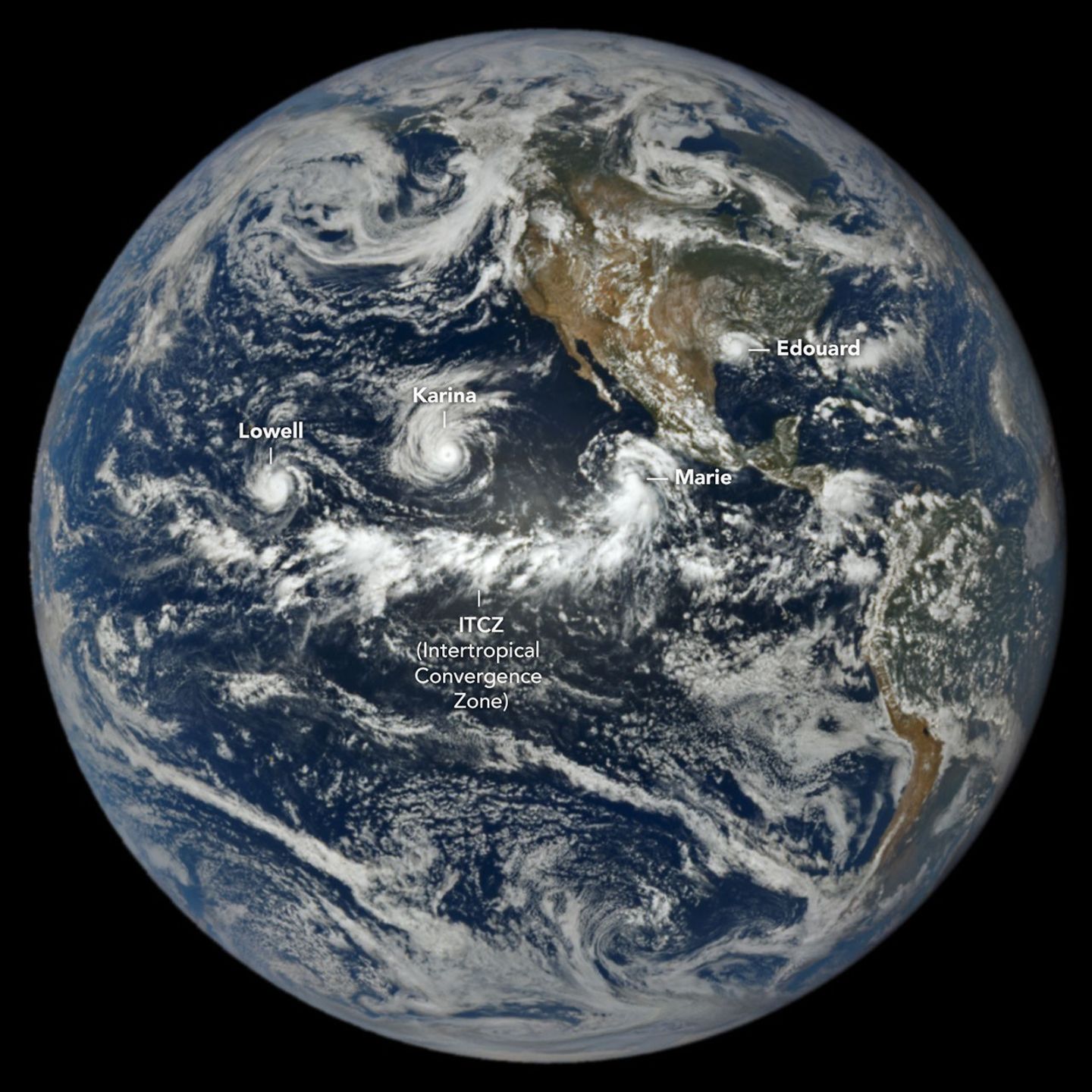
DATA LOG: ATMOSPHERIC ANOMALY REPORT
Orbital sensors have confirmed a significant meteorological event over the Pacific basin. According to NASA Breaking News, three distinct tropical cyclones were captured in simultaneous operation by Earth-observing satellites, presenting a high-density cluster of atmospheric kinetic energy.
The trio comprises Hurricanes Gilma and Hone in the Central and Eastern Pacific, and Typhoon Shanshan currently transiting the Western Pacific toward the Japanese archipelago. While individual storms are seasonal norms, the concurrent formation and peak intensity of these three systems underscore an intensifying trend in oceanic thermal energy transfer.
CYCLONE SPECIFICATIONS
- Gilma: Observed as a powerful Category 3-equivalent system, displaying a well-defined eye and symmetrical convection bands.
- Hone: Intercepted south of the Hawaiian islands, bringing heavy precipitation and sustained winds to the volcanic chain.
- Shanshan: A formidable Western Pacific threat, tracked on a vector toward high-population industrial zones in Japan.
NASA’s Earth Observatory continues to utilize its suite of orbital instruments—including the Visible Infrared Imaging Radiometer Suite (VIIRS) and MODIS sensors—to track sea surface temperature correlations and moisture flux. The data provides a critical look at the Pacific’s role as a thermal engine. For agencies managing terrestrial logistics and aerospace launch windows, these systems represent significant operational hazards that require constant telemetry monitoring.
As these storms continue their trajectories, orbital assets remain locked in high-cadence observation mode to feed global climate models and emergency response networks.