OSIRIS: HYDROSAT UNVEILS NEXT-GEN THERMAL SENSING CONSTELLATION
Hydrosat has revealed Osiris, a high-resolution thermal infrared constellation designed to bridge the gap between wide-swath coverage and precision imaging, set for a 2027 deployment.
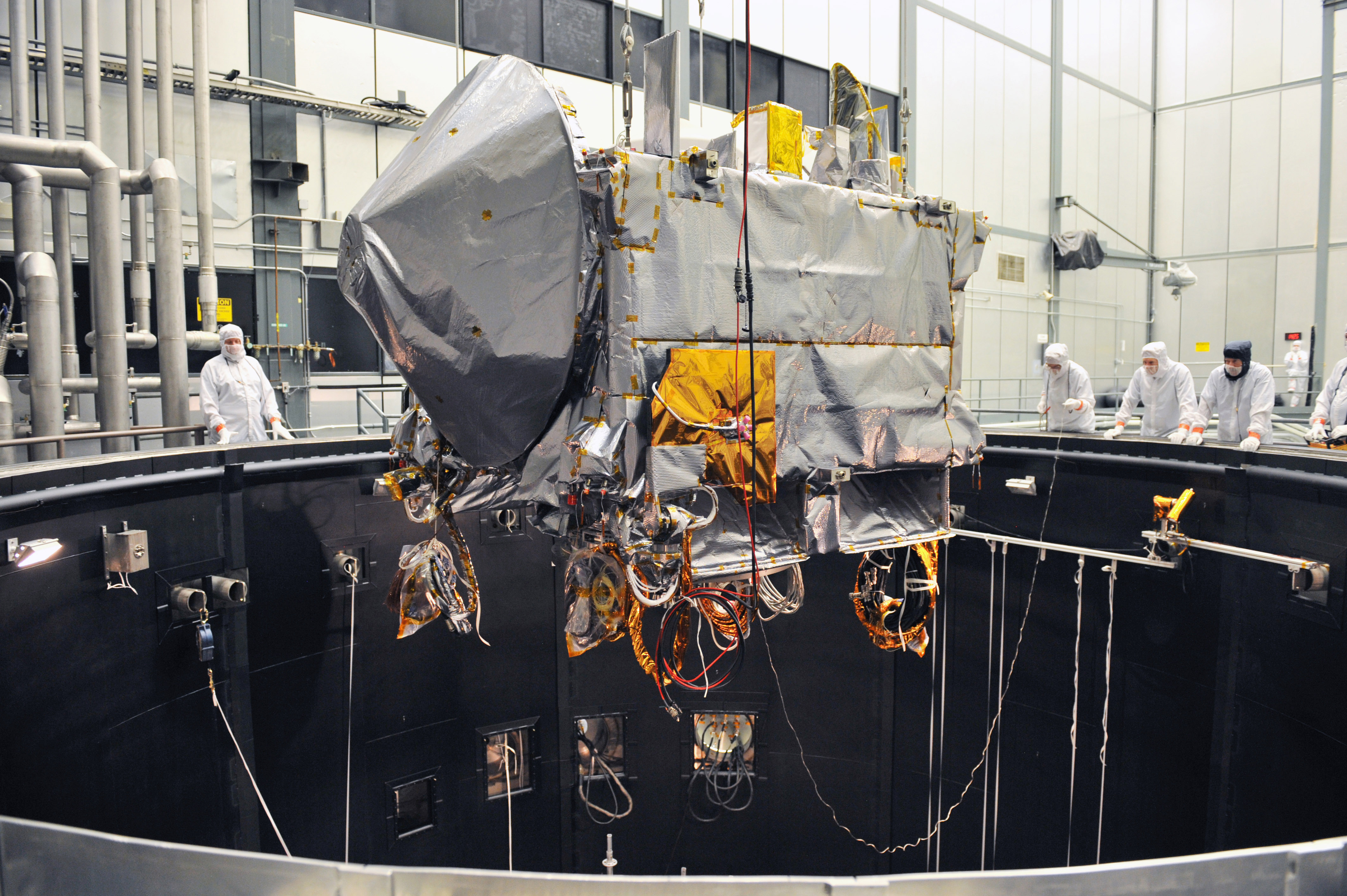
HYDROSAT DATA UPGRADE
Hydrosat has officially announced Osiris, a next-generation satellite constellation designed to augment its current orbital assets, VanZyl-1 and -2. According to Payload, the new hardware aims to eliminate the traditional trade-off between image resolution and swath width. CEO Pieter Fossel characterized the upgrade as "VanZyl-2 on steroids."
TECHNICAL SPECIFICATIONS
The Osiris architecture features an upgraded payload consisting of five integrated sensors per unit:
Long-wave infrared (LWIR): Captures thermal data at 25-meter resolution across a 160-340km swath.
Visible near-infrared (VNIR): A four-sensor array capable of 10-meter resolution.
Operating in an "always-on" configuration, the satellites will provide continuous stripmapping for the company’s Discovery Platform, enabling daily site-specific change detection for global clients.
MARKET TRACTION
Hydrosat is not waiting for the 2027 launch to scale. Current VanZyl data (30m VNIR / 70m LWIR) is already utilized by defense sectors for nighttime intelligence, surveillance, and reconnaissance (ISR). Recent milestones include:
A NASA Commercial Satellite Data Acquisition (CSDA) contract.
An NRO Stage 2 contract expansion.
* A SpaceWERX STRATFI award for thermal development.
HARDWARE AS A SERVICE
Beyond data sales, Hydrosat is pivoting toward hardware integration. The company recently signed an MoU with Kazakhstan to integrate Osiris payloads and AI analytics into government-owned spacecraft. Fossel noted that while the current revenue split is roughly 40% commercial, consistent quarterly growth suggests a shifting ratio as hardware sales expand the company's footprint in the global EO market.