Orbital Watch: Iceberg A-81 Intercepts South Georgia
Massive iceberg A-81 has reached the shallow waters of South Georgia, posing potential risks to local ecosystems and maritime navigation as it fragments in the Southern Ocean.
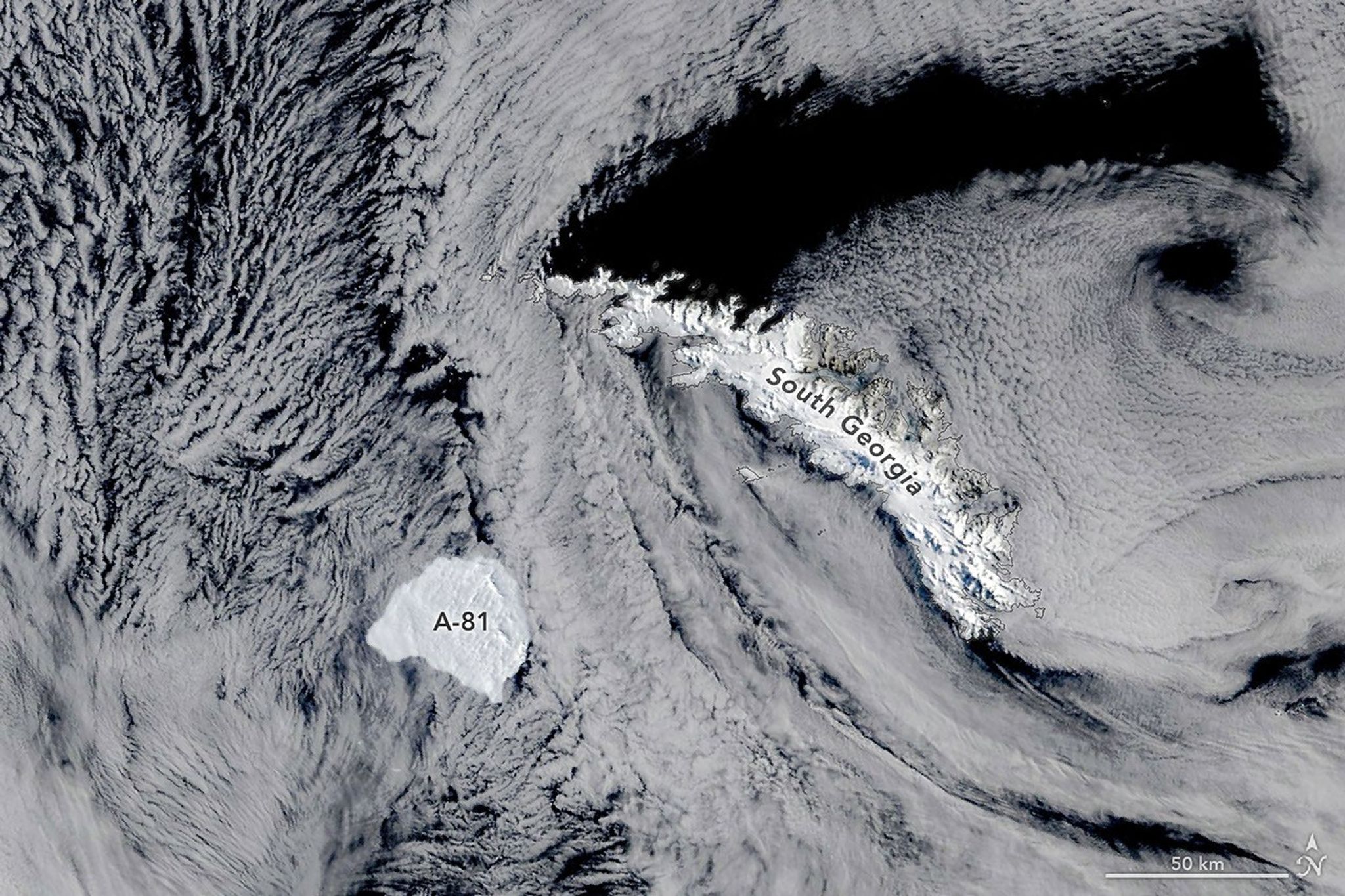
# DEPLOYMENT LOG: A-81 POSITIONING
Satellite surveillance has confirmed that the massive iceberg A-81 has reached the coastal waters of South Georgia. According to NASA Breaking News, the iceberg—which originally calved from the Brunt Ice Shelf in January 2023—is now navigating the hazardous currents of the Southern Ocean.
GEO-SPATIAL TRAJECTORY
Following its separation from the Antarctic continent, A-81 traveled approximately 1,200 kilometers. Data streams indicate the berg is currently interacting with the shallow shelf surrounding the island of South Georgia. This region is a known "graveyard" for Antarctic ice, where large masses often become grounded or are subjected to rapid fragmentation due to warmer water temperatures and heavy swells.
ENVIRONMENTAL IMPACT ASSESSMENT
Sensor arrays monitoring the area highlight two primary concerns for the local biosphere:
1. Benthic Disruption: If the keel of A-81 scrapes the seabed, it can destroy diverse seafloor communities.
2. Nutrient Injection: As the ice melts, it releases massive quantities of terrestrial dust and iron into the ocean, potentially triggering phytoplankton blooms that alter the local food web.
NAVIGATION HAZARD
Orbital assets continue to track A-81 to mitigate risks to maritime traffic. The fragmentation process generates "bergy bits" and growlers, which are difficult to detect via standard radar but capable of significant hull damage. Remote sensing remains the primary tool for maintaining safety in this sector.
Status: Monitoring ongoing. Further fragmentation expected as the berg enters the Antarctic Circumpolar Current.