Orbital Validation: The Dawn of Commercial Betavoltaic Power
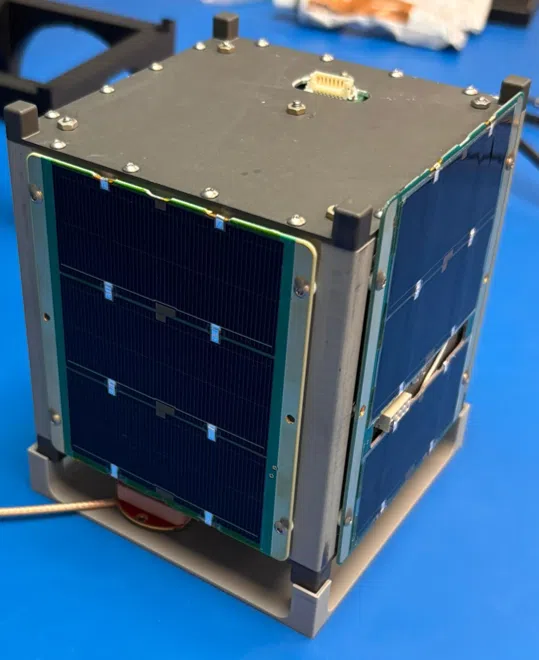
Florida startup City Labs has successfully launched BOHR, the first commercial satellite to test tritium-based nuclear batteries in orbit, signaling a shift away from sole reliance on solar power.
Operational Status: Deployment Confirmed
According to SpaceNews, Florida-based startup City Labs has successfully initiated an orbital demonstration of its NanoTritium betavoltaic power system. The payload, integrated into the BOHR (Betavoltaic Orbital High-Reliability) cubesat, launched on July 7 via a SpaceX Transporter mission. This event marks a critical milestone as the first commercial nuclear-powered technology test in Earth orbit.
Technical Specifications: Tritium Decay
The BOHR experiment focuses on tritium—a radioactive isotope of hydrogen—to generate electricity through radioactive decay. Unlike traditional solar arrays, which are rendered useless in Shadow Zones, betavoltaic cells provide a continuous, low-power current. While the electricity generated is measured in microwatts, the objective is to sustain low-power electronics and autonomous sensors for years without external recharging.
Regulatory and Tactical Context
The mission is operating under the Federal Aviation Administration’s framework established by National Security Presidential Memorandum-20, designed to regulate the launch of radioactive materials. The demonstration is supported by a coalition of U.S. defense and space agencies, including NASA and the Air Force Research Laboratory, reflecting a growing strategic requirement for persistent power in "contested environments" or deep-space zones where solar flux is insufficient.
Strategic Road Map
City Labs intends to leverage the BOHR results to develop a tritium-powered Radioisotope Heater Unit (RHU) by 2027. These units will be vital for survival during the two-week lunar night, providing thermal regulation for hardware in permanently shadowed craters. By shifting from plutonium to tritium, the firm aims to bypass the high barriers of entry associated with traditional radioisotope power systems.
Source: SpaceNews