Orbital Surveillance Confirms Major Hydrological Surge at Navajo Reservoir
New satellite data analyzed by NASA indicates a significant volume increase at the Navajo Reservoir, driven by intense seasonal melt and precipitation cycles.
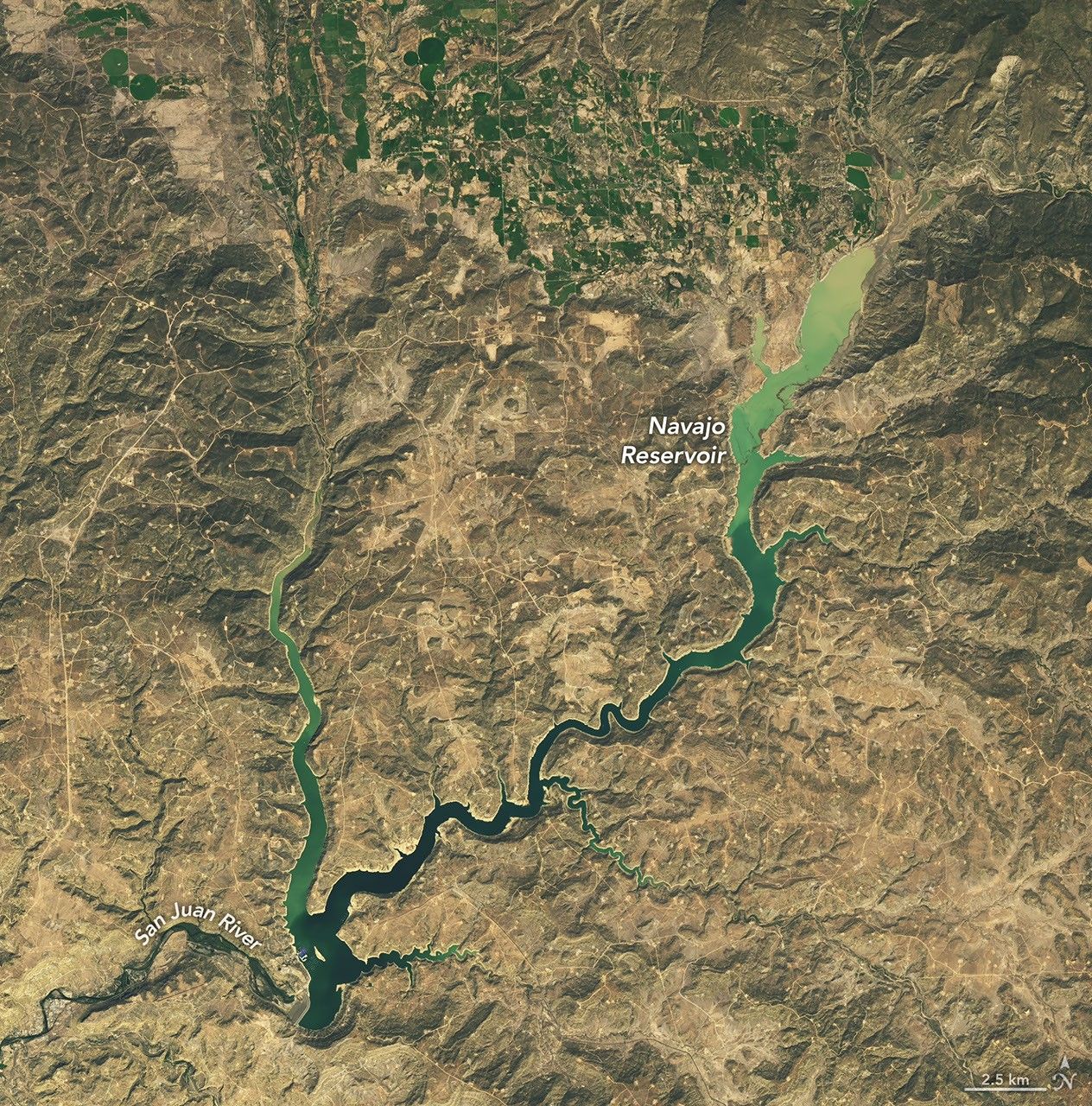
Hydrological Status Report: Navajo Reservoir
Latest telemetry from orbital assets confirms a rapid elevation in water levels at the Navajo Reservoir, a critical infrastructure node located at the intersection of New Mexico and Colorado. According to NASA Breaking News, multispectral imaging reveals a significant surge in water volume, a direct consequence of accelerated snowpack melt and localized atmospheric discharge across the San Juan River basin.
Data Analysis and Observation
Satellite comparison indicates a stark contrast to previous hydrological cycles. The reservoir—a primary storage facility for the Colorado River Storage Project—has transitioned from critical lows to a high-capacity state. High-resolution sensors captured the inflow patterns, demonstrating how terrestrial thermal shifts are driving hydraulic pressure within regional watersheds. The data confirms that the influx is sufficient to alter the local landscape signature when viewed from Low Earth Orbit (LEO).
Strategic Implications
While the surge provides a buffer against protracted regional aridity, the rapid rate of accumulation requires constant monitoring. Remote sensing platforms, including those utilized by the NASA Earth Observatory, remain the primary diagnostic tool for assessing these large-scale environmental fluctuations. This surge highlights the increasing volatility of planetary water cycles and the necessity of space-based observation to manage terrestrial resources.
This data serves as a baseline for ongoing climate modeling and water security protocols in the North American sector.