Orbital Sensors Detect Rapid Fire Spread Across Amazon Basin
NASA satellite data confirms the arrival of the annual burning season in the Amazon, with high-intensity thermal signatures detected across the rainforest corridor.
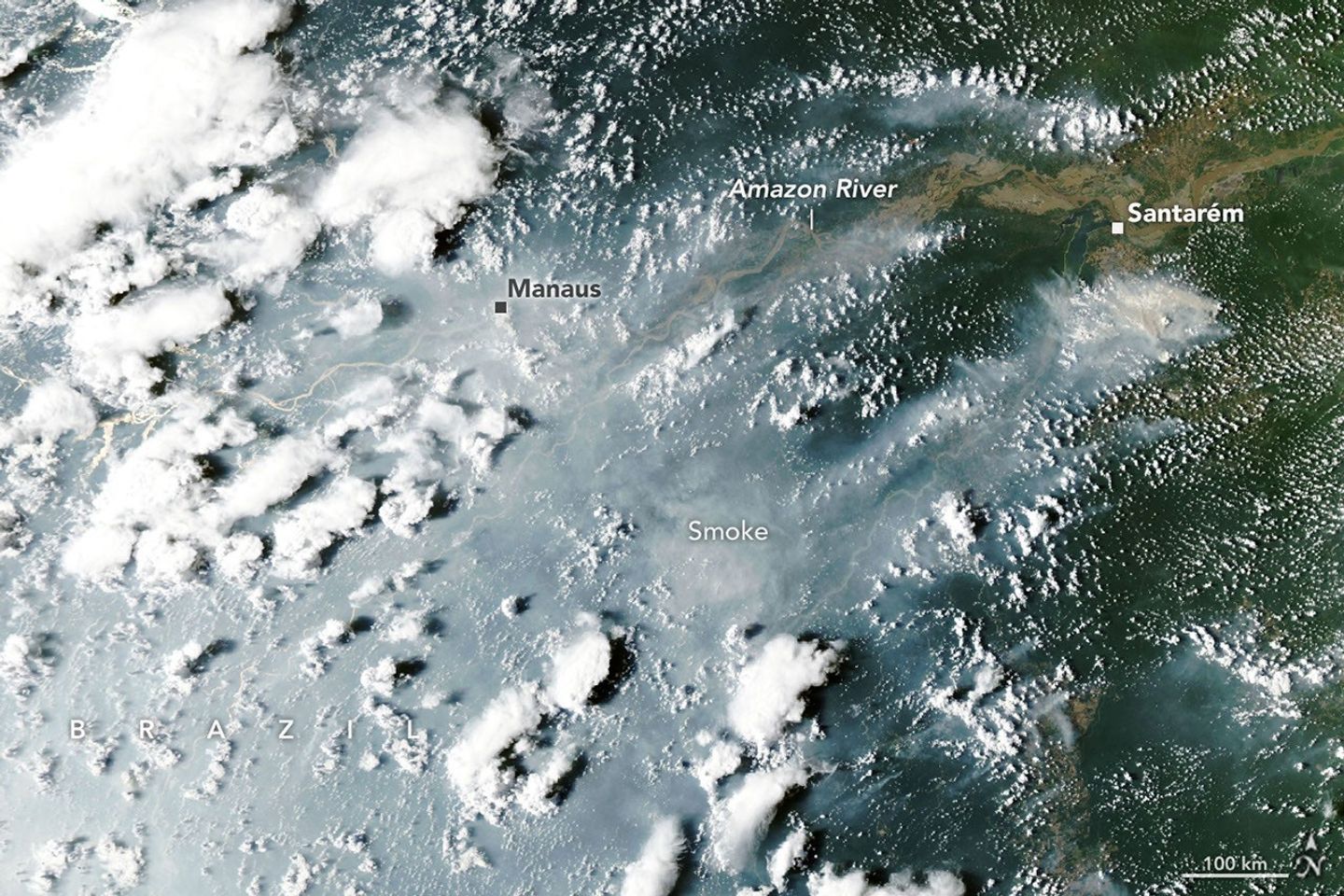
Data Acquisition: Thermal Anomalies
Recent telemetry from orbital observation platforms has confirmed a sharp increase in thermal activity across the Amazon rainforest. According to NASA Breaking News, the transition into the annual burning season has commenced, marked by a significant uptick in active fire signatures detected from low-Earth orbit. These sensors are currently monitoring atmospheric particulates and heat anomalies that indicate widespread combustion events across the biome.
Operational Context
Historically, this phase of the regional cycle is driven by a combination of climactic conditions and anthropogenic land clearance. NASA’s Earth Observatory utilizes advanced multispectral imaging to distinguish between small-scale agricultural burns and high-intensity forest fires that threaten the primary canopy. The current data stream suggests that smoke plumes are beginning to impact regional air quality, observable as grey-scale veils across the deep green of the rainforest in standard optical imagery.
Mission Implications
While monitoring remains a primary objective for NASA’s Earth Science Division, the data is shared globally to facilitate environmental response. Other active missions, including the Perseverance rover on Mars and the SPHEREx telescope, continue their specific deep-space and planetary objectives, but Earth observation remains a critical node in the space agency's mission architecture. The current fire front serves as a baseline for understanding global carbon flux and planetary health metrics. Orbital surveillance will remain at high-alert status as the dry season progresses through the final quarter of the year.