Orbital Saturation: AI Integration Scales Space Intelligence Operations
As orbital reconnaissance becomes more pervasive, the U.S. Space Force is turning to AI-driven automation to process massive data streams and accelerate battlefield decision-making.
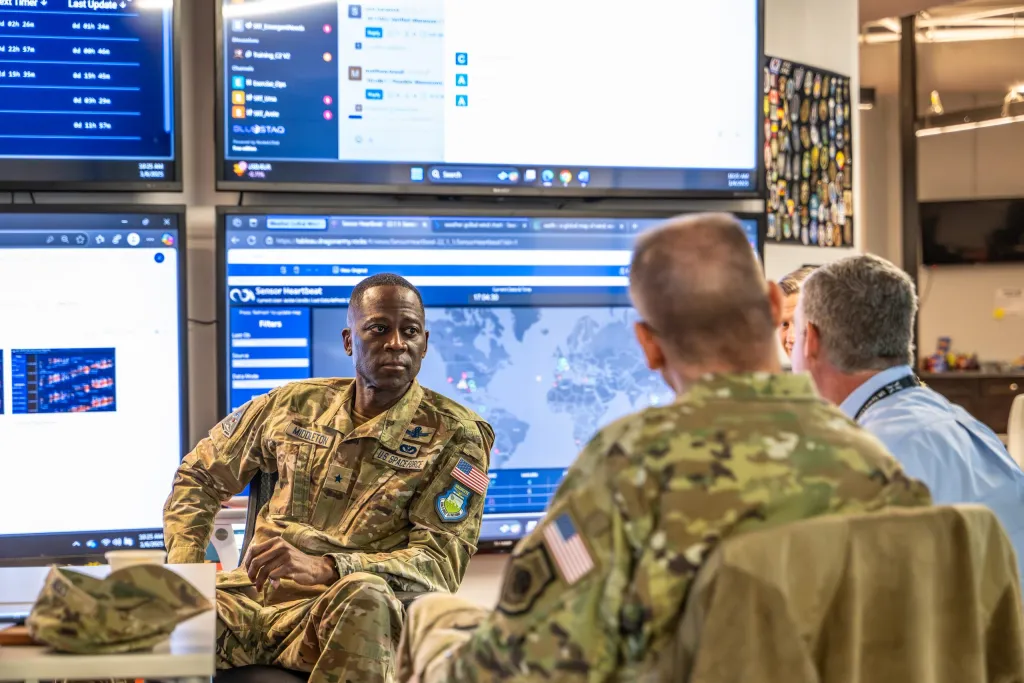
Data Processing: The New Orbital Bottleneck
As space-based reconnaissance reaches a state of near-total coverage, the strategic advantage is shifting from raw sensor access to the speed of data interpretation. According to SpaceNews, the U.S. Space Force (USSF) is increasingly leveraging a combination of classified assets and commercial geospatial intelligence to maintain situational awareness over global flashpoints.
While the executive branch has highlighted the "unprecedented" visibility provided by Space Force and National Reconnaissance Office (NRO) constellations, military leaders admit the challenge lies in the volume of information. Gen. Douglas Schiess, USSF Chief of Space Operations, recently emphasized that the service is now focused on delivering actionable intelligence to combatant commanders rather than just collecting imagery.
Automation at the Edge
The industry is responding via the Tactical Surveillance, Reconnaissance, and Tracking (TacSRT) program. Commercial vendors like Danti are deploying AI tools to synthesize disparate data streams—including maritime signals, weather, and open-source news—into coherent tactical reports.
Jesse Kallman, CEO of Danti, notes that AI has evolved from a simple search-and-retrieval tool into an autonomous analyst. Systems can now track developing events and automatically generate briefings that previously required analysts to work overnight. This automation allows for continuous assessment of changes on the ground without increasing human overhead.
The Commercial Integration Model
The USSF formalised its collaboration with the intelligence community on the TacSRT program in May 2025. This framework allows for the rapid acquisition of unclassified commercial sensing, which is then contextualized by AI before human review. While the human remains in the loop for final approval, the integration of these high-speed processing tools ensures that the "space component" of modern warfare moves at the speed of digital signals, not manual interpretation.