Orbital Rhythms: Detecting Exoplanets via Gravitational Waves
NASA researchers demonstrate how the Laser Interferometer Space Antenna (LISA) will detect exoplanets by monitoring gravitational wave fluctuations in binary star systems.
Surveillance: Deep Space Acoustics
In a shift for orbital reconnaissance, NASA scientists have confirmed that gravitational waves—ripples in the fabric of spacetime—will serve as a primary tool for identifying exoplanets within our galaxy. According to NASA Breaking News, the upcoming Laser Interferometer Space Antenna (LISA) mission will transition exoplanet detection from visual light monitoring to gravitational disturbance analysis.
The LISA Methodology
LISA, a collaborative effort between NASA and the European Space Agency (ESA), utilizes a trio of spacecraft positioned millions of kilometers apart. By firing lasers between these units, the mission detects microscopic changes in distance caused by gravitational waves. While traditional methods like the transit technique require planets to pass between their star and a telescope, gravitational wave detection focuses on white dwarf binaries.
These systems consist of two dead stars orbiting each other at high velocities, emitting a constant gravitational hum. If a massive planet—roughly the size of Jupiter or larger—is present in a stable orbit around these stars, its mass tugs on the binary pair. This interaction creates a measurable shift, or "modulation," in the gravitational frequency.
Data Acquisition Goals
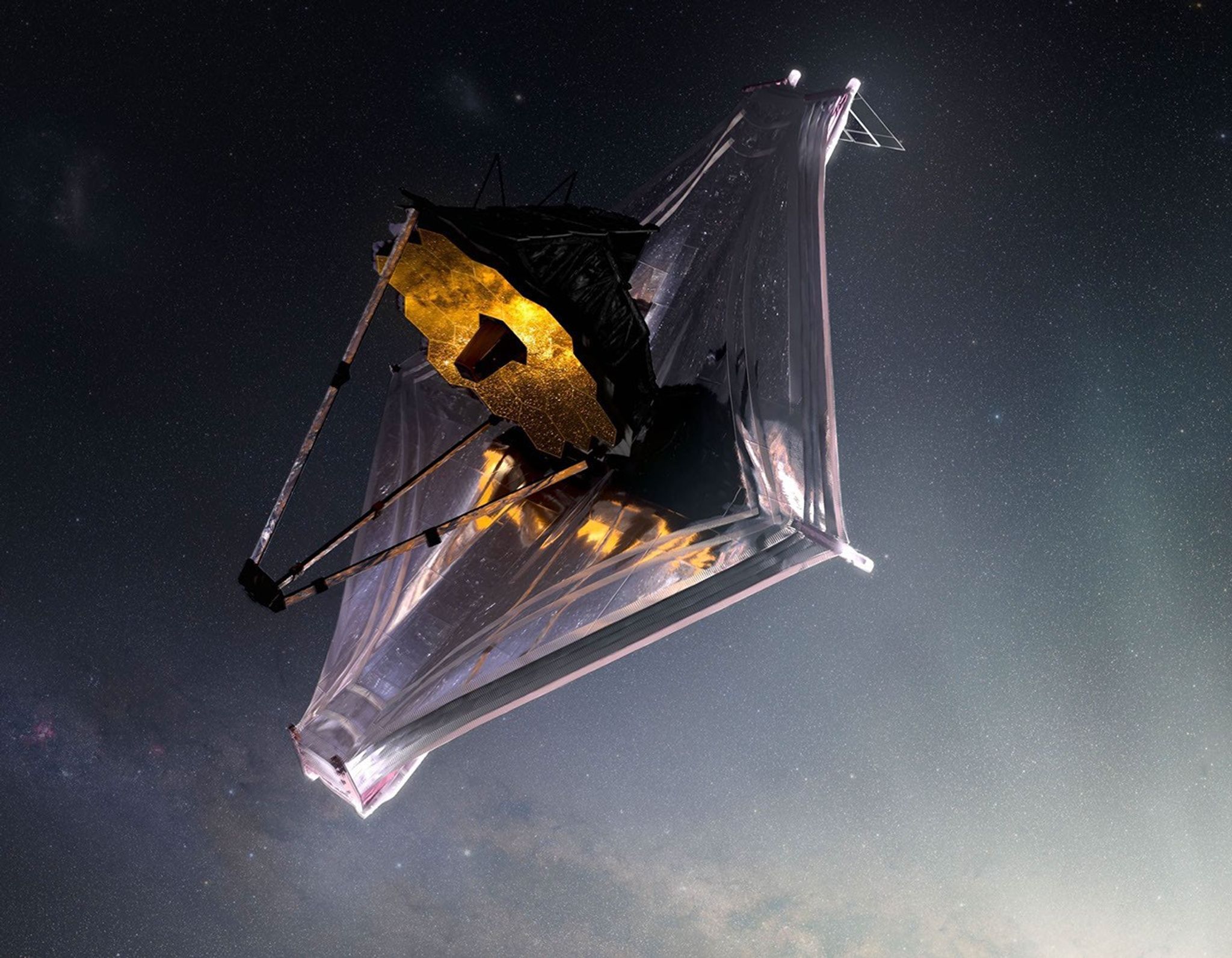
Unlike current missions like Webb or Roman, which are limited by light interference and distance, LISA’s gravitational sensors can penetrate dense regions of the Milky Way, including the galactic center. This capability allows researchers to map planetary systems that were previously invisible to optical hardware. The mission is scheduled for launch in the mid-2030s, marking a new era of "multi-messenger" astronomy where gravity, not just light, dictates our understanding of the cosmos.