Orbital Recovery: China Secures Long March 10B Booster via Net Capture
China has successfully recovered a Long March 10B first stage using a sea-based net system, marking a critical milestone for its reusable heavy-lift and lunar ambitions.
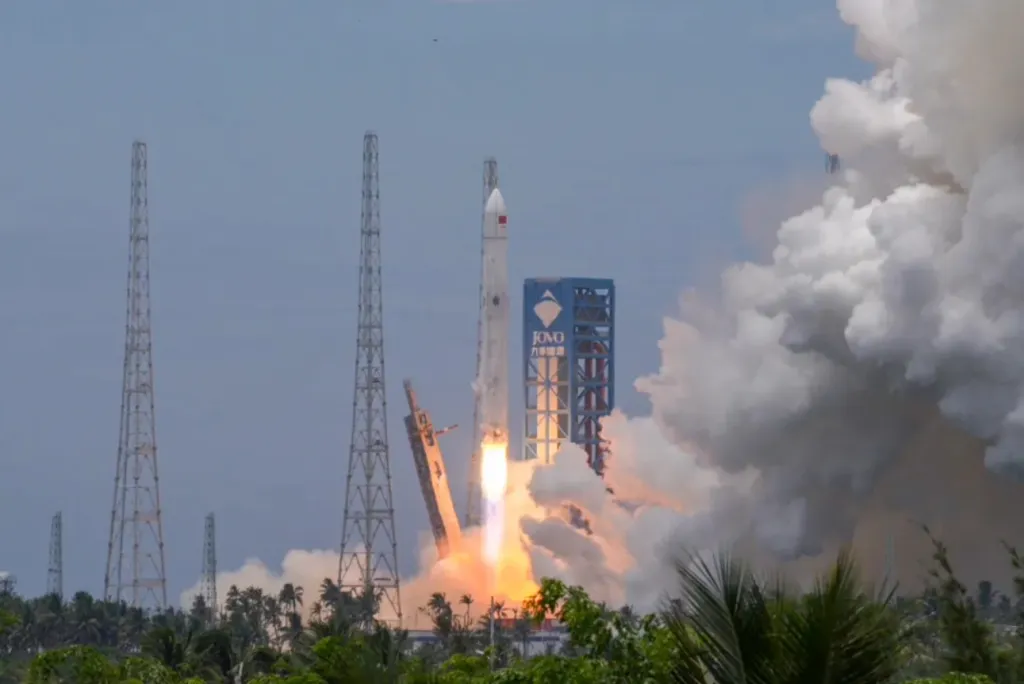
Mission Protocol: Success
China has successfully demonstration-tested its reusable launch capabilities. On July 10, the first Long March 10B rocket lifted off from the Hainan Commercial Space Launch Site at 04:15 UTC. According to SpaceNews, the China Aerospace Science and Technology Corporation (CASC) confirmed the recovery of the first stage approximately 11 minutes after launch.
Technical Execution
The recovery was executed via a proprietary net capture system on the Linghang Zhe vessel. Unlike the landing legs utilized by SpaceX or Blue Origin, the 5-meter-diameter Long March 10B utilizes a deployable hook system caught by a tensioned, hydraulic-damped net. CASC officials state this is the world’s first successful implementation of a net-system recovery for an orbital carrier rocket.
System Specifications
- Dimensions: 63 meters length, 5 meters diameter.
- Mass: 760,000 kg liftoff mass.
- Capacity: 16,000 kg to Low Earth Orbit (LEO) in reusable configuration.
- Payload: An undisclosed satellite was successfully inserted into orbit 90 minutes post-launch.
Strategic Implications
This milestone stabilizes China’s pathway toward a sustainable crewed lunar program and high-cadence satellite constellation deployment. CASC intends to refurbish and relaunch the recovered booster before the end of the year. This success places CASC alongside SpaceX and Blue Origin as the only entities to recover an orbital booster, intensifying the global competition for low-cost access to space.