Orbital Readiness: MTG-I2 Transitions from Cleanroom to Launch Configuration
Europe’s Meteosat Third Generation Imager-2 has successfully exited the cleanroom phase, marking a critical milestone in the mission to overhaul continental weather forecasting and lightning detection.
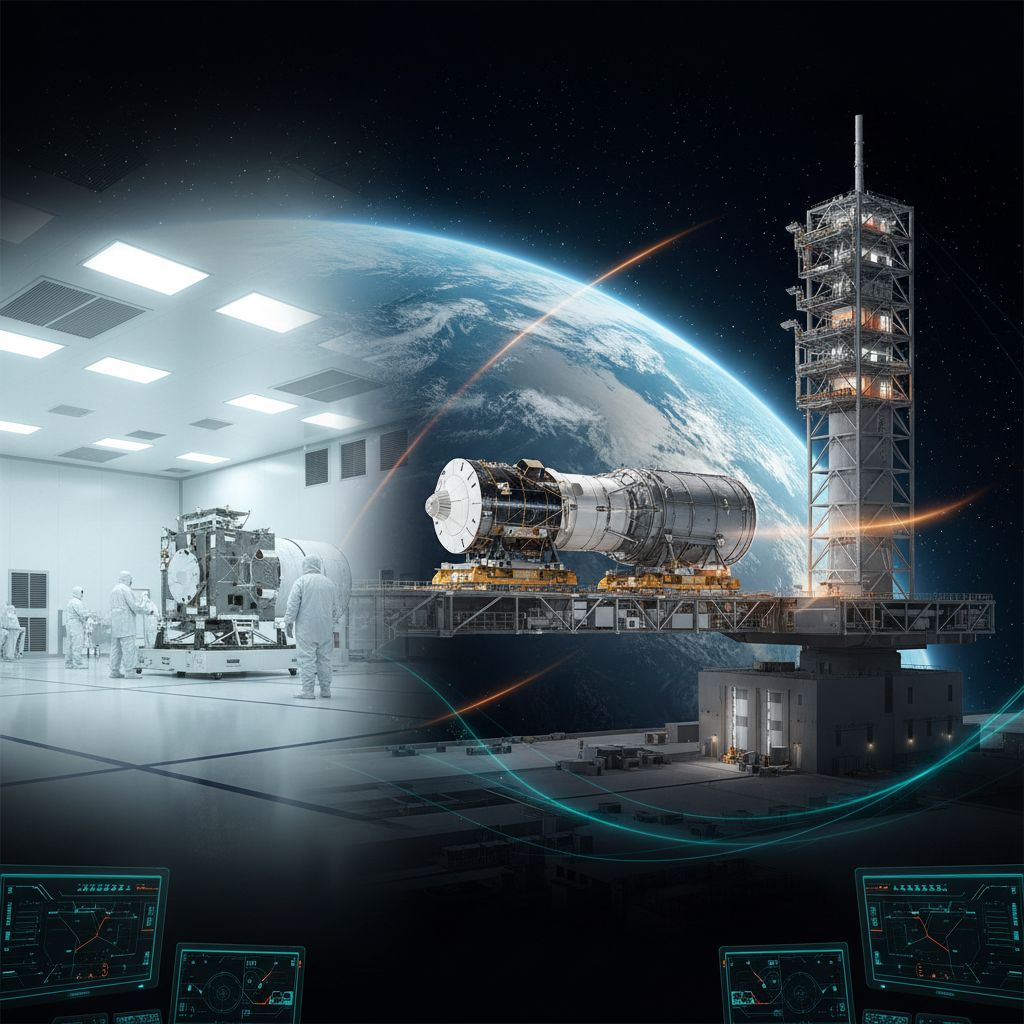
Technical Transition
The Meteosat Third Generation Imager-2 (MTG-I2) satellite has successfully concluded its rigorous cleanroom testing phase, transitioning into the final logistics chain for orbital deployment. According to the ESA YouTube channel, the satellite has undergone exhaustive validation to ensure its complex suite of meteorological instruments can survive the environmental extremes of space.
Sensor Capabilities
As the second imager in the MTG constellation, the MTG-I2 represents a significant technical leap for European meteorological infrastructure. The hardware is centered around two primary payloads: the Flexible Combined Imager (FCI) and the Lightning Imager (LI). The FCI is designed to deliver high-resolution scans of Earth’s disk every 10 minutes across 16 spectral bands, while the Lightning Imager provides continuous monitoring of atmospheric electrical discharges—a first for European geostationary satellites.
Operational Trajectory
Following its exit from the cleanroom, the satellite is undergoing final integration and fueling preparations. Once operational at its geostationary position 36,000 kilometers above the equator, it will work in tandem with MTG-I1 to provide redundant, high-cadence data streams. This dual-satellite configuration ensures that EUMETSAT (the European Organisation for the Exploitation of Meteorological Satellites) can maintain uninterrupted observation of rapidly developing weather systems and severe storms.
Mission Integration
This deployment is part of a broader collaborative effort between ESA and EUMETSAT to replace the aging Meteosat Second Generation (MSG) fleet. The transition from cleanroom to launch site signifies that the satellite’s structural integrity and thermal management systems have met all mission-critical parameters. The focus now shifts to the launch vehicle integration and the initiation of the countdown sequence.