Orbital Monitoring: Sierra Nevada Snow Season Begins
Satellite reconnaissance confirms the onset of the snow season in the Sierra Nevada mountains, a critical hydrological cycle monitored by NASA Earth Observatory assets.
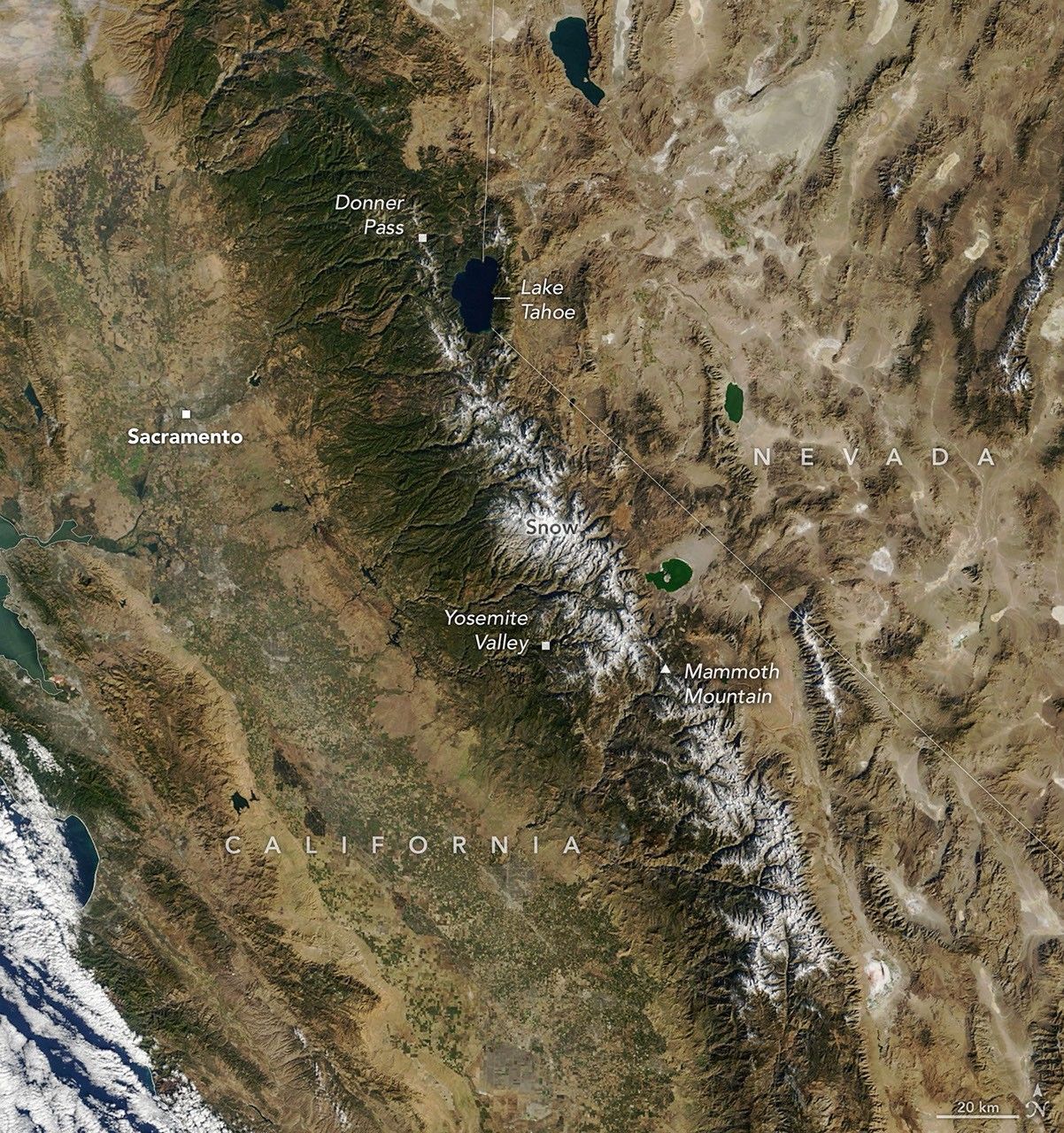
Surveillance Briefing: Cryosphere Dynamics
High-resolution imaging assets have confirmed the seasonal transition of the Sierra Nevada range. According to NASA Breaking News, the Earth Observatory has officially logged the commencement of the regional snow season, documenting the first significant accumulation across the mountain chain’s elevated altitudes.
Hydrological Infrastructure
This data is not merely aesthetic; it represents a critical telemetry point for Western North American water security. The Sierra Nevada snowpack serves as a natural cryospheric reservoir, storing precipitation that fuels essential agricultural and urban sectors during the thermal peaks of the summer months. Monitoring this volume from low-Earth orbit (LEO) allows for precise modeling of runoff patterns and reservoir management.
Multi-Mission Context
While the Earth Observatory focuses on planetary vitals, NASA remains engaged in a wide spectrum of operations. Simultaneous missions include the preparation for Artemis lunar deployments and the maintenance of the International Space Station. Additionally, astrophysical assets like the James Webb Space Telescope and the Hubble Space Telescope continue to stream deep-space data, illustrating the Agency’s multi-layered approach to scientific observation.
Technical Outlook
As the winter cycle intensifies, orbital sensors will track snow-water equivalent (SWE) metrics. These figures are vital for climatologists assessing the impacts of long-term atmospheric shifts. The ability to observe these large-scale geological transformations in real-time underscores the necessity of sustained satellite infrastructure for terrestrial maintenance. Spacechannel.eu will continue to monitor orbital reports as the seasonal cycle progresses.