ORBITAL MIRRORS: FCC LICENSES EÄRENDIL-1 FOR BEAMED SUNLIGHT EXPERIMENT
Reflect Orbital has received FCC clearance to launch its first reflector satellite, potentially paving the way for a 50,000-unit constellation despite protests from the scientific community.
MISSION OBJECTIVE: SYNTHETIC DAYLIGHT
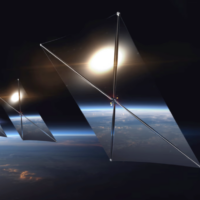
Reflect Orbital has secured a critical regulatory victory. According to Payload, the US Federal Communications Commission (FCC) has granted the startup a license to deploy its first experimental hardware: the Eärendil-1 satellite. Scheduled for a launch later this window, the mission aims to validate the mechanics of a deployable 18-metre film reflector designed to intercept solar radiation and direct it to specific terrestrial coordinates during local night cycles.
REGULATORY GAP
The authorization proceeded despite significant resistance from the global astronomical and biological communities. Critics argue that a planned 50,000-unit constellation would create irreversible light pollution, crippling ground-based telescopes and disrupting the circadian rhythms of terrestrial ecosystems. Scientists have warned that artificial illumination of the night sky could catastrophic for local flora and fauna.
However, the FCC determined that these environmental and scientific concerns fell outside its specific regulatory mandate. The commission opted to treat the Eärendil-1 mission as an isolated event, stating that the alleged harms were unlikely to manifest from a single demonstration unit. By granting the license while ignoring the downstream implications of a full constellation, the FCC has effectively postponed a definitive ruling on the legality of large-scale orbital reflectors.
STRATEGIC RESPONSE
Reflect Orbital remains focused on proving operational precision. Chief Product Officer Tristan Semmelhack maintains that the debut flight is a necessary step to "earn the right" to scale. The mission's success depends on demonstrating that reflected light can be tightly controlled, limited in duration, and managed in coordination with the scientific institutions currently voicing opposition. If successful, the experiment will shift the debate from theoretical harm to measurable light-management performance.