Orbital Forensics: Tracking Cyanobacteria in Blue Mesa
Satellite imagery reveals a concerning surge in harmful algal blooms at Colorado's Blue Mesa Reservoir, highlighting the critical role of orbital monitoring in terrestrial water security.
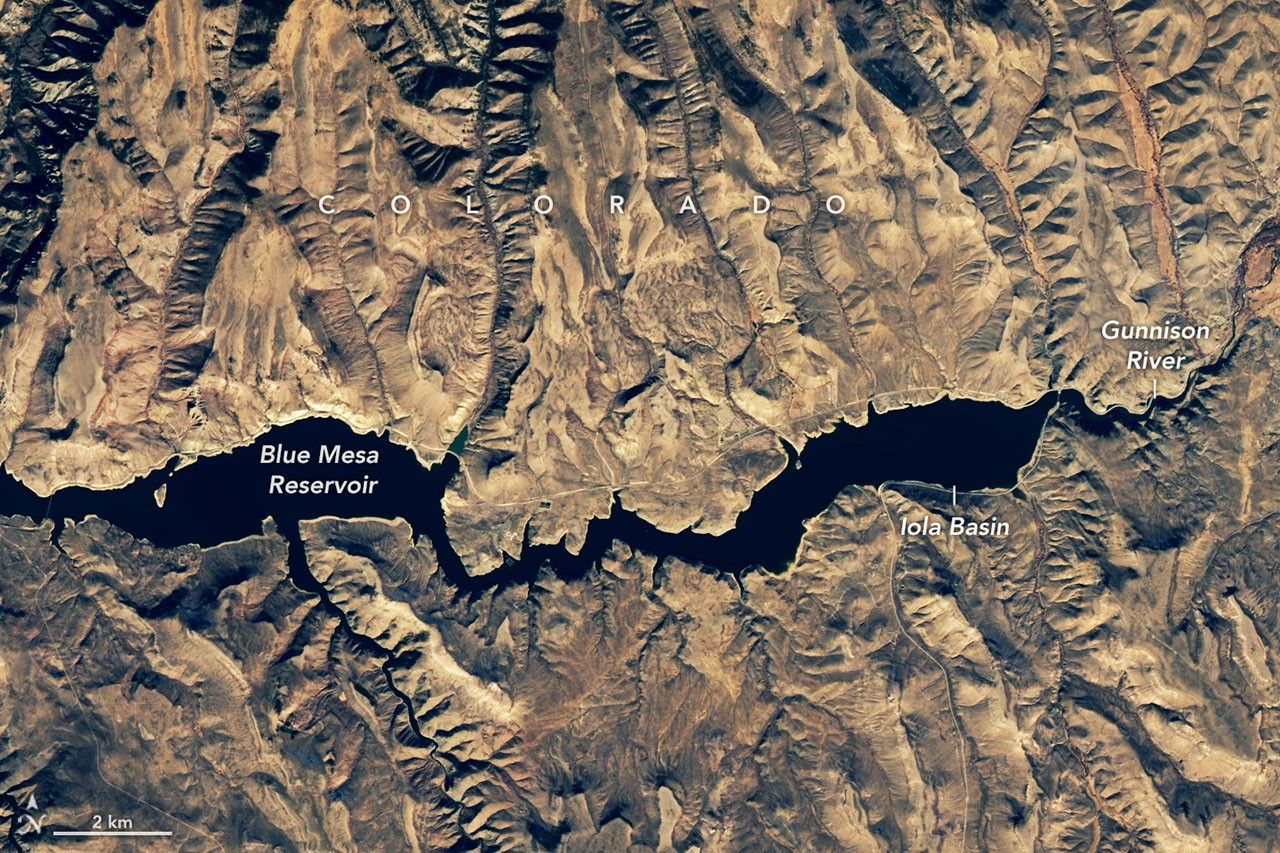
Data Analysis: Blue Mesa Inundation
Recent orbital telemetry has confirmed the presence of extensive cyanobacteria concentrations within the Blue Mesa Reservoir in Colorado. According to NASA Breaking News, the Earth Observatory-class satellites have identified distinct spectral signatures associated with harmful algal blooms (HABs) that are currently impacting the region’s primary water storage infrastructure.
Bio-Spectral Signatures
The phenomenon, often colloquially referred to as 'pond scum,' manifests as vibrant green swirls in high-resolution satellite imagery. These are not merely aesthetic anomalies; they represent dense colonies of microorganisms—specifically blue-green algae. While these organisms are a natural component of aquatic ecosystems, their proliferation is being exacerbated by rising surface temperatures and nutrient-rich runoff, creating a toxic feedback loop.
Analytical Constraints
Monitoring from the LEO (Low Earth Orbit) provides a significant strategic advantage. Ground-based sampling is labor-intensive and localized, whereas multi-spectral imaging allows for a synoptic view of the reservoir's health. NASA’s analysis indicates that these blooms pose significant risks to both local ecology and public health, as certain cyanobacteria strains produce neurotoxins and hepatotoxins.
As the climate continues to shift, the reliance on space-based assets to manage terrestrial biological threats becomes a necessity. The data gathered from Blue Mesa provides a critical benchmark for future predictive models concerning inland biomass volatility.