Orbital Files for 100,000 Edge-Compute Satellites
Startup Orbital has petitioned the FCC to deploy 10 gigawatts of space-based AI computing power via a massive 100,000-satellite constellation.
Terminal Access: Orbital Constellation Filing
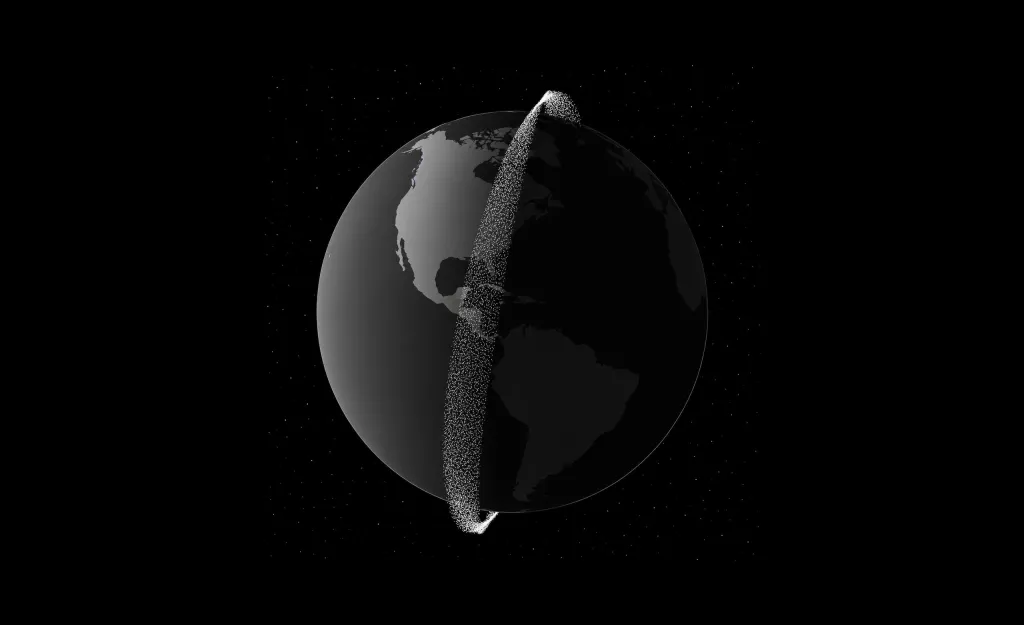
Los Angeles-based startup Orbital has submitted a petition to the Federal Communications Commission (FCC) to deploy a massive constellation of 100,000 data center satellites. The goal is to offload the mounting power and cooling burdens of terrestrial AI infrastructure by establishing 10 gigawatts of compute capacity in Low Earth Orbit (LEO).
According to SpaceNews, the filing specifies 100-kilowatt-class satellites operating at altitudes between 500 and 850 kilometers. These units are projected to have a dry mass of 1.5 to 2.5 metric tons, featuring solar arrays and thermal radiators spanning 100 meters. To manage data throughput, the system will utilize optical inter-satellite links to piggyback on third-party networks, such as SpaceX’s Starlink.
The Compute Arms Race
Orbital CEO Euwyn Poon, previously an entrepreneur in the micromobility sector, intends to launch a scaled-down demonstration payload next year. This will lead to the 2028 deployment of "Orbital-1," the first purpose-built compute satellite intended to mirror the final 100kW operational design.
The venture enters a crowded regulatory field. SpaceX and Starcloud have already filed for constellations of one million and 88,000 satellites respectively. Poon identifies the primary hurdle as "launch complexity," noting that the business model depends heavily on the availability of heavy-lift vehicles like Starship to achieve scale.
Industrial Logic
Orbital’s strategy treats satellites as mass-produced hardware rather than bespoke scientific instruments. By applying manufacturing principles from the electric scooter industry, the team—comprising veterans from SpaceX, Amazon, and Northrop Grumman—aims to iterate designs for maximum efficiency through successive generations. The full constellation is projected to be operational well into the 2030s.