Orbital Feed: Massive Dust Plume Engulfs West African Interior
High-resolution satellite telemetry confirms a significant dust storm sweeping across Mali, highlighting shifting atmospheric dynamics and the critical role of orbital monitoring in environmental surveillance.
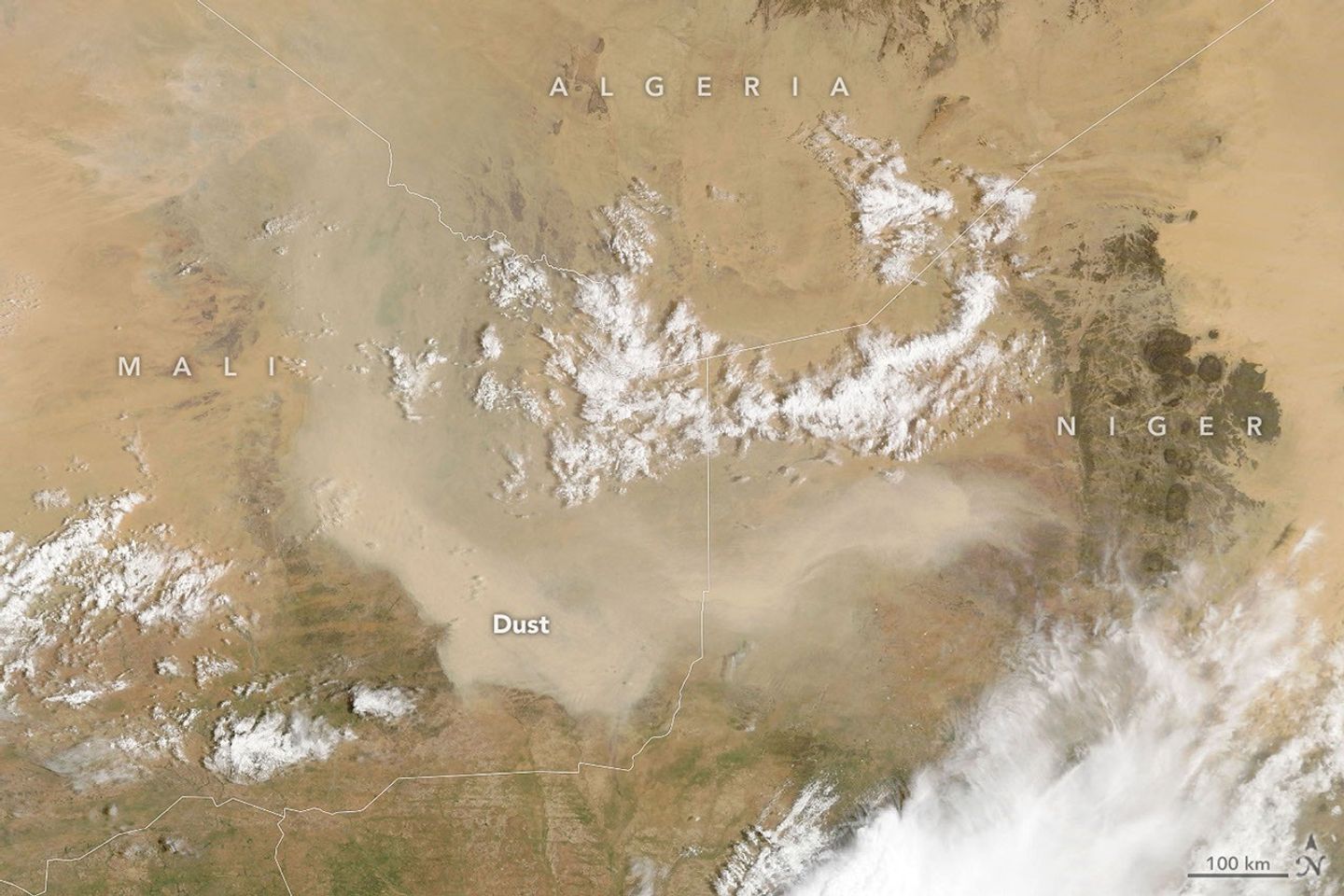
ATMOSPHERIC ANOMALY: MALI
Recent telemetry from orbital sensors has confirmed a massive dust event traversing the West African interior. According to NASA Breaking News, a dense plume of particulate matter has swept across Mali, drastically reducing visibility and altering local atmospheric chemistry. The event, captured via high-resolution satellite imaging, underscores the volatile nature of the Sahel region’s climate interface.
DATA ANALYSIS
Thermal and optical imaging reveal a wall of dust migrating south-southwest. These storms, often triggered by convective downdrafts or intense seasonal winds, act as significant vectors for mineral transport across the Atlantic. The scale of the current Mali event indicates a high-intensity disruption, potentially impacting public health and aviation safety within the regional corridor. Monitoring stations report that the particulate density is sufficient to mask large-scale geological features from standard optical observation.
ORBITAL PERSPECTIVE
The Earth Observatory’s ability to track these events in real-time provides critical data for predictive modeling. By observing the velocity and concentration of the Mali plume, researchers can better understand the feedback loops between desertification and atmospheric loading. For space-based assets, such events serve as a reminder of the dynamic, often violent transitions occurring within Earth's troposphere, necessitating constant vigilance from our orbital infrastructure.