Orbital Eclipse: Perseverance Captures Earth-Phobos Occultation
NASA’s Perseverance rover has documented a rare celestial alignment from the Martian surface, filming Earth as it vanished behind the silhouette of the moon Phobos.
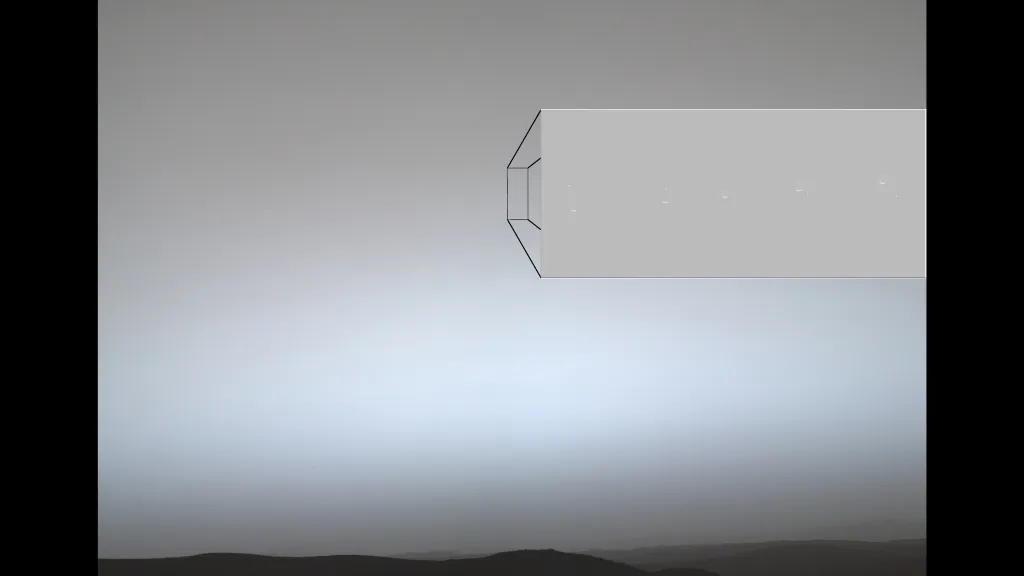
Visual Data Log: Martian Surface
In a rare observation of inner-system alignment, the Perseverance rover has successfully captured footage of Earth disappearing behind the Martian moon Phobos. According to NASA Breaking News, the occultation was documented using the rover's advanced Mastcam-Z imaging system from its current position within Jezero Crater.
The Occultation Event
The event provides more than just a sense of scale for the distant "Blue Marble." From the perspective of the Martian surface, Earth appears as a bright, point-source light. The passage of Phobos—a lumpy, potato-shaped moon roughly 22 kilometers in diameter—across this light source allows mission scientists to refine orbital mechanics and tidal influence data.
Phobos orbits Mars three times a day, maintaining such close proximity that it is destined to eventually break apart or collide with the planet. Capturing these precise transit events helps researchers track the moon's gradual orbital decay.
Technical Significance
For the Perseverance mission, these observations serve as calibration exercises for the Mastcam-Z hardware. By timing the exact second the planet vanishes and reappears, engineers can verify the accuracy of the rover's astronomical positioning software. This data is critical for future autonomous navigation and long-range telecommunications alignment.
While the rover’s primary objective remains the search for ancient microbial life and the collection of regolith samples, these celestial observations underscore the isolation of the Martian frontier. Earth, currently millions of kilometers away, was briefly obscured by a moon that is itself a transient feature of the Martian skyline.