Orbital Descent: The Terminal Collapse of Puncak Jaya’s Ice Fields
Satellite data confirmed by NASA Breaking News indicates the complete loss of Indonesia's equatorial glaciers is imminent as rising temperatures dissolve the last remaining ice on Puncak Jaya.
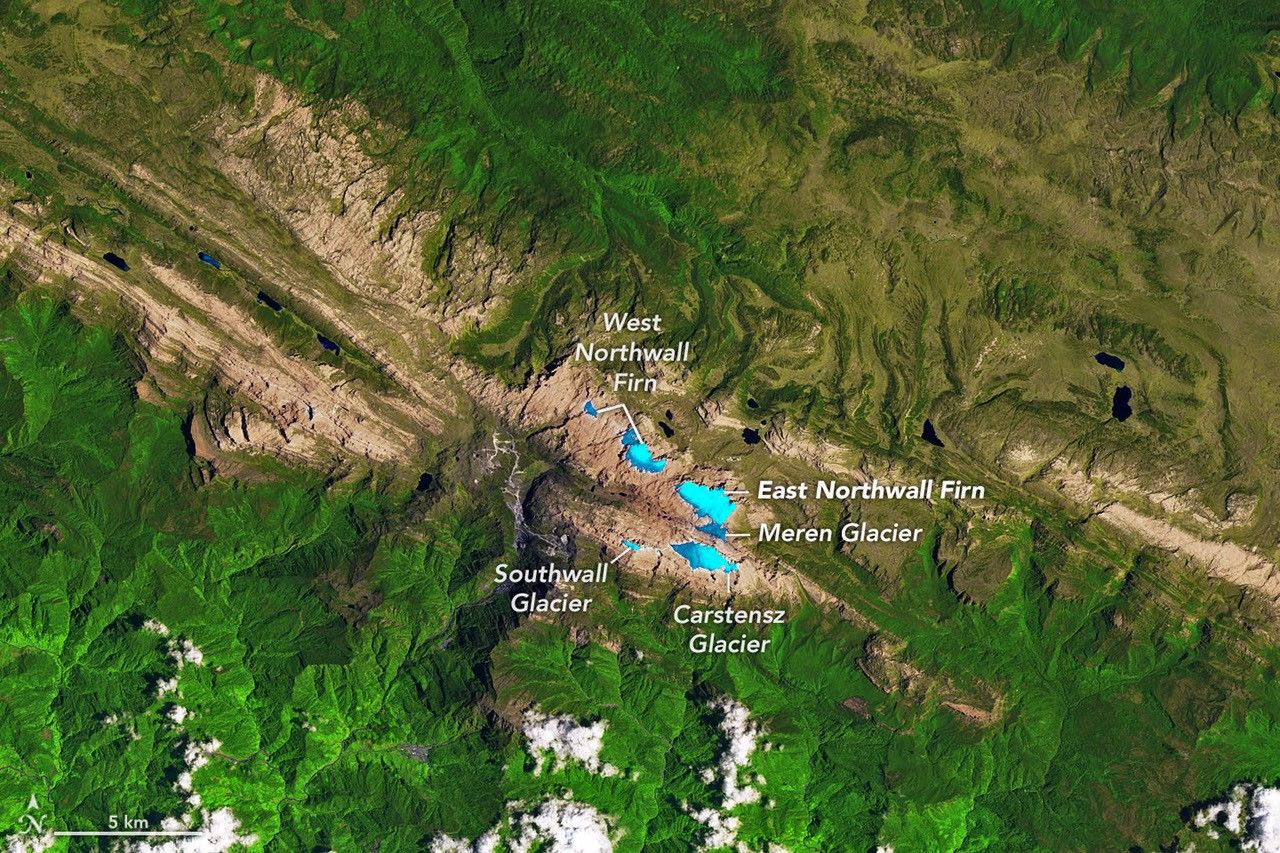
Terminal Phase: Equatorial Deglaciation
Satellite telemetry and ground-based observations confirm that the ice fields atop Puncak Jaya, Indonesia—the highest peak in Oceania—are entering a final state of collapse. According to NASA Breaking News, the remaining tropical glaciers in this region are projected to vanish entirely within the next decade, marking a significant shift in the planet's cryospheric profile.
Data Analysis
The decline is not a new phenomenon but has reached a critical velocity. Researchers monitoring the region via Earth-observatory satellites have tracked a persistent reduction in surface area and ice thickness. Puncak Jaya, located in the Sudirman Range of Papua, once supported several distinct glacial bodies. Current multispectral imaging shows these have fragmented into isolated patches of thin ice, vulnerable to the high-ambient thermal energy of the tropical atmosphere.
Atmospheric Drivers
The primary forcing agent identified is the steady increase in regional temperatures, compounded by El Niño cycles that decrease snowfall and increase liquid precipitation at high altitudes. Unlike polar ice caps, these equatorial glaciers serve as sensitive "canaries" for global atmospheric changes. As the freezing level rises above the summit of the 4,884-meter peak, the ice loses its ability to regenerate during the monsoon seasons.
The Final Outlook
NASA’s Earth Observatory reports that the vanishing ice is more than a localized loss; it is a preview of the fate awaiting other high-altitude tropical systems. The transition from a glaciated peak to a bare rocky summit appears irreversible under current climate trajectories. For orbital monitors, Puncak Jaya now serves as a high-contrast case study in rapid planetary transformation, providing essential data for climate modeling and the evolution of terrestrial ecosystems in the post-glacial era.