Orbital Data Exposes Gap in Global Forest Carbon Reporting
A new ESA-backed study reveals significant discrepancies between national forest carbon reports and satellite observations, calling for a unified monitoring framework.
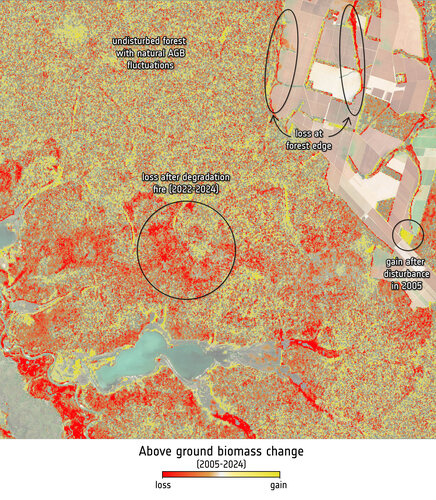
Current methods for tracking forest carbon emissions are failing to provide a clear picture of the global climate crisis. According to the European Space Agency (ESA), a recent study published in Nature Communications highlights a massive data gap between official national reports and independent satellite observations.
The Data Discrepancy
Most nations calculate forest carbon flux using ground-based inventories and statistical models. However, when compared to the ESA Climate Change Initiative (CCI) datasets, these figures often conflict. The study indicates that human-managed forests are frequently credited for carbon sequestration that may actually be driven by environmental factors—such as increased CO2 fertilization or climate variability—rather than direct policy interventions.
Orbital Verification
Space-born sensors provide a high-frequency, objective layer of truth. By utilizing biomass maps and atmospheric CO2 monitoring, researchers can identify rapid changes in vegetation cover that ground surveys might miss for years. The ESA report stresses that while national reporting follows UN guidelines, the lack of spatial precision leads to "missing" emissions or overstated sinks. This instability in data complicates the global stocktake process necessary for the Paris Agreement.
Toward a Standardized Framework
To stabilize global climate modeling, the research team advocates for an integrated approach. By fusing regional inventory data with the high-resolution temporal feeds from the Copernicus Sentinel fleet and dedicated biomass missions, scientists can refine the accuracy of carbon accounting. This shift is not merely academic; it is a technical prerequisite for verifying that climate targets are being met in real-time.
According to ESA, the goal is to establish a transparent, satellite-verified transparent reporting system that eliminates the current ambiguity in terrestrial carbon sinks.