Orbital Data Confirms Accelerating European Forest Biomass Loss
New analysis of satellite data reveals a sharp decline in European forest biomass since 2018, driven by extreme weather events and increased harvesting activity.
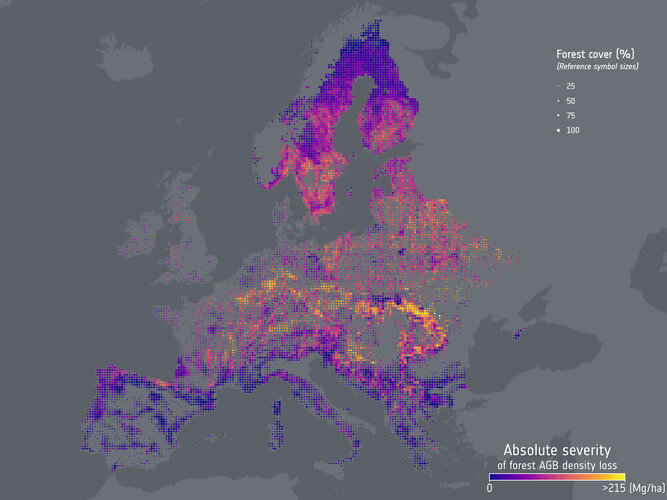
# Data Alert: European Biomass Deficit
Satellite monitoring systems have identified a significant downward shift in the carbon storage capacity of European forests. According to ESA, the continent’s forests—which traditionally serve as a critical carbon sink—have experienced an accelerated loss of biomass since 2018.
The Breakdown
For decades, European timber volume steadily increased due to reforestation and improved management. However, recent data streams from the ESA Climate Change Initiative (CCI) indicate a reversal of this trend. While forests still cover roughly 40% of Europe’s landmass, the density of organic matter (biomass) within these areas is thinning at an unprecedented rate.
Primary Stressors
ESA researchers attribute this degradation to a combination of anthropogenic and environmental factors:
- Extreme Weather: Prolonged droughts and heatwaves since 2018 have increased tree mortality and reduced growth rates.
- Biological Threats: Warm-weather-induced pest outbreaks, particularly bark beetles, have devastated vast tracts of Central European woodland.
- Harvesting Intensification: Increased demand for timber and bioenergy has led to higher rates of logging, further depleting the carbon stock.
Orbital Verification
The findings rely on high-resolution Earth Observation (EO) data, merging decades of archival imagery with modern L-band radar and optical sensors. This multi-sensor approach allows scientists to distinguish between temporary seasonal changes and long-term structural biomass loss. The data confirms that the resilience of the European carbon sink is weakening, complicating EU net-zero targets.
Monitoring will continue via the upcoming Biomass mission, designed to provide even higher precision maps of global carbon stocks.