Orbital Bio-Surveillance: Satellite Sensors Track Global Foliage Shift
NASA Earth Observatory assets are utilizing advanced spectral analysis to monitor the seasonal transition of terrestrial vegetation, providing critical data on climate health through the lens of autumn leaf color changes.
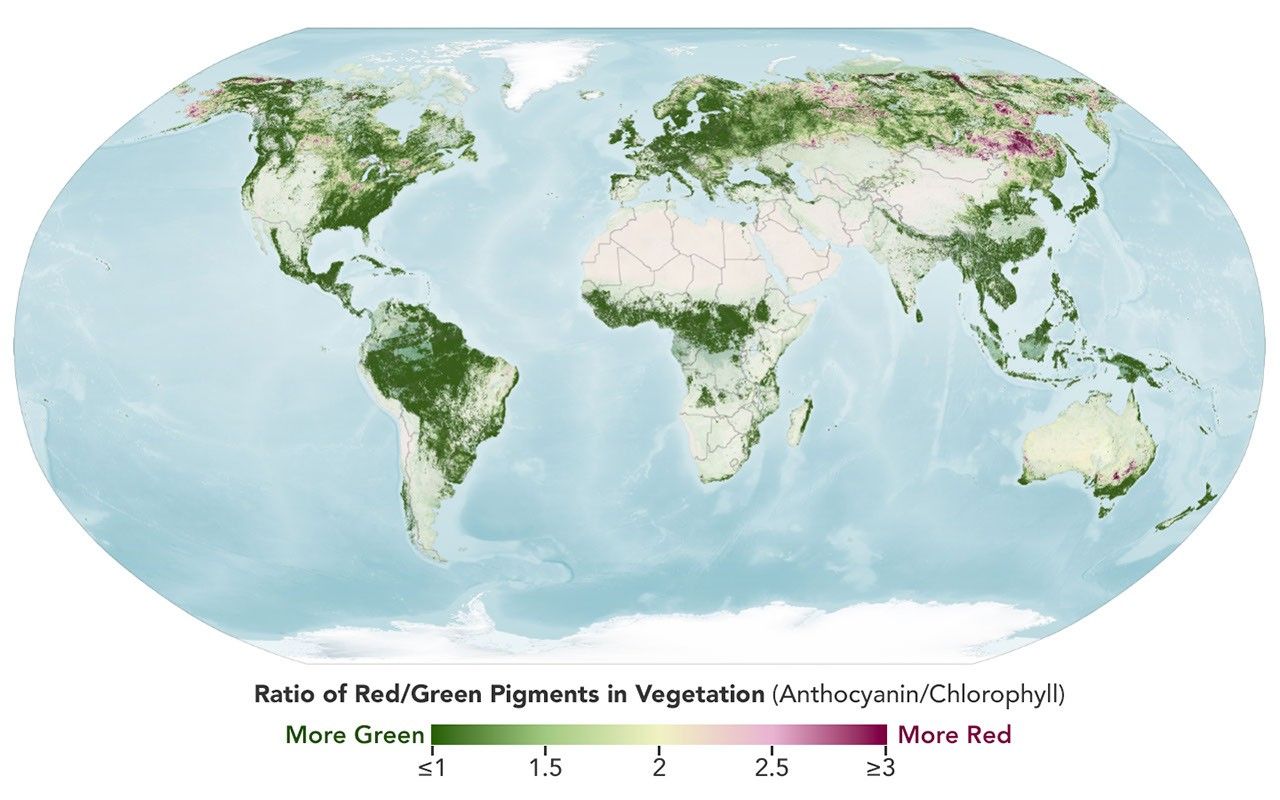
DATA OVERVIEW
Orbital sensors are currently prioritising the detection of anthocyanin and carotenoid signatures across the Northern Hemisphere. According to NASA Breaking News, researchers are utilizing Earth-observing satellites to track the precise transition of deciduous forests from chlorophyll-dominant green to the vivid reds and yellows of the autumnal cycle.
SPECTRAL ANALYSIS
Standard visual observation is insufficient for high-fidelity climate modelling. Satellite platforms, such as those managed by NASA’s Earth Observatory, deploy radiometers to measure the specific wavelengths of light reflected by vegetation. As chlorophyll levels degrade due to decreasing photoperiods and cooling temperatures, the spectral signature of the canopy shifts. This change allows orbital assets to map the health and stress levels of global biomes with unprecedented accuracy.
CLIMATE DIAGNOSTICS
This 'hunting of red leaves' is not merely aesthetic; it serves as a critical diagnostic tool for the planetary life-support system. By monitoring the timing and intensity of foliage shifts, scientists can determine how shifting weather patterns and carbon cycles are affecting forest longevity. The data captured by these missions provides a baseline for understanding how terrestrial carbon sinks are responding to atmospheric volatility.
MISSION STATUS
NASA continues to integrate this Earth-science data with ongoing missions, including the Landsat program and MODIS instruments. These systems ensure that the transition of the biosphere is recorded as a high-resolution time series, essential for long-term ecological forecasting.