Orbital Bio-Metrics: FLEX Mission to Track Earth’s Photosynthetic Glow
The European Space Agency prepares to launch the FLEX mission, utilizing advanced spectrometry to measure the faint fluorescent signatures of vegetation, providing a real-time diagnostic of planetary health.
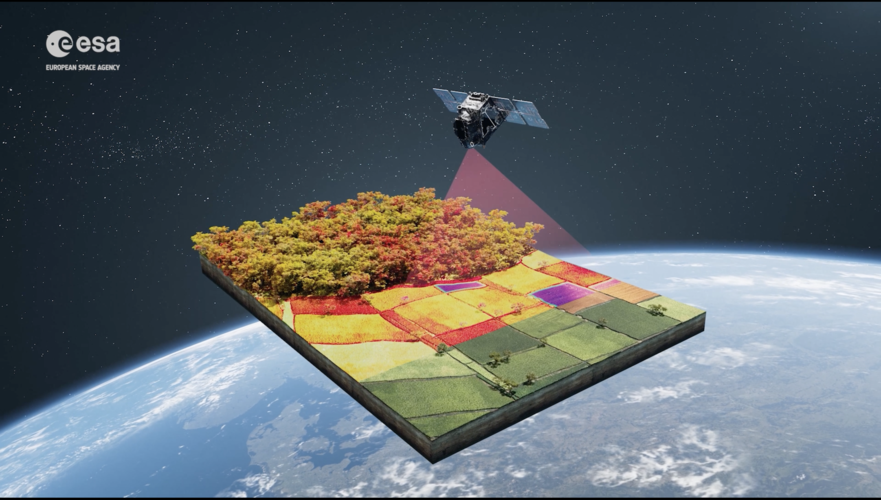
DATA ACQUISITION: THE VEGETATION FLUORESCENCE EXPLORER
Standard orbital monitoring of Earth’s flora has historically relied on reflected light. The European Space Agency (ESA) is shifting this paradigm with the Fluorescence Explorer (FLEX) mission. Instead of observing surface color, FLEX is designed to detect the faint, invisible glow emitted by plants during photosynthesis.
TECHNICAL OVERVIEW
According to ESA, the mission centers on the Floris instrument—a high-resolution imaging spectrometer. During photosynthesis, plants dissipate a fraction of absorbed solar energy as a low-level fluorescent signal. This signal, though invisible to the human eye, serves as a direct indicator of photosynthetic activity and plant metabolic efficiency. By capturing this data, FLEX will provide a real-time diagnostic of vegetation health and stress levels that current satellites cannot replicate.
SYNERGISTIC DEPLOYMENT
The mission is optimized for tandem operations. FLEX will fly in close formation with a Sentinel-3 satellite, part of the Copernicus Earth observation program. This pairing allows FLEX to leverage Sentinel-3’s existing ocean and land color instruments to provide necessary atmospheric and temperature context. Together, they will produce the most comprehensive map of terrestrial carbon cycle dynamics to date.
OPERATIONAL IMPACT
By monitoring global vegetation at this level of precision, ESA aims to refine climate modeling and agricultural management. The ability to detect plant stress before it becomes visible in the infrared or visual spectrum provides a critical lead time for food security and ecosystem preservation. The mission represents a transition from observing what the planet looks like to understanding how the planet functions at a cellular level.