Orbital Ballet: Visualizing the High-Stakes Physics of Space Combat
The Space Force Association has unveiled a digital simulation environment designed to show policymakers why space warfare looks less like 'Star Wars' and more like a slow, lethal ballet.
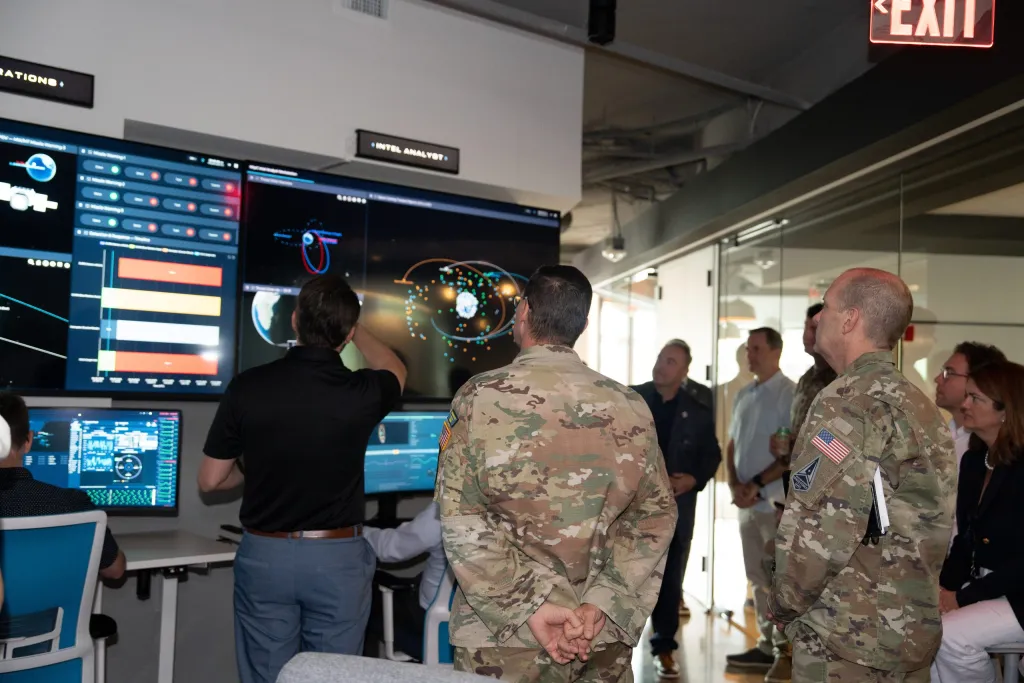
Traditional combat is tactile; tanks maneuver on ranges and warships are visible from piers. Space, however, remains an abstract battlefield where satellites move at thousands of kilometers per hour, yet tactical maneuvers unfold over days. To bridge this conceptual gap, the Space Force Association (SFA) has launched the National Spacepower Center, an industry-backed initiative designed to visualize orbital conflict for Congress and the public.
According to SpaceNews, the center recently demonstrated its first prototype to top U.S. Space Force leadership, including Gen. Chance Saltzman. The simulation utilized a concept often mislabeled as "space dogfighting." Unlike the rapid pivots of fighter jets, orbital combat is governed by rigid orbital mechanics. Success depends on precise engine burns that gradually alter a satellite’s trajectory over hours or days—a process described by developers as a "carefully timed performance" rather than a chase.
The Simulation Architecture
The prototype used unclassified data to depict a scenario in the South China Sea. An adversary satellite in a highly elliptical orbit approached a U.S. missile-tracking asset, jamming its sensors and disrupting terrestrial military operations. A second friendly satellite was then deployed to intercept the threat.
The technical backbone of the project consists of a consortium including Redwire, COMSPOC, Sedaro, OpenC3, and TigerVision. By integrating orbital tracking data, spacecraft engineering models, and command-and-control software, the group produced a physics-based 4K visualization in under four months.
Strategic Utility
By relying on unclassified, open-source data, the SFA aims to provide a platform that lawmakers and international allies can access without security clearances. This immersive environment translates abstract physics into tangible strategic consequences, demonstrating how the loss of a single orbital node can blind forces on the ground. The center currently operates as an internal SFA project, though it seeks eventual formal adoption by military leadership.