Orbital Assets Track Heavy Smoke Over Washington State
NASA's Earth Observatory provides satellite-level evidence of massive smoke plumes originating from the Pioneer Fire, impacting air quality across the Pacific Northwest.
DATA ACQUISITION: ATMOSPHERIC STATUS
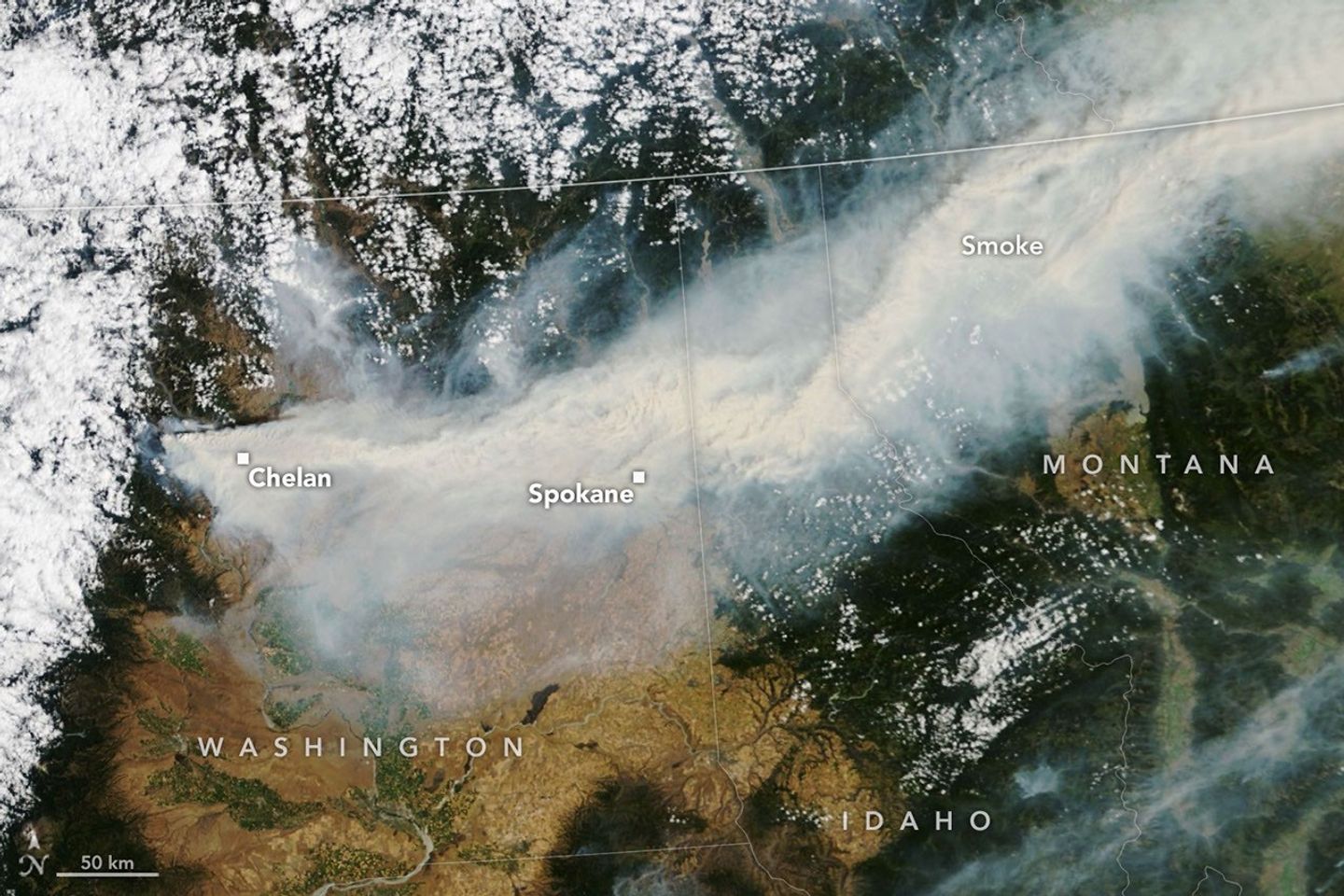
Recent telemetry from orbital sensors has confirmed heavy aerosol concentrations over the Pacific Northwest. According to NASA Breaking News, high-resolution imagery captured by the Earth Observatory confirms that smoke from the Pioneer Fire is currently streaming across Eastern Washington, creating a significant atmospheric shroud visible from Low Earth Orbit (LEO).
FIRE ANALYSIS: THE PIONEER ANOMALY
The Pioneer Fire, localized near Lake Chelan, has become a primary source of particulate output in the region. Fueled by dense timber and steep, inaccessible terrain, the fire has resisted immediate containment, leading to the sustained release of smoke. Satellite data suggests that prevailing wind patterns are currently funneling these plumes toward the east and southeast, impacting visibility and air quality in the Columbia Basin and beyond.
INSTRUMENTATION AND MONITORING
NASA’s fleet of Earth-observing satellites remains the primary tool for tracking the dispersion of these emissions. By utilizing thermal infrared and visible light sensors, mission controllers can map the fire's perimeter and the subsequent drift of the smoke front. This data is critical for ground-based agencies attempting to forecast air quality indices (AQI) for civilian populations in the path of the drift.
SYSTEM IMPACT
The persistence of the smoke indicates a stable high-pressure system or wind flow that continues to transport combustion byproducts across the state. Monitoring remains active as orbital passes continue to update the atmospheric model of the region. No immediate dissipation is signaled by current meteorological data streams.