Orbital Analysis: The Mechanics of Autumnal Valley Fog
Satellite imaging confirms the onset of seasonal radiation fog across Earth’s terrestrial basins, a phenomenon driven by thermal inversion and nocturnal cooling.
ATMOSPHERIC MONITORING REPORT
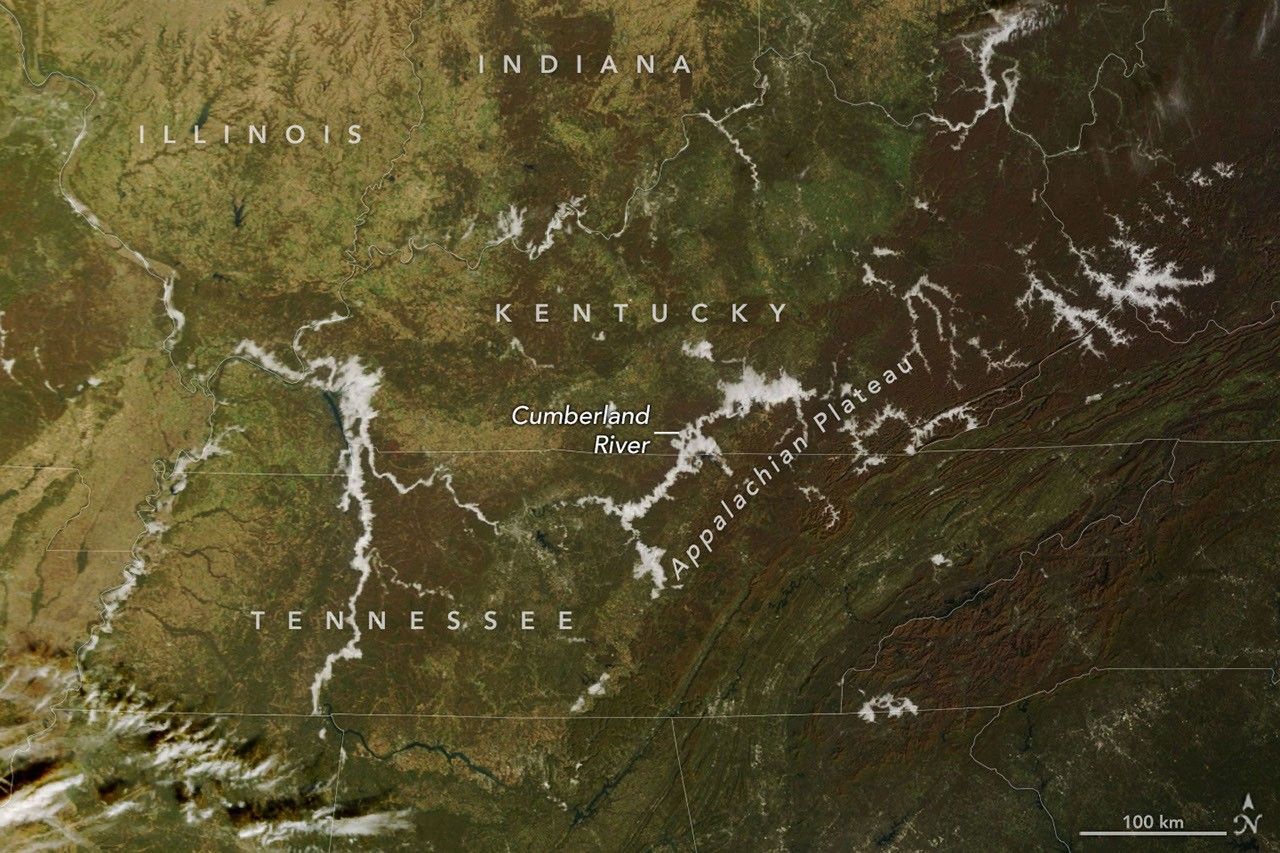
Seasonal transition triggers predictable shifts in planetary boundary layer dynamics. According to NASA Breaking News, the onset of autumn has initiated widespread valley fog across the Northern Hemisphere. This phenomenon, captured by high-resolution Earth-observation sensors, serves as a primary indicator of shifting thermal gradients.
//The Mechanics of Radiation Fog
Valley fog—or radiation fog—is the product of specific meteorological variables. During clear autumn nights, the terrestrial surface loses heat via longwave radiation. The air directly above the ground cools rapidly; because cold air is denser than warm air, it descends and accumulates in low-lying topographical basins. As temperatures drop below the dew point, water vapor condenses into low-altitude stratus clouds confined by the surrounding terrain.
//Observation and Dissipation
Space-based imaging systems observe these formations as high-albedo structures filling the contours of mountain ranges and river valleys. The fog remains trapped until solar radiation penetrates the layer, warming the ground and inducing evaporation from the bottom up.
In addition to Earth-system monitoring, recent agency updates highlight critical milestones in off-world habitation. These include the completion of the CHAPEA Mission 2, where a crew spent 378 days in a simulated Martian environment, and the issuance of new contracts for Moon Base infrastructure and logistics. As NASA scales its Artemis initiatives, planetary science—from terrestrial weather patterns to lunar transport—remains a core priority for global space agencies.