Orbital Analysis: Comet PanSTARRs and Chromatic Bolide Intercept
A rare astronomical alignment captured by NASA features Comet PanSTARRs traversing the inner solar system alongside a distinctively colored 'rainbow' meteor.
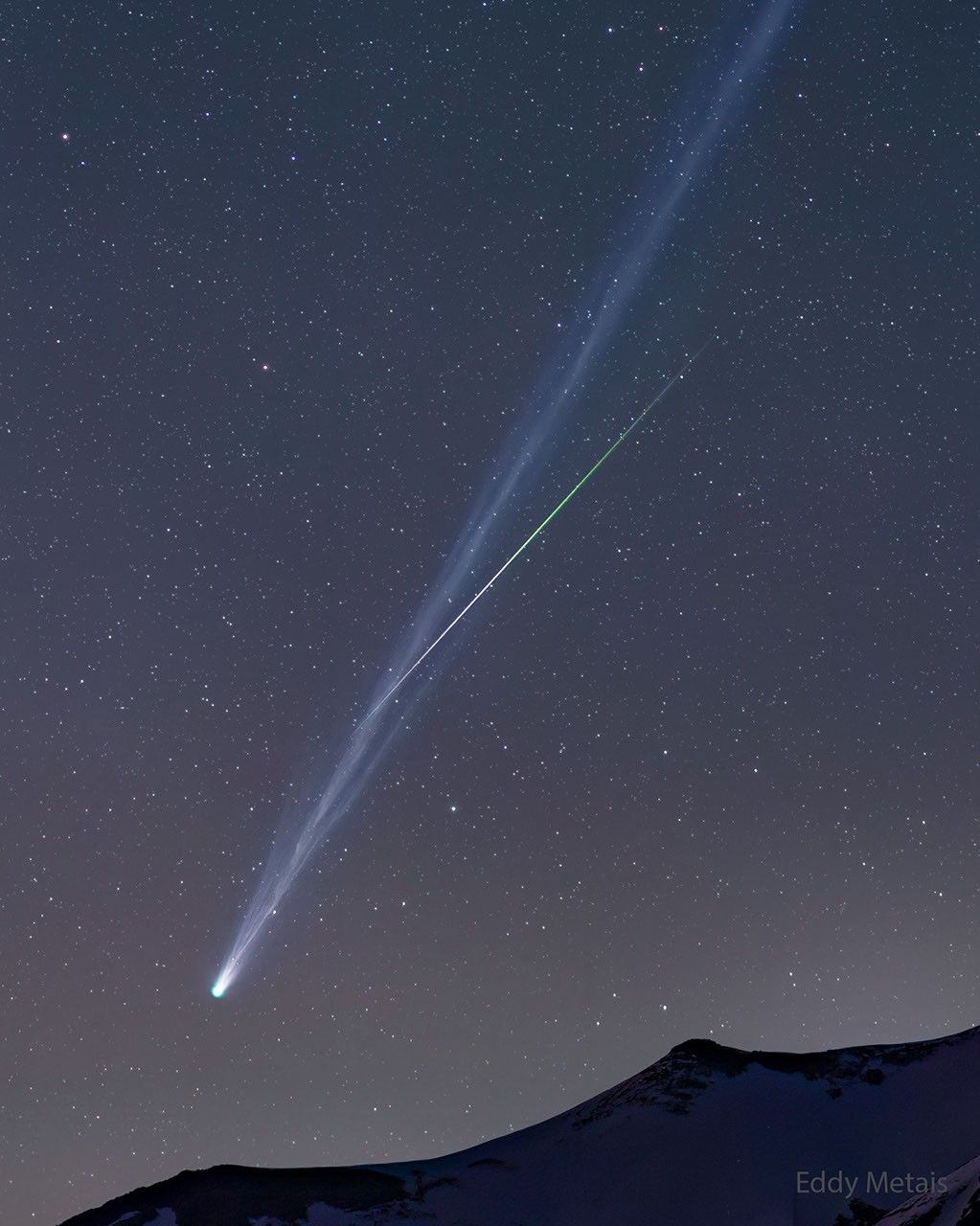
Technical Briefing: Celestial Convergence
Deep space monitoring systems have recorded a rare visual intersection involving Comet PanSTARRs and a high-velocity bolide, categorized as a "rainbow meteor." According to NASA Breaking News, the event—documented as the Astronomy Picture of the Day for 3 November 2026—highlights the complex atmospheric chemistry involved when extraterrestrial debris enters the terrestrial envelope.
The Comet: PanSTARRs
Comet PanSTARRs continues its trajectory through the inner solar system, exhibiting a visible coma and dust tail. These icy remnants of the early solar system serve as critical data points for understanding planetary formation. The comet’s presence provides a stable backdrop for transient phenomena, such as the meteor captured in this recent imaging sequence.
Spectral Signature: The Rainbow Meteor
The meteor in question earned its "rainbow" designation due to the shifting hues observed during its terminal descent. As the meteoroid disintegrated within the atmosphere, its constituent elements—likely including nickel, iron, and magnesium—ignited at varying temperatures. This process, known as ablation, creates a localized plasma trail that glows in different wavelengths. The resulting spectrum offers a chemical fingerprint of the object, revealing its mineralogical composition before total vaporization.
Operational Outlook
This intersection serves as a reminder of the dense kinetic environment surrounding Earth. While the comet remains at a safe distance, the meteor represents a successful atmospheric termination of minor space debris. For European observers and researchers at spacechannel.eu, such events underscore the necessity of continuous sky-survey initiatives like Pan-STARRS to track both long-period visitors and immediate atmospheric intruders.