Orbital Analysis: Barnes Ice Cap Reaches Critical Exposure
Satellite data confirms the Barnes Ice Cap in the Canadian Arctic has entered a high-ablation phase, losing its protective firn layer and exposing ancient ice to accelerated melting.
DATA OVERVIEW
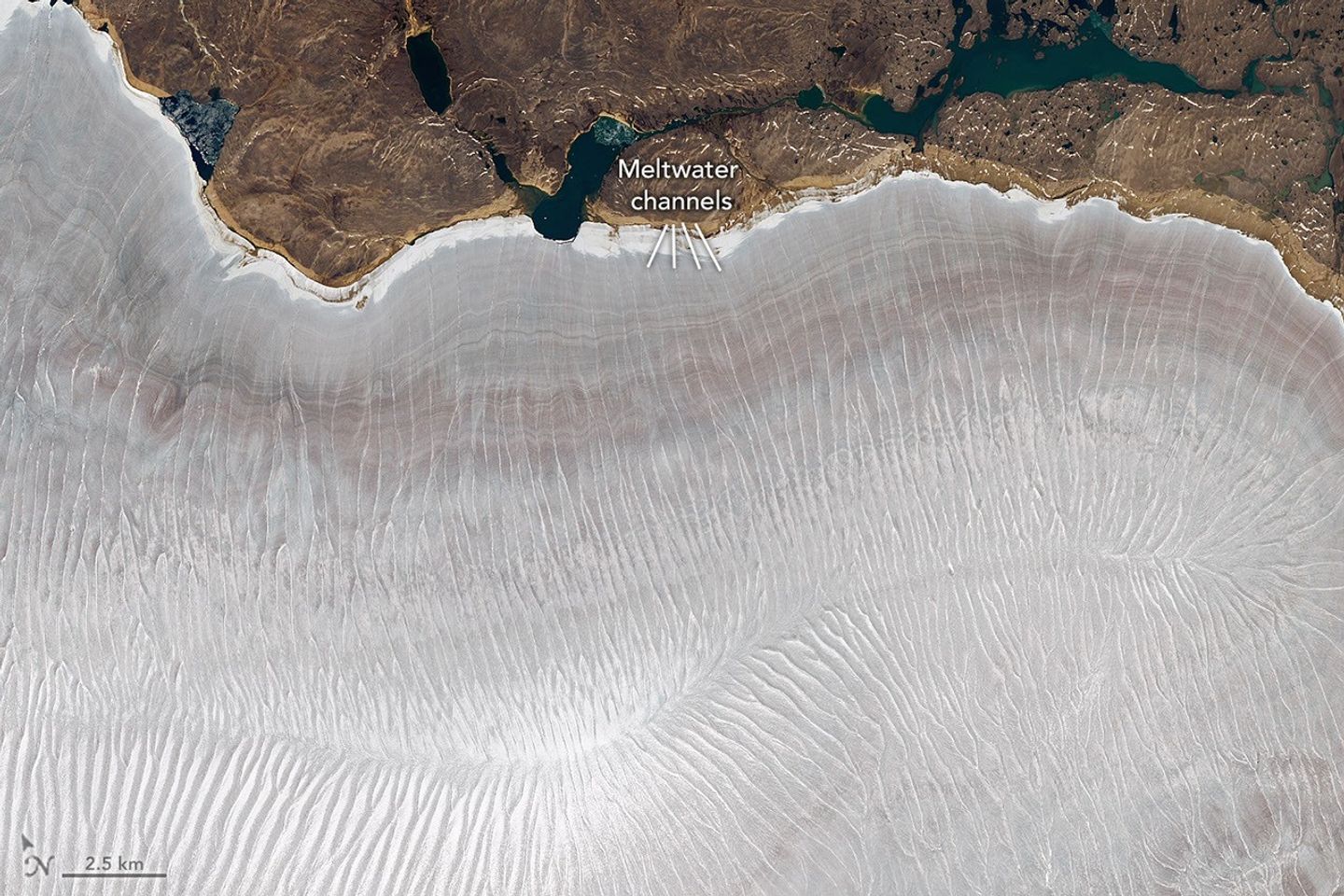
Satellite monitoring systems have identified a significant thermal event in the Canadian Arctic. According to NASA Breaking News, the Barnes Ice Cap on Baffin Island has undergone an unusually intense melting season, resulting in a nearly complete loss of its seasonal snow cover. This exposure reveals the dark, ancient glacial ice beneath, a state termed as 'bare ice' by orbital observation teams.
CRITICAL ANOMALIES
The Barnes Ice Cap is a geological relic, a remnant of the Laurentide Ice Sheet that dominated North America during the last glacial period. Unlike many glaciers that rely on high-altitude accumulation, this ice cap survives primarily due to its massive cold thermal inertia. However, thermal sensors indicate that the 'firn'—the porous, multi-year snow layer that acts as a protective buffer—has been severely depleted.
Without this reflective snow layer, the albedo of the ice cap drops significantly. The exposed dark ice absorbs a higher percentage of solar radiation, triggering a feedback loop that accelerates mass loss. Current telemetry suggests that if current warming trends persist, the ice cap faces total dissipation within the next few centuries.
SYSTEM IMPACT
This event is not isolated. The degradation of the Barnes Ice Cap serves as a high-fidelity indicator for the stability of other Arctic ice masses. As the structural integrity of these ancient reservoirs weakens, global sea-level models must be recalibrated to account for the increased meltwater discharge into the North Atlantic.