Orbital Alignment: The Ganymede-Io Occultation
A rare celestial alignment brings Jupiter's largest moons, Ganymede and Io, into a mutual occultation, providing critical data for Jovian orbital mechanics.
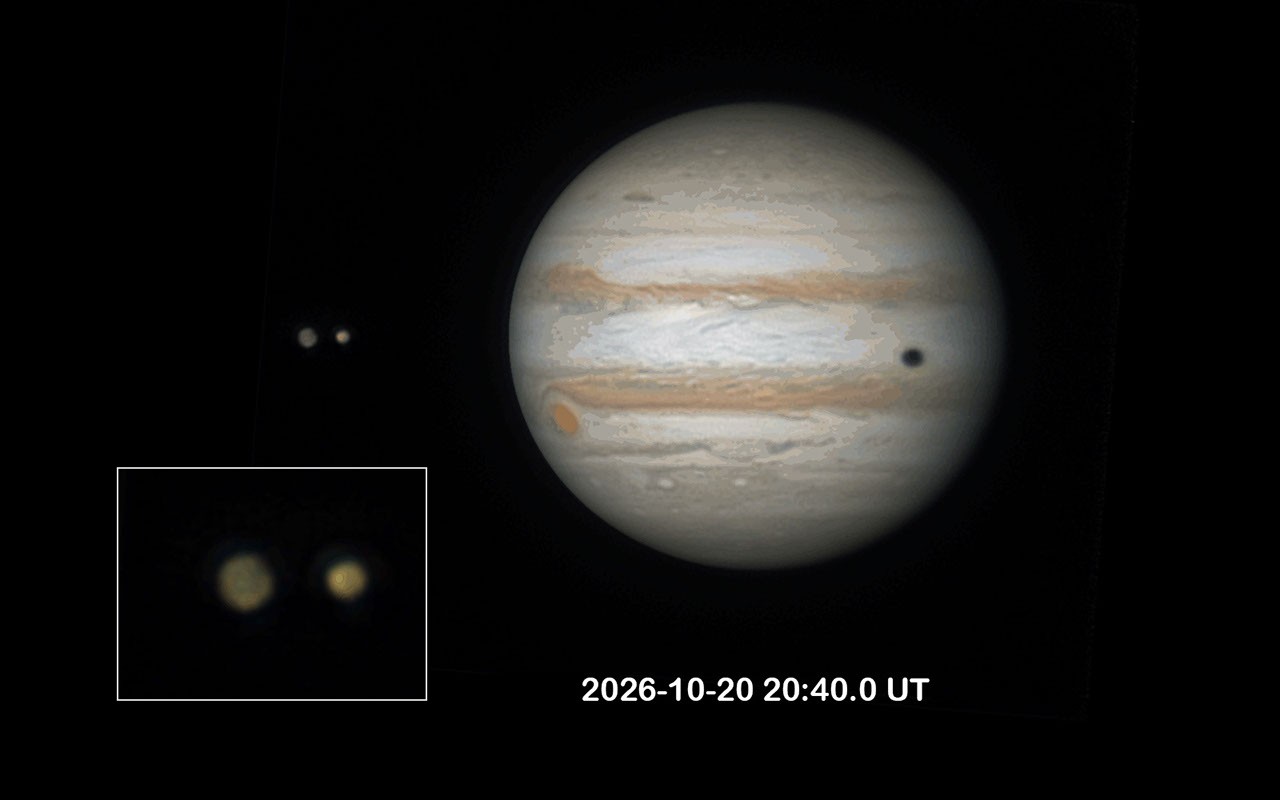
Jovian System Alert
Deep-space monitoring has confirmed a rare celestial event scheduled for the Jovian theater. According to NASA Breaking News, observers are tracking the mutual occultation of Ganymede and Io. This rare alignment occurs when one moon passes directly in front of the other from the perspective of an observer, a phenomenon dictated by the precise orbital resonance of the Galilean system.
Geometric Precision
During this event, Ganymede—the largest moon in the solar system—will partially or fully obscure Io. Unlike standard eclipses involving the Sun, mutual occultations between moons require a specific tilt of the Jovian orbital plane relative to the Earth. These windows of opportunity only open roughly every six years when the Jovian equinox approaches, allowing for high-fidelity light-curve data collection.
Scientific Significance
For researchers at organizations like ESA and NASA, these events are more than mere visual spectacles. By measuring the decrease in total reflected light as one moon shadows the other, scientists can refine the ephemerides of these icy worlds. This data is critical for the navigation of upcoming deep-space probes, including the JUICE (JUpiter ICy moons Explorer) and Europa Clipper missions, which require millisecond precision for gravity-assist maneuvers.
Observation Logistics
Ground-based assets and orbital telescopes will be synchronized to capture the transition. The data harvested from the thermal and visual signatures during the overlap will assist in mapping surface features and potential atmospheric variations on Io, the most volcanically active body in our system. As the Swift mission concludes its tenure, the focus shifts toward these long-range planetary interactions to bolster our understanding of the outer solar system's architecture.