Orbital Alignment: Lunar Occultation of Venus Observed
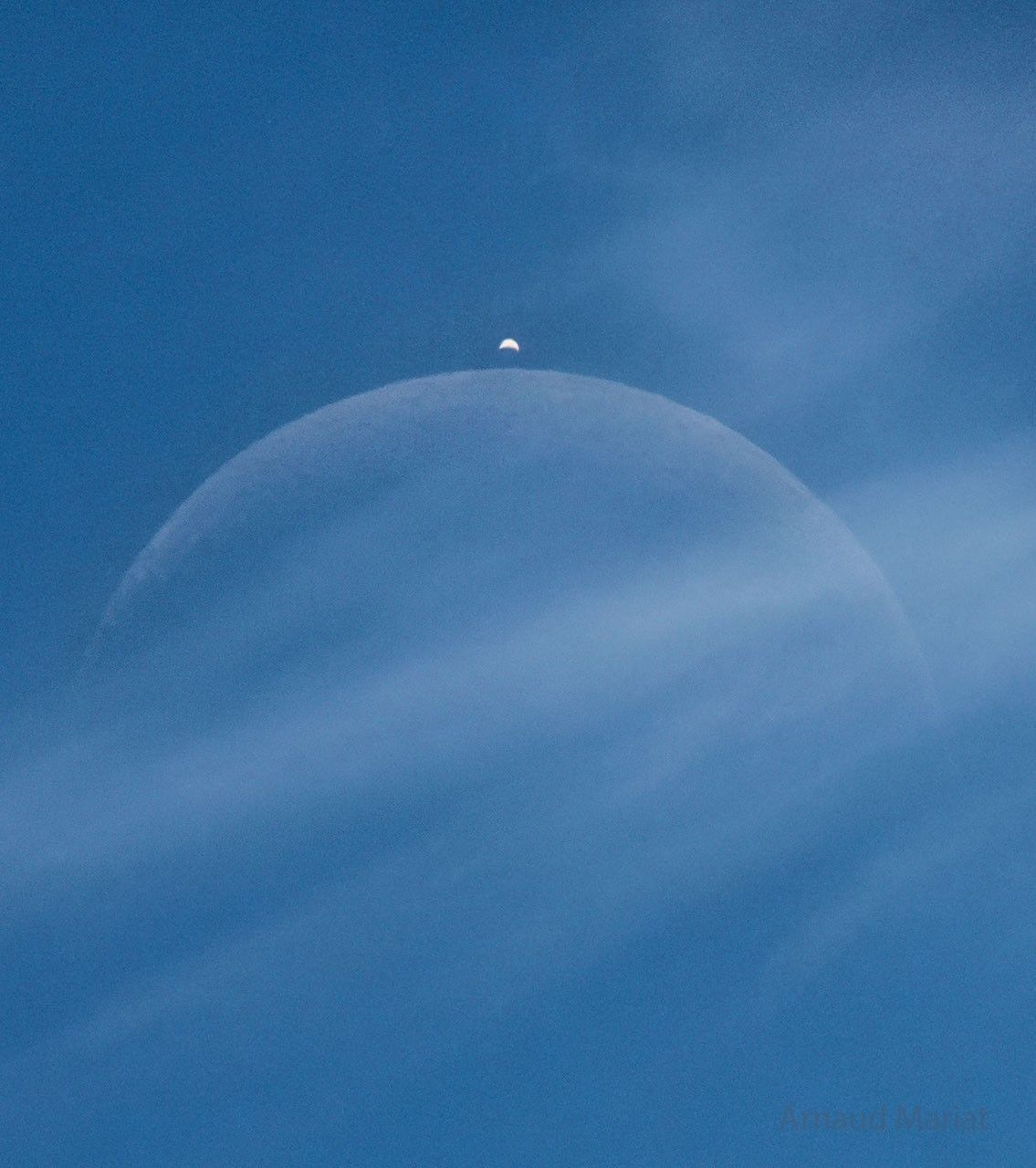
A rare daytime astronomical event occurred on September 15, 2026, as the Moon eclipsed Venus in a precise celestial occultation recorded by NASA observers.
DATA FEED: CELESTIAL MECHANICS
On 15 September 2026, terrestrial observers documented a significant orbital alignment: a daytime occultation of Venus by the Moon. While traditional eclipses involve the Sun, this event—a daytime eclipse of a planet—demonstrates the precise geometric dance of the inner solar system.
According to NASA Breaking News, the event provided a unique high-contrast observation window. Unlike nocturnal observations where the brilliance of Venus can overwhelm sensitive optics, the daylight context allowed for a distinct visual separation of the lunar limb against the planetary disk. The Moon, acting as a natural coronagraph, momentarily obstructed the second planet from the Sun, providing valuable data on light diffraction and orbital timing.
MISSION CONTEXT
This event coincides with a period of intensified focus on lunar and planetary science. Current agency priorities, including the Artemis Accords and collaborative satellite missions with European partners, emphasize the necessity of precise celestial tracking. Observations of occultations remain a foundational method for verifying the ephemerides—the calculated positions of celestial bodies—required for deep-space navigation.
ANALYSIS
The ability to track Venus during a daylight lunar transit highlights the advancement in ground-based imaging and the clarity of the current orbital period. For mission planners, these events are more than visual curiosities; they are calibration milestones for the sensors that will eventually guide craft to the lunar surface and beyond. No anomalies were reported during the transit, and the data has been integrated into the broader planetary science database for future mission planning.