Operation Wind-Scan: ESA Greenlights Aeolus-2 Mission
ESA has officially authorized the development of Aeolus-2, ensuring the continuity of global horizontal wind vector profiling from orbit following the success of its 2018 predecessor.
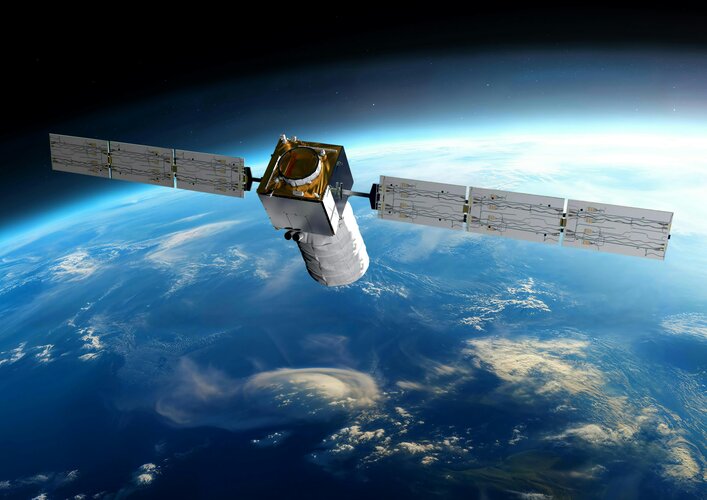
Mission Continuity Confirmed
Following the operational success and end-of-life deorbiting of the pioneering Aeolus satellite, the European Space Agency (ESA) has formally authorized the successor mission: Aeolus-2. This secondary phase ensures the long-term provision of global wind-profile data, a critical metric for numerical weather prediction and climate monitoring.
Strategic Industrial Alignment
According to ESA, the authorization triggers a primary contract with Airbus Defence and Space as the lead industrial partner. The mission will utilize a direct-detection Doppler wind lidar—an evolution of the Aladin instrument—refined for higher reliability and operational longevity compared to the technology demonstrator launched in 2018.
Operational Parameters
Aeolus-2 will operate as a collaborative program between ESA and EUMETSAT. While ESA manages the initial development and satellite procurement, EUMETSAT will oversee the operational lifespan and data dissemination to meteorological services across Europe and its partner nations.
Data Integrity and Climate Science
The mission is designed to fill a persistent gap in the Global Observing System. By measuring wind speeds in the clear atmosphere across various altitudes, Aeolus-2 will provide high-resolution vertical profiles that terrestrial systems and passive satellite sensors cannot replicate. These datasets are vital for tracking atmospheric circulation patterns and improving the accuracy of extreme weather alerts.
Technical specifications indicate that the new generation will feature an optimized power supply and enhanced thermal management to mitigate the laser degradation issues observed early in the first mission's lifecycle. With procurement now authorized, the mission remains on track for its projected launch window.