Observational Log: The Nancy Grace Roman Space Telescope Capabilities
Scheduled for mid-2020s deployment, the Nancy Grace Roman Space Telescope will provide a wide-field view of the cosmos, targeting dark energy, exoplanet census, and galactic evolution.
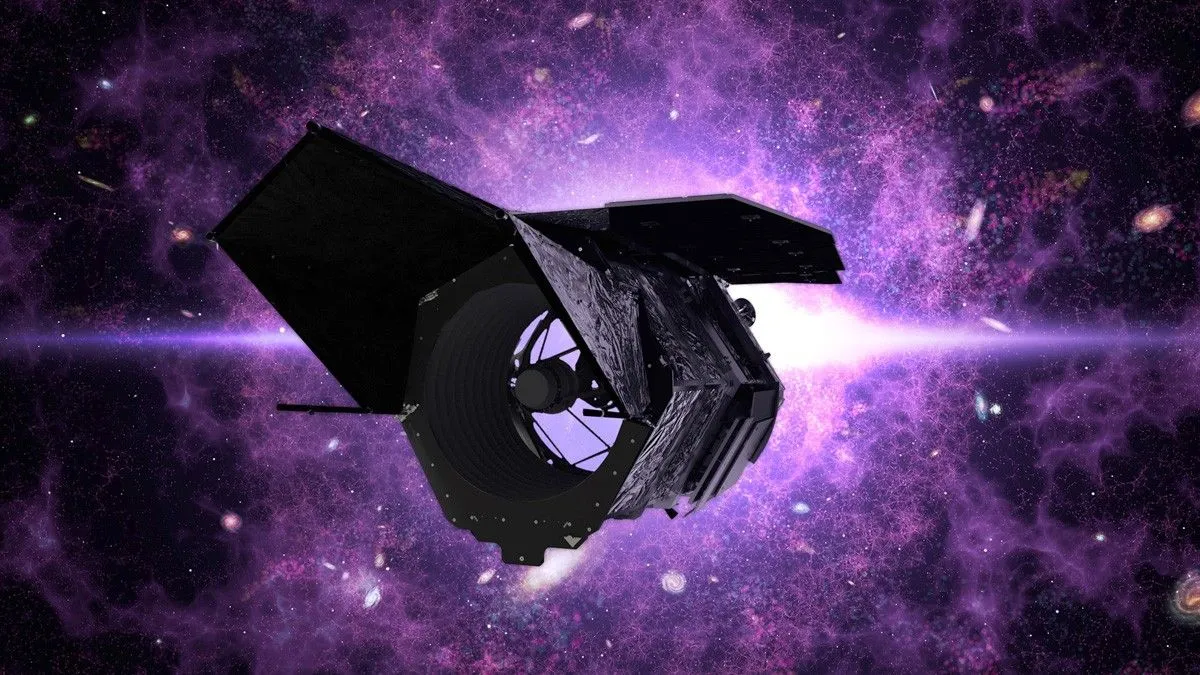
Technical Briefing: Wide-Field Infrared Survey
According to NASA Breaking News, the Nancy Grace Roman Space Telescope represents the next evolution in orbital infrared observation. Formerly known as the Wide Field Infrared Survey Telescope (WFIRST), this observatory is designed to address fundamental questions regarding dark energy and the distribution of exoplanets throughout the Milky Way.
Strategic Comparison
While the Roman Space Telescope shares a mirror size with the Hubble Space Telescope (2.4 meters), its primary advantage lies in its field of view. The instrument is capable of capturing images with 100 times the area of Hubble’s infrared sensor. This allows Roman to survey vast regions of the sky in a single exposure, significantly increasing the efficiency of deep-space data collection.
Mission Objectives
1. Dark Energy Analysis: By mapping the expansion history of the universe, Roman will test theories of cosmic acceleration.
2. Exoplanet Surveys: Utilizing gravitational microlensing, the telescope will identify planets orbiting stars thousands of light-years away.
3. Galactic Inventory: The wide-field view will facilitate a comprehensive census of stars and planetary systems in the local galaxy.
Instrumental Capabilities
The observatory features a Coronagraph Instrument, designed to block starlight and reveal the faint signatures of orbiting planets. This technology is critical for direct imaging and atmospheric characterization of gas giants and smaller rocky worlds. The mission is slated for launch by May 2027, positioning it as a cornerstone of next-generation astrophysical research.