Nuri Launch Deploys AI Guardian Module for Autonomous Spacecraft
South Korea’s Nuri rocket has successfully deployed 15 satellites, including a mission-critical AI verification module from ArbaLabs designed to monitor autonomous edge-compute systems.
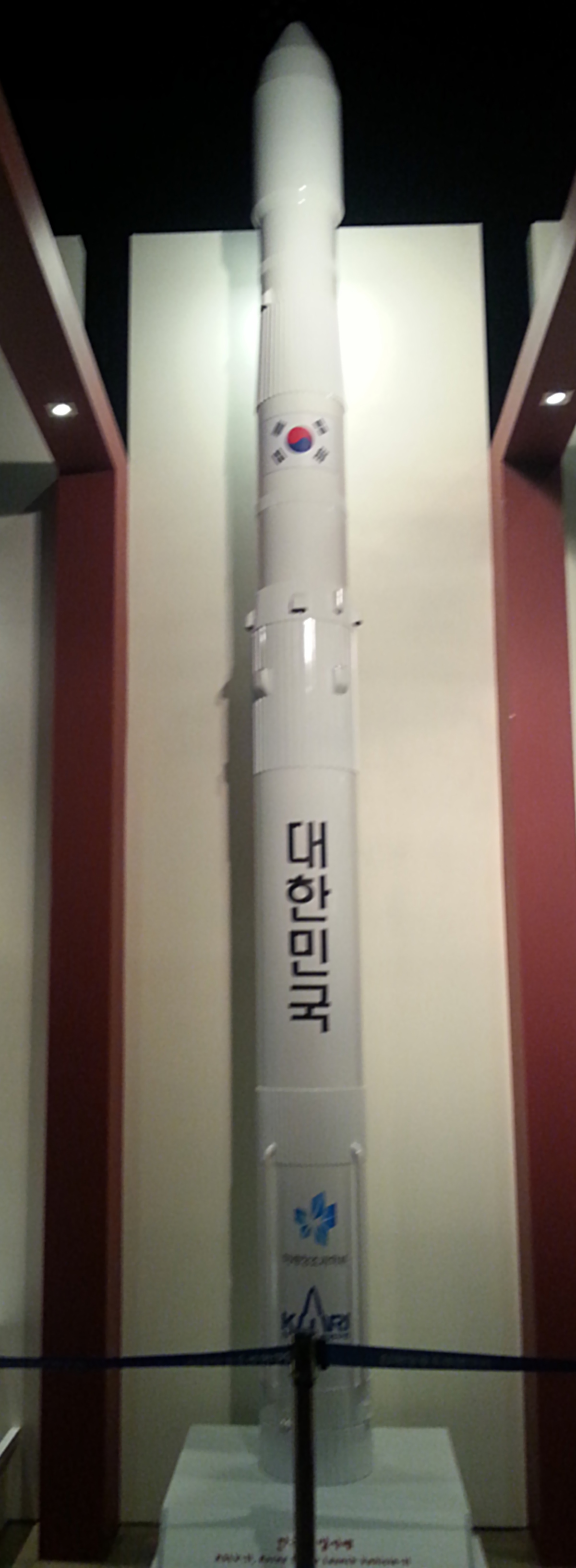
Mission Profile: Nuri Flight 5
South Korea has reinforced its orbital access capabilities with the fifth launch of the three-stage Nuri rocket. Lifting off from the Naro Space Center, the vehicle successfully deployed a 15-satellite manifest into orbit. The payload suite included five NEONSAT Earth observation satellites and 10 cubesats focused on space medicine, optical communications, and weather telemetry.
Hardening COTS Hardware
Among the deployed assets is Space & Bean’s SD-1Sat, a 3U cubesat serving as a testbed for a proprietary protective enclosure. According to Payload, the mission aims to prove that commercial off-the-shelf (COTS) components can survive the vacuum, radiation, and thermal extremes of space when shielded by specialized housings. This could significantly lower the cost barrier for future satellite constellations by bypassing expensive space-rated processors.
The AI Watchdog: ArbaEdge
Integrated into the SD-1Sat is ArbaLabs’ ArbaEdge module, a diagnostic layer for autonomous systems. As satellite operators increasingly rely on edge-AI for real-time processing, the risk of "hallucinations" or corrupted outputs grows. ArbaEdge creates a digital mirror of the AI's internal processes to verify integrity and sign output evidence.
ArbaLabs CEO Ashley Reeves noted to Payload that while most industry players are focused on deploying AI, few are implementing checks and balances. The module’s verification data is limited to two megabytes, preventing the wasteful downlink of corrupted datasets. Beyond orbit, ArbaLabs views space as a "beachhead" for the tech, with future applications planned for autonomous drones and humanoid robotics—including the potential for hardware-level "kill-switches" to override malfunctioning systems.