Nuclear Revival: SpaceX Transporter-17 Deploys First Commercial Atomic Payload
SpaceX's Transporter-17 mission has successfully orbited City Labs’ BOHR satellite, marking the first commercial deployment of a nuclear betavoltaic battery in space history.
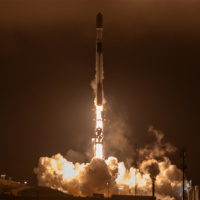
SpaceX’s Transporter-17 mission initiated more than just another orbital deployment cycle this morning. Lifting off from Vandenberg Space Force Base at 03:12, the Falcon 9 carried 81 payloads to Low Earth Orbit (LEO), headlined by the first commercial nuclear-powered satellite.
The Atomic Shift
According to Payload, the City Labs’ Betavoltaic Orbital High-Reliability (BOHR) satellite is a technical pathfinder. It utilizes a tritium-powered betavoltaic battery to generate electricity independent of solar exposure. While NASA has utilized nuclear energy for decades, City Labs CEO Peter Cabauy emphasizes that commercial scalability required navigating complex FAA regulatory channels, establishing a blueprint for future non-government atomic missions.
Strategic Utility
Beyond LEO, this technology aims for the lunar surface. City Labs intends to scale these tritium sources into radioisotope heating units. This would enable CLPS landers to survive the fourteen-day lunar night and operate in Permanently Shadowed Regions (PSRs) where solar power is non-existent.
Global Manifest
The mission also served as a broad industry cross-section. European contributions were notable, including the German Zentrum für Telematik’s TOM-1, -2, and -3 cubesats for 3D volcanic ash imaging, and ISISPACE’s GRITSS for geodetic research. Other key deployments included Finland’s ICEYE constellation expansion, FOSSA Systems’ 26th IoT satellite, and Planetary Labs' Pelican-11 tech demo.
The End of the Rideshare Era?
Despite the success, the future of the Transporter program remains in question. SpaceX is reportedly freezing reservations for the series after 2029, potentially pivoting its launch capacity toward Starlink and xAI. For the specialized and European small-sat community, this bottleneck represents a significant risk to future orbital access if sovereign launch alternatives fail to mature rapidly.