Nominees Pressure U.S. Space Acquisition For Speed And Commercial Integration
Trump administration nominees Erich Hernandez-Baquero and Roger Mason push for procurement reform and tightened Space Force-NRO cooperation during Senate confirmation hearings.
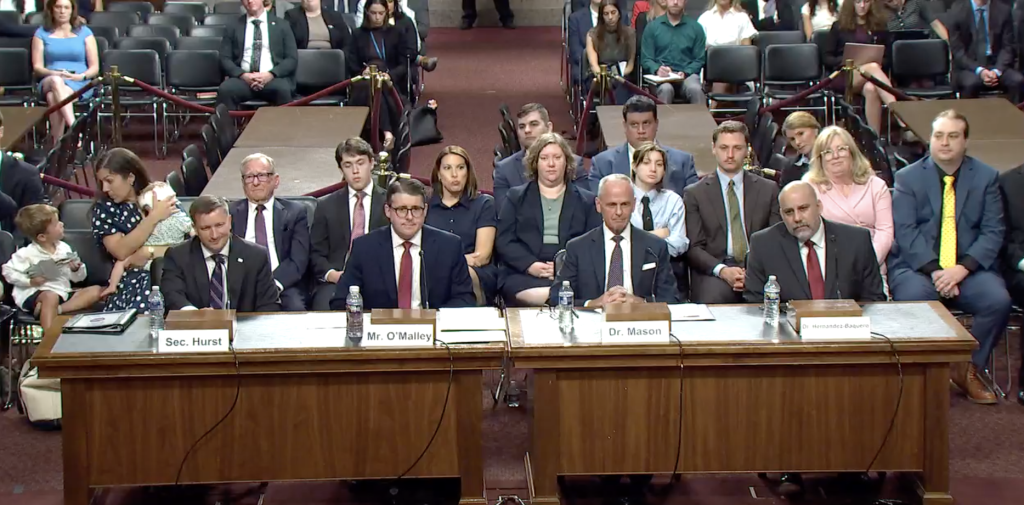
According to SpaceNews, the Senate Armed Services Committee (SASC) recently held confirmation hearings for key civilian leadership roles within the Department of the Air Force and the National Reconnaissance Office (NRO). Nominees Erich Hernandez-Baquero and Roger Mason signaled a strategic pivot toward accelerated acquisition and a "commercial-first" posture.
Strategic Realignment
Hernandez-Baquero, nominated as the Air Force’s top space acquisition official, outlined a mandate to reform procurement cycles. His focus rests on the newly established Portfolio Acquisition Executives (PAEs), a structure designed to manage mission areas rather than isolated programs. This is intended to eliminate silos between satellites, ground systems, and software, ensuring end-to-end operationality. He expressed specific concern regarding "legacy acquisitions" that lack the flexibility of modern digital engineering.
Intelligence-Military Fusion
Roger Mason, tapped to lead the NRO, addressed the evolving boundary between the spy agency and the Space Force. Central to this is the transition of moving-target surveillance (GMTI and AMTI) from air to orbit. Mason defended current cooperation as "good governance," emphasizing that the NRO’s role is to adapt existing specialized technology for military use rather than duplicating efforts.
The Commercial Mandate
Both nominees underscored that commercial capabilities are no longer supplementary but essential. Despite Chairman Roger Wicker’s observation that Pentagon commercial spending has dipped by 1%, Mason insisted that future architectures must integrate proliferated small-satellite constellations with specialized government assets. Additionally, the hearing touched on the Golden Dome missile-defense initiative, with Hernandez-Baquero committing to cost-scaling assessments for its space-based interceptor layer. Mason concluded that the sheer volume of data from these hybrid architectures makes the integration of AI non-negotiable for future mission success.