Next Generation of Planetary Scientists Learn Public Engagement Skills
FORCE is a world-class laboratory that uses high-pressure experimental equipment to recreate the extreme conditions found deep within Earth and other planetary bodies, enabling researchers to better understand how planets form, evolve, and behave under immense pressures.
Search
Suggested Searches
- Climate Change
- Artemis
- Expedition 64
- Mars perseverance
- SpaceX Crew-2
- International Space Station
- View All Topics A-Z
- Home
- Missions
- Humans in Space
- Earth
- The Solar System
- The Universe
- Science
- Aeronautics
- Technology
- Learning Resources
- About NASA
- Español
Highlights
  
Back
- Search All NASA Missions
- A to Z List of Missions
- Upcoming Launches and Landings
- Spaceships and Rockets
- Communicating with Missions
- Artemis
- James Webb Space Telescope
- Hubble Space Telescope
- International Space Station
- OSIRIS-REx
- Explore Earth Science
- Climate Change
- Earth, Our Planet
- Earth Science in Action
- Earth Multimedia
- Earth Data
- Earth Science Researchers
- The Sun
- Mercury
- Venus
- Earth
- The Moon
- Mars
- Jupiter
- Saturn
- Uranus
- Neptune
- Pluto & Dwarf Planets
- Asteroids, Comets & Meteors
- The Kuiper Belt
- The Oort Cloud
- Skywatching
- Exoplanets
- The Search for Life in the Universe
- Stars
- Galaxies
- Black Holes
- The Big Bang
- Dark Matter
- Dark Energy
- Earth Science
- Planetary Science
- Astrophysics & Space Science
- The Sun & Heliophysics
- Biological & Physical Sciences
- Lunar Science
- Citizen Science
- Astromaterials
- Aeronautics Research
- Human Space Travel Research
- Science in the Air
- NASA Aircraft
- Flight Innovation
- Supersonic Flight
- Air Traffic Solutions
- Green Aviation Tech
- Drones & You
- Technology Transfer & Spinoffs
- Space Travel Technology
- Technology Living in Space
- Manufacturing and Materials
- Robotics
- Science Instruments
- Computing
- For Kids and Students
- For Educators
- For Colleges and Universities
- For Professionals
- Science for Everyone
- Requests for Exhibits, Artifacts, or Speakers
- STEM Engagement at NASA
- NASA's Impacts
- Centers and Facilities
- Directorates
- Organizations
- People of NASA
- Careers
- Internships
- Our History
- Doing Business with NASA
- Get Involved
- Contact
- NASA+
- Images
- NASA Live
- NASA Apps
- Podcasts
- Image of the Day
- e-Books
- 3D Resources
- Interactives
- STEM Multimedia
- NASA Brand & Usage Guidelines
Highlights
  
Highlights
  
Highlights
  
Highlights
  
Highlights
  
Highlights
  
Highlights
  
Highlights
  
Highlights

Highlights
  
Highlights
  
Explore This Section
3 min read
# Next Generation of Planetary Scientists Learn Public Engagement Skills
!The headshot image of NASA Science Editorial Team
NASA Science Editorial Team
Aug 17, 2026
Article
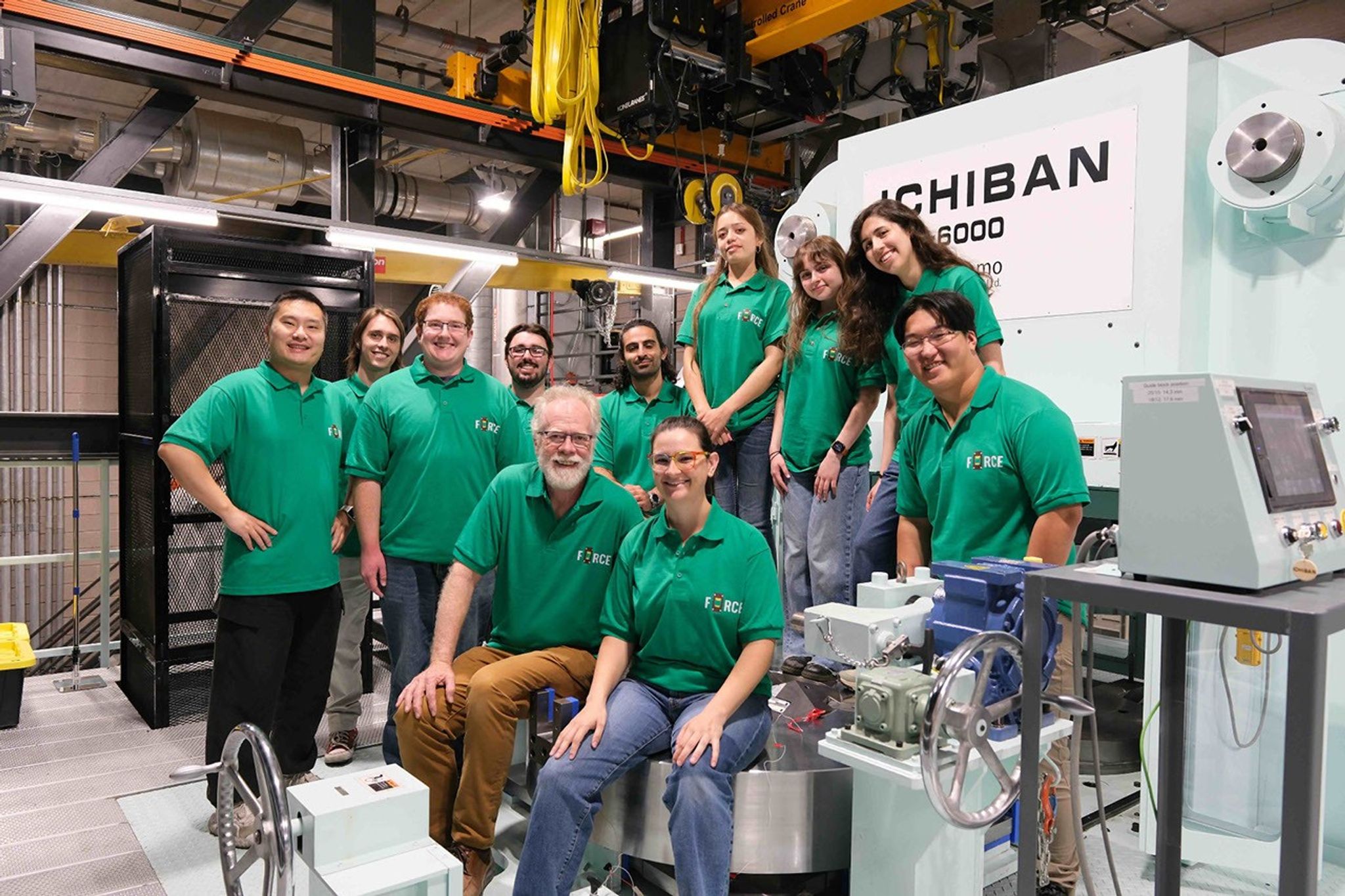
Group photo of undergraduate research interns and FORCE leaders standing together beside the high-pressure laboratory equipment.
The NASA Science Mission Directorate (SMD) Community of Practice for Education (SCoPE) – part of the NASA Science Activation (SciAct) Program portfolio – enables Earth and Space Science and Engineering Subject Matter Experts (SMEs) – especially NASA-funded SMEs – to efficiently and effectively share their science with support from SciAct education experts.
In Summer 2026, NASA SCoPE partnered with Arizona State University's Facility for Open Research in a Compressed Environment (FORCE) Summer School to help seven undergraduate student interns build the science communication skills needed to share their research with a variety of audiences. FORCE is a world-class laboratory that uses high-pressure experimental equipment to recreate the extreme conditions found deep within Earth and other planetary bodies, enabling researchers to better understand how planets form, evolve, and behave under immense pressures.
As part of the Summer School, SCoPE facilitated two hands-on workshops on June 25 and 26, followed by office hours the following week, to help interns translate their technical research into compelling stories for non-expert audiences. The training focused on identifying the central themes of their work, developing clear and engaging messages, planning effective visitor interactions, and thinking through the logistics of public engagement. Interns also received guidance on preparing both their research posters and individual outreach stations.
The training culminated in two complementary outreach experiences. The first was the FORCE Open House, which welcomed approximately 50 members of the general public for an inside look at the laboratory. Visitors toured the facility, met the research team, explored the specialized equipment used to simulate the interiors of Earth and other planets, and interacted with interns at themed outreach stations designed to explain the science behind the experiments in accessible, engaging ways.
At the second event, a poster session for ASU faculty, staff, and students, the interns presented their research, providing an opportunity to discuss their scientific findings with members of the university community and receive feedback on their presentations.
By integrating science communication training into the Summer School experience, NASA SCoPE helped equip emerging planetary scientists with practical skills for engaging both scientific peers and public audiences. The poster session and Open House demonstrated how thoughtful communication training can strengthen researchers' confidence while building stronger connections between cutting-edge planetary science and the communities it serves.
NASA SCoPE is supported by NASA cooperative agreement award number 80NSSC21M0006 and helps enrich and enhance the impact of the NASA Science Activation Program portfolio, which connects learners with authentic NASA science experiences through partnerships with educators and community organizations.
Share
Details
Last Updated
Aug 17, 2026
Related Terms
- Science Activation
- Earth Science
- For Colleges & Universities
- Opportunities For Educators to Get Involved
- Planetary Science
Explore More


Keep Exploring
Discover More Topics From NASA
James Webb Space Telescope \\
\\
Webb is the premier observatory of the next decade, serving thousands of astronomers worldwide. It studies every phase in the…\\
\\
 Perseverance Rover \\
\\
This rover and its aerial sidekick were assigned to study the geology of Mars and seek signs of ancient microbial…\\
\\
 Parker Solar Probe \\
\\
On a mission to “touch the Sun,” NASA's Parker Solar Probe became the first spacecraft to fly through the corona…\\
\\
 Juno \\
\\
NASA’s Juno spacecraft entered orbit around Jupiter in 2016, the first explorer to peer below the planet's dense clouds to…\\
\\

Δ
Did you find what you were looking for?(Required)
Yes
No
Partly
What were you looking for?(Required)
0 of 1000 max characters
What were you hoping to accomplish by visiting our website?(Required)
0 of 3000 max characters
×
Notifications