NEUTRON SECURED: KEPLER LOCKS 2028 OPTICAL RELAY DEPLOYMENT
Kepler Communications has contracted Rocket Lab’s medium-lift Neutron vehicle for a dedicated 2028 launch, marking a critical capacity shift toward 100 Gbps optical data relay.
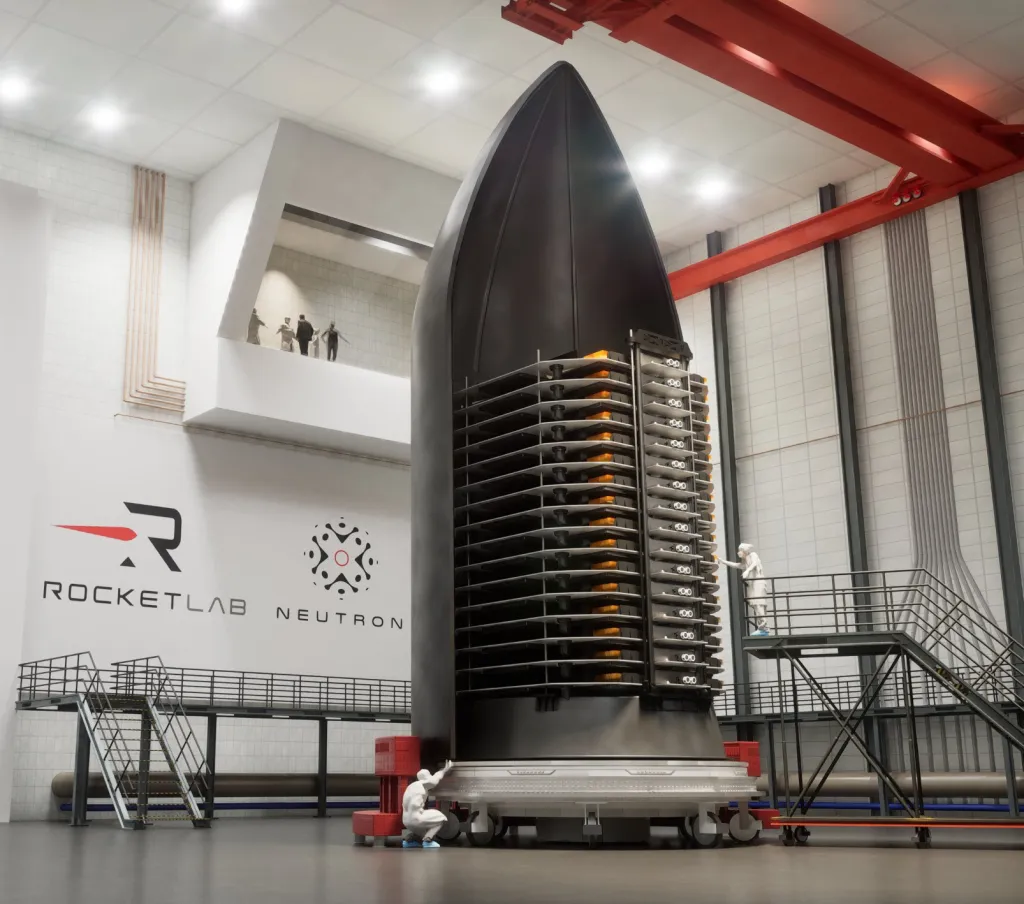
Terminal Entry: Launch Manifest Update
Canadian operator Kepler Communications has formalized a launch agreement with Rocket Lab to utilize the upcoming Neutron vehicle for a dedicated mission in 2028. According to SpaceNews, this contract marks a pivotal transition for Kepler as it moves away from rideshare agreements on platforms like the SpaceX Falcon 9 to secure dedicated orbital injection for its next-generation constellation.
Operational Shift: Tranche 2 Readiness
Kepler’s expansion focuses on high-speed optical relay capabilities. While the current Tranche 1 network consists of 300kg satellites providing 2.5 Gbps links, the upcoming Tranche 2 hardware is designed to scale throughput to 100 Gbps. This second generation remains backward-compatible while significantly increasing on-orbit compute and hosted payload capacity.
Strategic Alliances
The 2028 launch manifest is also a critical component of the European Space Agency’s HydRON program. Kepler is developing 10 satellites for this initiative, which aims to demonstrate a multi-orbit, terabit-per-second optical transport system—essentially extending terrestrial fiber-optic speeds into the vacuum of space.
Launch Vehicle Specs
Rocket Lab’s Neutron is a medium-lift reusable vehicle capable of hauling 13,000 kg to Low Earth Orbit (LEO). This capacity is essential for Kepler’s ramp-up as it transitions from its legacy 12kg IoT spacecraft to the heavier, sensor-rich optical relays. Although Neutron’s debut has been adjusted to late 2026 following a testing failure earlier this year, the 2028 manifest remains a cornerstone of Rocket Lab’s commercial backlog, alongside major contracts for the U.S. Space Force.