NEO Surveyor Integration: Precision Sunshade Assembly Confirmed
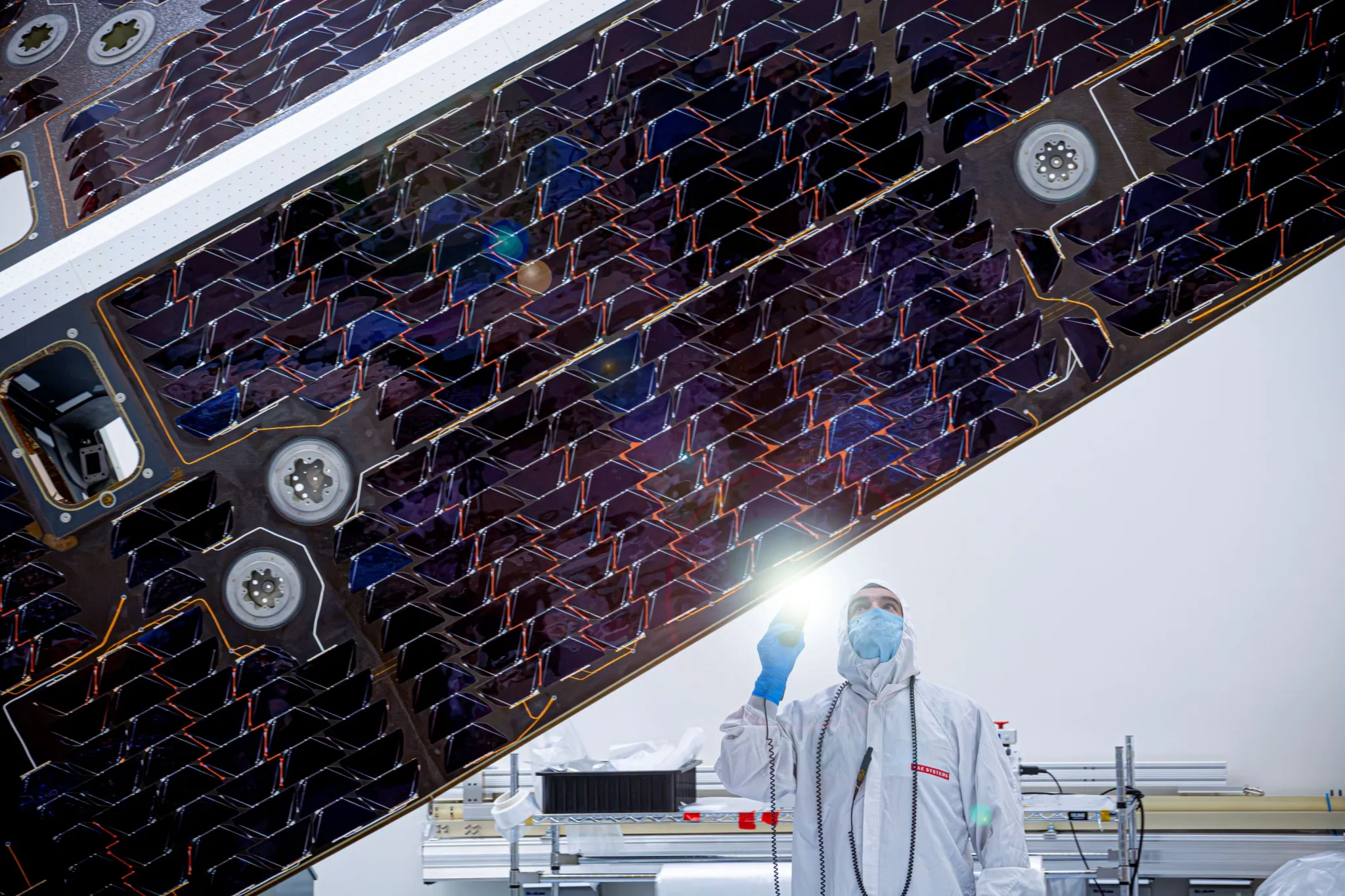
NASA engineers have finalized the integration of the NEO Surveyor's critical sunshade. This hardware is essential for maintaining the cryo-stable environment required to detect Near-Earth Objects.
Terminal Access: Planetary Defense Systems
Hardware integration for NASA’s Near-Earth Object (NEO) Surveyor has reached a critical milestone. According to NASA Breaking News, engineers at the Jet Propulsion Laboratory (JPL) have successfully completed the installation of the mission's primary sunshade.
This deployment-ready structure is not merely a glare shield; it is a thermal management system vital for deep-space infrared detection. The NEO Surveyor is designed to locate potentially hazardous asteroids and comets that approach Earth’s orbital path. To achieve this, the spacecraft must maintain extreme thermal stability. The sunshade functions by blocking massive thermal radiation from the Sun, allowing the telescope's sensitive infrared detectors to operate at temperatures below 40 Kelvin.
Operational Parameters
Data integrity for the NEO Surveyor depends on the telescope’s ability to remain colder than the objects it is searching for. The newly integrated sunshade facilitates this by shedding heat into the vacuum, ensuring the heat signature of the spacecraft does not overwhelm the faint infrared signals emitted by dark, carbon-rich asteroids.
Once positioned at the L1 Lagrange point, the NEO Surveyor will execute a five-year primary mission. The objective is the identification of 90% of near-Earth objects larger than 140 meters in diameter—a threshold designated by the U.S. Congress as capable of causing significant regional devastation.
With the sunshade secured, the craft enters the next phase of environmental testing. The mission remains on track for a launch window no earlier than 2027.