NEBULAR ANOMALIES: THE GHOSTS OF CASSIOPEIA REVEALED
New deep-space imaging has identified 'ghostly' nebular structures within the Cassiopeia constellation, marking a significant update to our mapping of the northern celestial hemisphere.
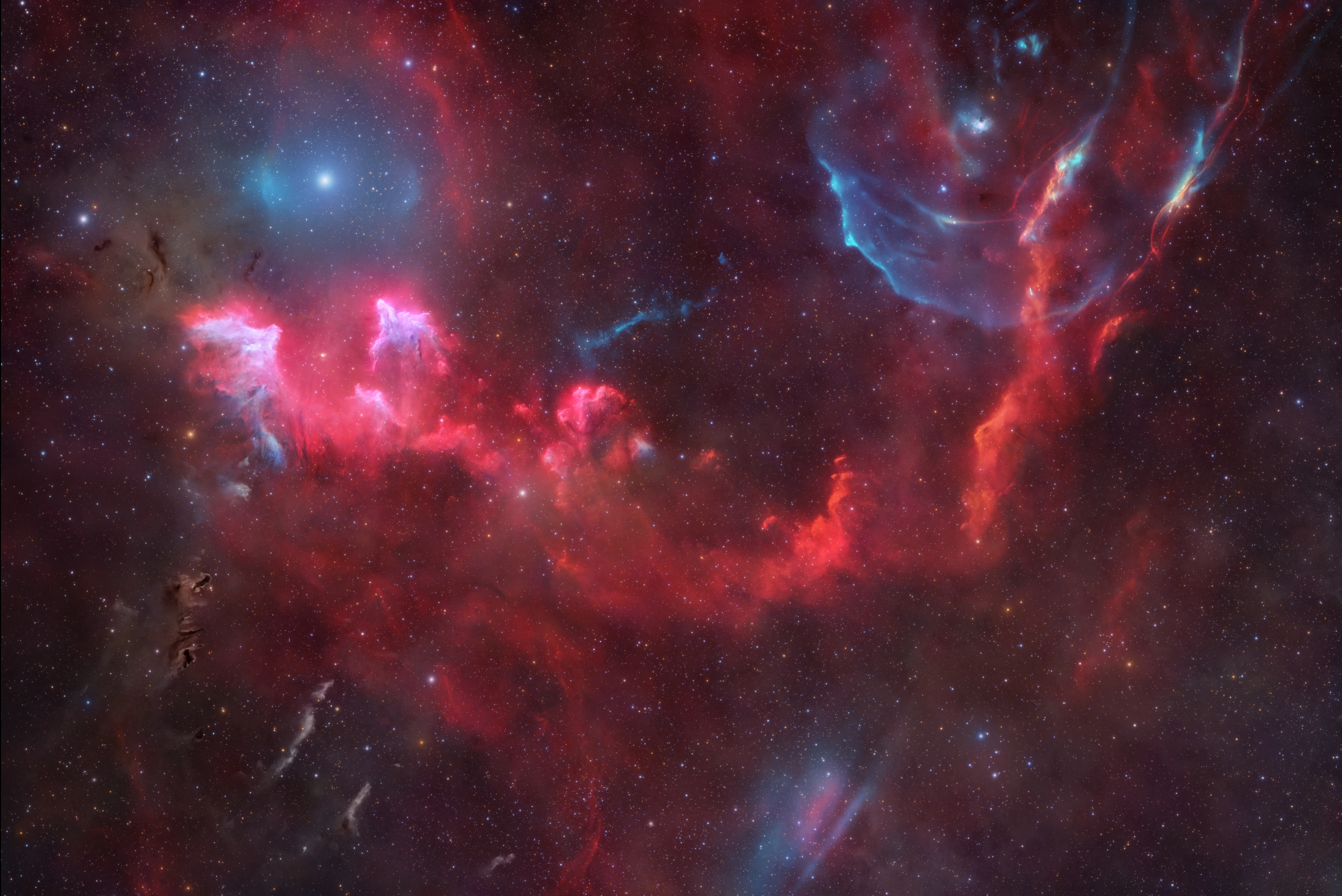
DATA FEED: CASSIOPEIA SECTOR
Latest imaging telemetry has confirmed the presence of distinct, spectral-like nebular structures within the Cassiopeia constellation. According to NASA Breaking News, these features—colloquially termed "Ghosts"—represent localized concentrations of interstellar dust and ionized gas illuminated by high-energy radiation from nearby stellar clusters.
Located approximately 550 light-years from Earth, these structures are technically classified as cometary globules. The high-resolution data indicates that the intense UV output from the star Gamma Cassiopeiae is actively eroding the surrounding hydrogen clouds, creating the ethereal, wispy visual profiles observed in recent captures. This process of photo-evaporation is critical to understanding the lifecycle of star-forming regions.
MISSION CONTEXT
While the primary focus remains on the Cassiopeia anomalies, the agency also reported logistical milestones regarding the SR-1 Freedom. Progress on the craft’s nuclear power module suggests a transition toward sustained, long-duration propulsion capabilities for deep-space sorties. Furthermore, the Nancy Grace Roman Space Telescope has been cited for its potential to further refine wide-field infrared surveys of such nebular regions once operational.
These findings come amidst a high-activity period for orbital observation, coinciding with the Orionid meteor shower and continued progress on the Artemis lunar architecture. The mapping of these "ghostly" structures provides vital data on the density and composition of the interstellar medium in our local galactic neighborhood.