NASA Sounding Rocket Penetrates Ionospheric Disruptions
A NASA suborbital mission has successfully deployed multi-point sensors inside ionospheric clouds to investigate why high-frequency radio and GPS signals experience sudden outages.
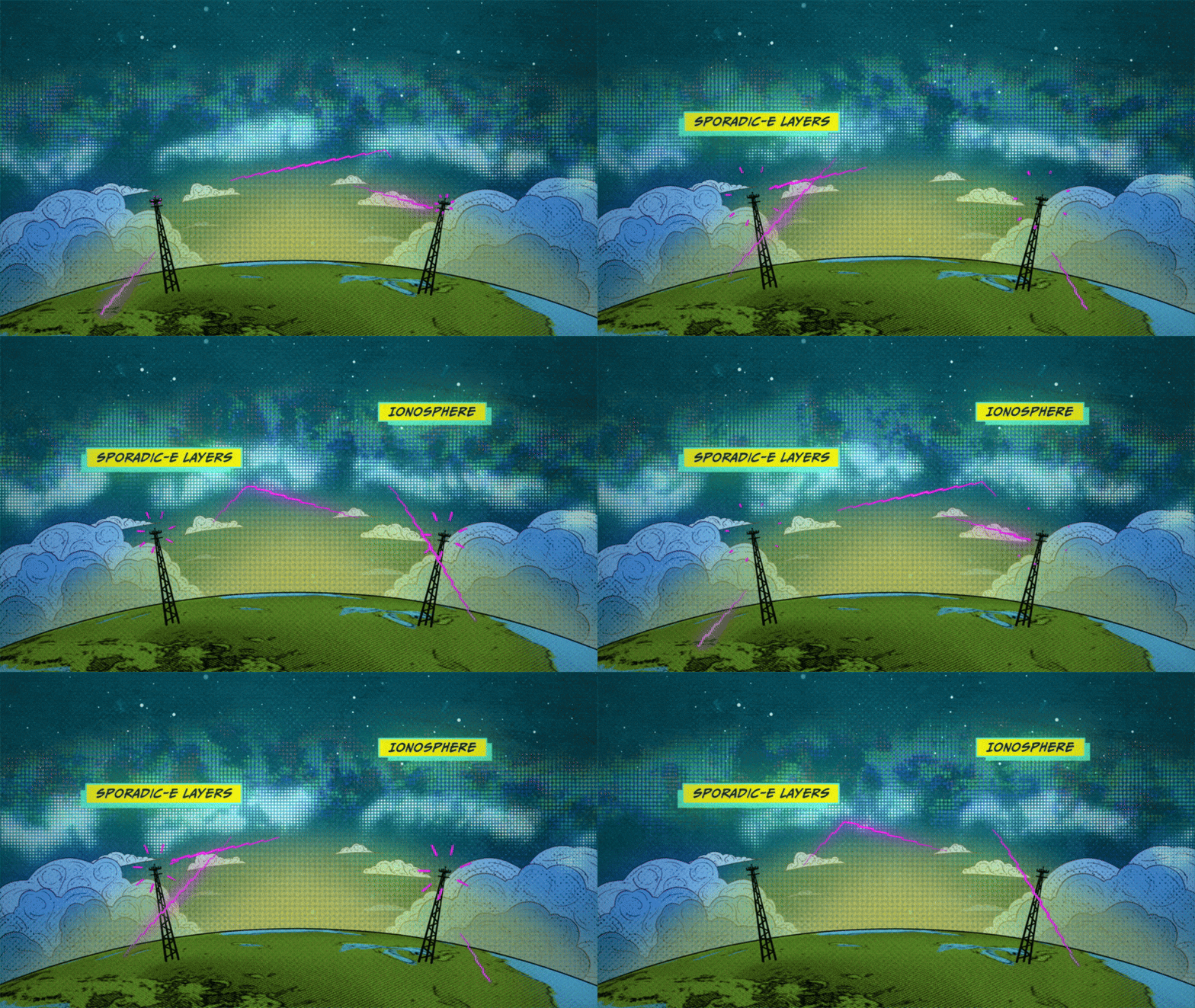
Mission Log: Ionospheric Penetration
NASA has deployed a specialized sounding rocket to investigate the volatile plasma structures of the Earth’s ionosphere. According to NASA Breaking News, the mission achieved the first multi-point measurements from within the specific plasma clouds that cause significant disruptions to high-frequency radio transmissions and Global Positioning System (GPS) signals.
Data Acquisition and Hardware
The mission utilized a suborbital sounding rocket, which provides a cost-effective platform for short-duration data collection in the upper atmosphere—an altitude too high for aircraft but too low for stable satellite orbits. During its trajectory, the vehicle released multiple independent sensor sub-payloads. This multi-point deployment allowed researchers to map the dimensions, density, and movement of plasma turbulence in real-time. Single-point observations from previous missions often struggle to distinguish between spatial variations and temporal changes; these synchronized sensors eliminate that ambiguity.
Scientific Implications
The target of the study is the Equatorial Spread F (ESF) phenomenon, where plasma densities become unstable and form "bubbles." These bubbles scatter radio waves, leading to communications blackouts. By capturing the internal dynamics of these clouds, the heliophysics team aims to refine predictive models for space weather. Reliable forecasting of these events is critical for maintaining robust communication links for aviation, maritime navigation, and satellite-based infrastructure.
NASA confirms that all sub-payloads successfully transmitted telemetry, providing a high-resolution snapshot of the ionospheric environment. This data will be integrated into global atmospheric models to improve orbital safety and signal reliability.