NASA Sets Coverage for August Northern Hemisphere Total Solar Eclipse
On Wednesday, Aug. 12, a total solar eclipse will be visible in parts of Greenland, Iceland, northern Russia, the Atlantic Ocean, Spain, and a small corner of Portugal. NASA will stream the eclipse live with views across the path and interviews with subject matter experts through
Search
Suggested Searches
- Climate Change
- Artemis
- Expedition 64
- Mars perseverance
- SpaceX Crew-2
- International Space Station
- View All Topics A-Z
- Home
- Missions
- Humans in Space
- Earth
- The Solar System
- The Universe
- Science
- Aeronautics
- Technology
- Learning Resources
- About NASA
- Español
Featured
  
Back
- Search All NASA Missions
- A to Z List of Missions
- Upcoming Launches and Landings
- Spaceships and Rockets
- Communicating with Missions
- Artemis
- James Webb Space Telescope
- Hubble Space Telescope
- International Space Station
- OSIRIS-Rex
- Explore Earth Science
- Climate Change
- Earth, Our Planet
- Earth Science in Action
- Earth Multimedia
- Earth Data
- Earth Science Researchers
- The Sun
- Mercury
- Venus
- Earth
- The Moon
- Mars
- Jupiter
- Saturn
- Uranus
- Neptune
- Pluto & Dwarf Planets
- Asteroids, Comets & Meteors
- The Kuiper Belt
- The Oort Cloud
- Skywatching
- Exoplanets
- The Search for Life in the Universe
- Stars
- Galaxies
- Black Holes
- The Big Bang
- Dark Energy
- Dark Matter
- Earth Science
- Planetary Science
- Astrophysics & Space Science
- The Sun & Heliophysics
- Biological & Physical Sciences
- Lunar Science
- Citizen Science
- Astromaterials
- Aeronautics Research
- Human Space Travel Research
- Science in the Air
- NASA Aircraft
- Flight Research Innovation
- Supersonic Flight
- Air Traffic Solutions
- Green Aviation Tech
- Drones & You
- Technology Transfer & Spinoffs
- Space Travel
- Living in Space
- Lunar Surface Technology
- Manufacturing and Materials
- Robotics
- Science Instruments
- Computing
- For Kids and Students
- For Educators
- For Colleges and Universities
- For Professionals
- Science for Everyone
- Requests for Exhibits, Artifacts, Speakers & Flyovers
- STEM Engagement at NASA
- NASA's Impacts
- Centers and Facilities
- Directorates
- Organizations
- People of NASA
- Careers
- Internships
- Our History
- Doing Business with NASA
- Get Involved
- Contact
- News Releases
- Recently Published
- Video Series on NASA+
- Podcasts & Audio
- Blogs
- Newsletters
- Social Media
- Media Resources
- Events
- Upcoming Launches & Landings
- Virtual Guest Program
- NASA+
- Images
- NASA Live
- NASA Apps
- Podcasts
- Image of the Day
- e-Books
- 3D Resources
- Interactives
- STEM Multimedia
- NASA Brand & Usage Guidelines
Featured
  
Highlights
  
Highlights
  
Highlights
  
Featured
  
Highlights
  
Highlights
  
Highlights
 [![Request for Information – Potential [Placeholder for Prize]](https://assets.science.nasa.gov/dynamicimage/assets/science/psd/solar/2023/09/s/solarsystem_0.jpg?w=1024)\\
\\
1 min read\\
\\
Request for Information – Potential \[Placeholder for Prize\]\\
\\
article5 days ago](https://science.nasa.gov/technology/workshops/request-for-information-response/) 
Featured

Featured
  
Highlights
  
2 min read
# NASA Sets Coverage for August Northern Hemisphere Total Solar Eclipse
!The headshot image of Gerelle Q. Dodson
Gerelle Q. Dodson
Jul 29, 2026
MEDIA ADVISORYM26-060
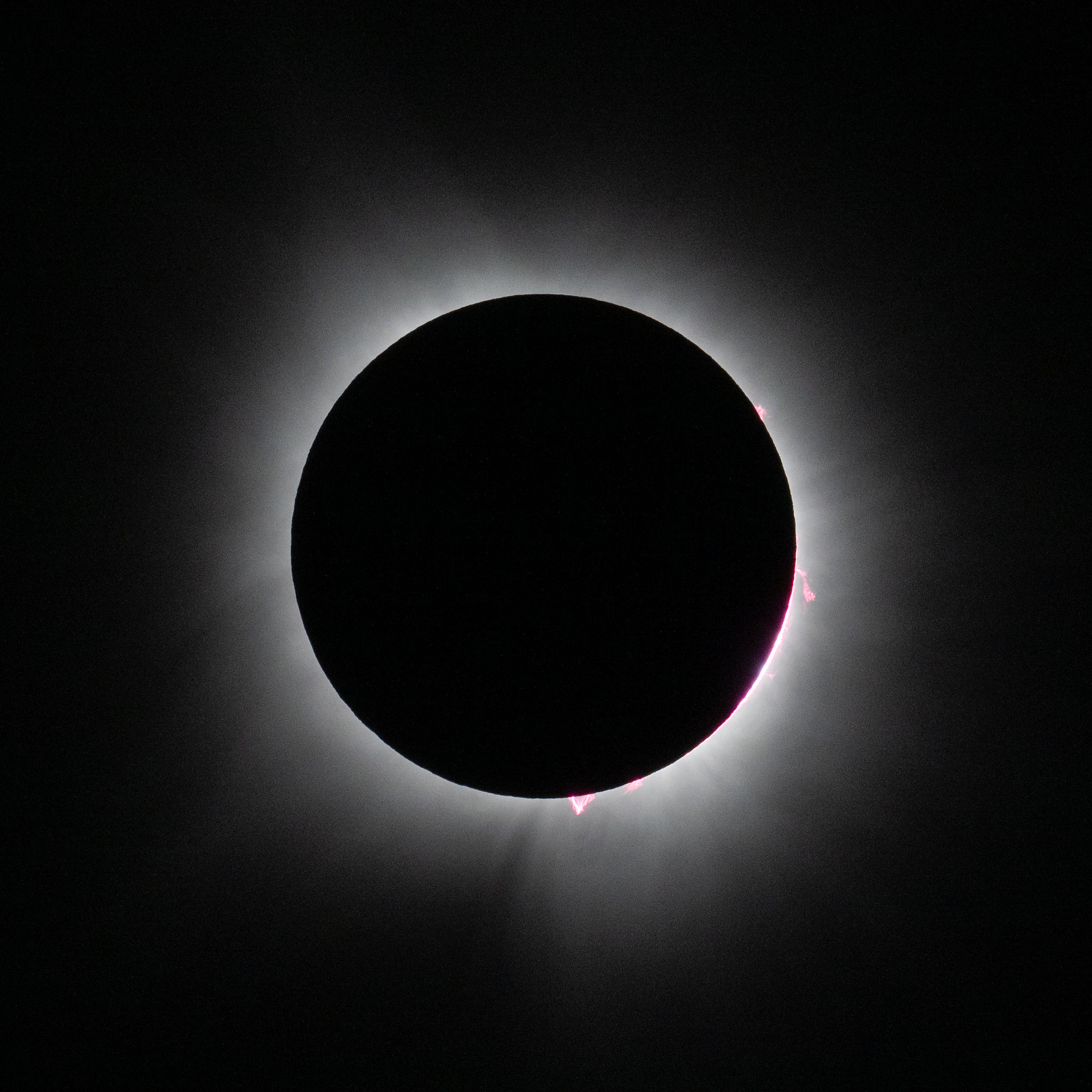
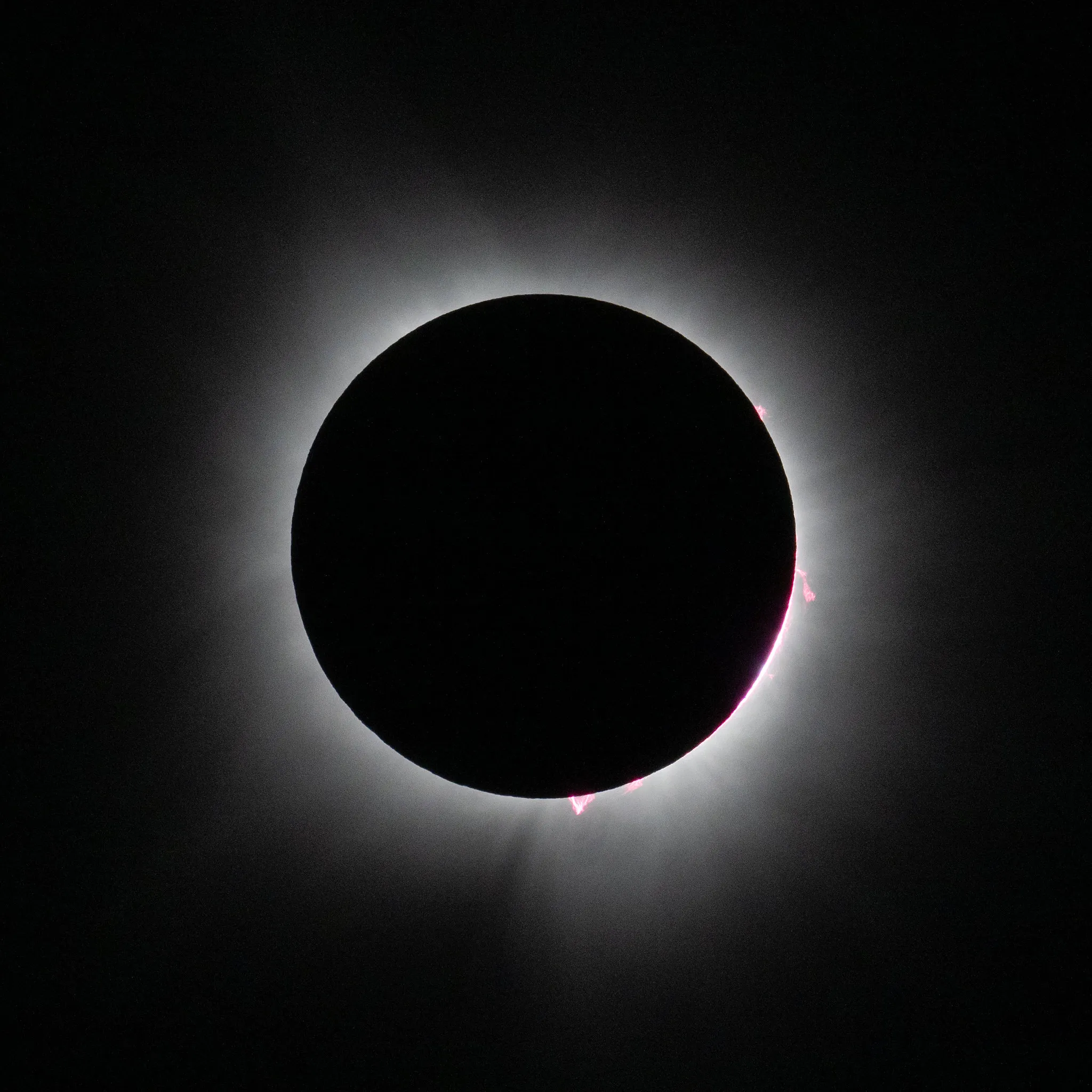
A total solar eclipse is seen in Dallas, Texas on Monday, April 8, 2024. A total solar eclipse swept across a narrow portion of the North American continent from Mexico’s Pacific coast to the Atlantic coast of Newfoundland, Canada. A partial solar eclipse was visible across the entire North American continent along with parts of Central America and Europe.
Credit: NASA/Keegan Barber
On Wednesday, Aug. 12, a total solar eclipse will be visible in parts of Greenland, Iceland, northern Russia, the Atlantic Ocean, Spain, and a small corner of Portugal. NASA will stream the eclipse live with views across the path and interviews with subject matter experts through a variety of platforms.
Learn where to watch online:
Viewers in other places in the Northern Hemisphere also will have the chance to experience a partial solar eclipse, including parts of the U.S. (from Alaska to North Carolina), most of Canada, much of Europe, and northwestern Africa.
During the eclipse, NASA will conduct experiments in the path of totality. To investigate the dynamics of the Sun’s corona, a NASA-funded science team will chase the Moon’s shadow with a WB-57 high-altitude research aircraft. The NASA-supported Nationwide Eclipse Ballooning Project is sending students from several U.S. universities to Iceland and Spain to launch scientific balloons before, during, and after the eclipse to research how the temporary darkening of our skies during the eclipse affects Earth’s atmosphere.
2026 Total Solar Eclipse (Official NASA Trailer) - YouTube
Tap to unmute
2026 Total Solar Eclipse (Official NASA Trailer) NASA
NASA15M subscribers
NASA’s eclipse coverage is as follows (all times Eastern):
Wednesday, Aug. 12
- 1:15 p.m.: Eclipse broadcast begins
- 1:45 p.m.: Totality begins in Iceland
- 2:28 p.m.: Totality begins in Spain
NASA photography coverage
Photos of the eclipse, dependent on visibility, will be available shortly after the eclipse. View images on the agency’s Flickr account.
Watch, engage on social media
During the broadcast, NASA experts will answer questions submitted on social media. Send in your questions and let people know you’re watching the eclipse on X, Facebook, and Instagram by following and tagging these accounts:
X:@ NASA, @NASASolarSystem, @NASAScience\_
Facebook: NASA, NASASolarSystem, @NASAScience
Instagram: @NASA, @NASASolarSystem, @NASAScience\_
Learn more about the eclipse at:
https://science.nasa.gov/eclipses
-end-
Abbey Interrante / Karen Fox
Headquarters, Washington
301-201-0124 / 202-358-1600
abbey.a.interrante@nasa.gov / karen.c.fox@nasa.gov
Share
Details
Last Updated
Jul 29, 2026
Location
Related Terms
Was this page helpful?
Δ
Was this page helpful?
Yes
No
×
Notifications