NASA’s Hubble Spots an Out-of-Sync Galaxy
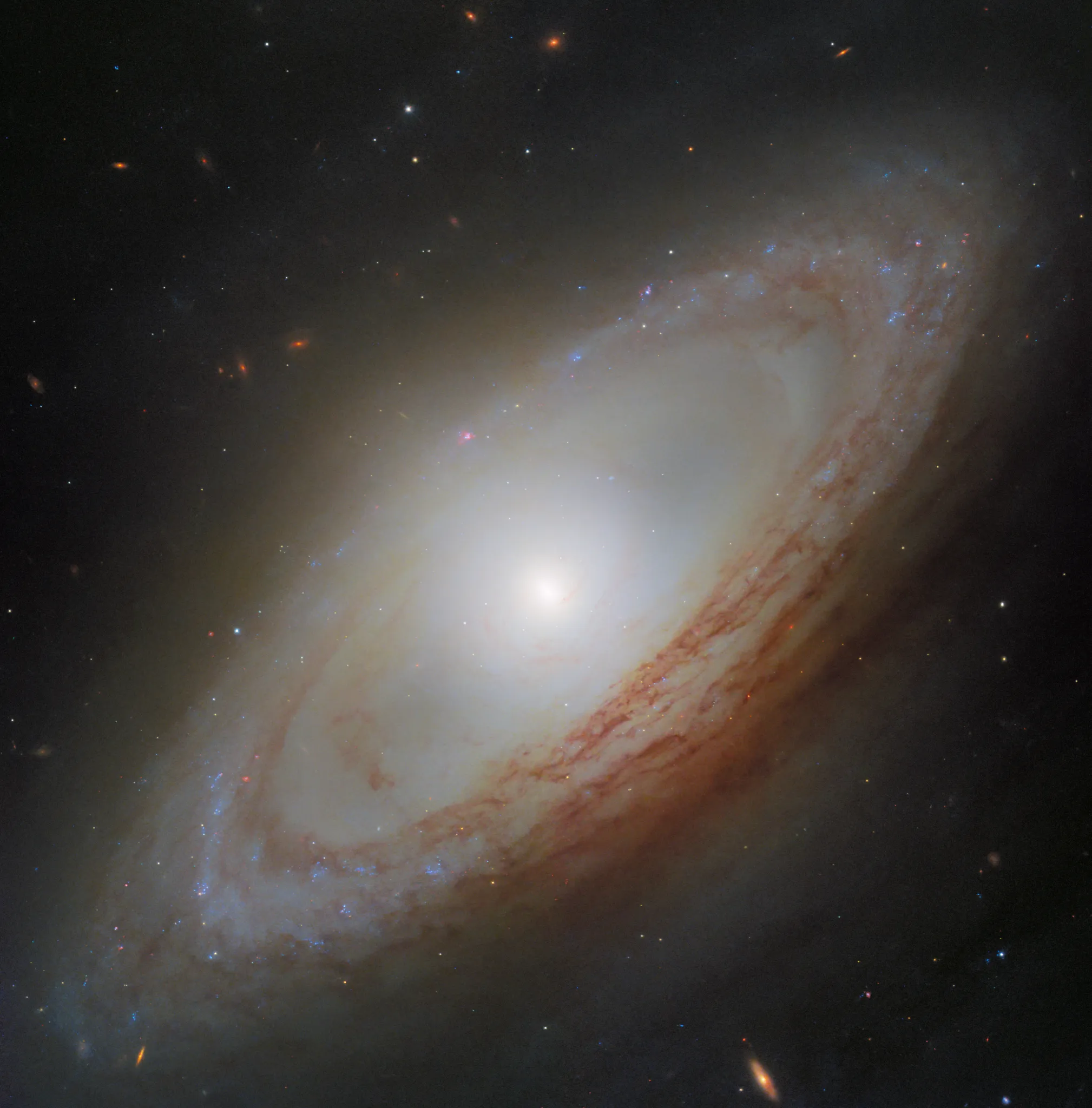
Though the spiral galaxy in this new image from the NASA/ESA Hubble Space Telescope seems serene, it hides a chaotic secret. This galaxy is NGC 4698, and it lies about 55 million light-years away in the constellation Virgo. It’s one of over a thousand galaxies in the Virgo Cluste
Search
Suggested Searches
- Climate Change
- Artemis
- Expedition 64
- Mars perseverance
- SpaceX Crew-2
- International Space Station
- View All Topics A-Z
- Home
- Missions
- Humans in Space
- Earth
- The Solar System
- The Universe
- Science
- Aeronautics
- Technology
- Learning Resources
- About NASA
- Español
Highlights
  
Back
- Search All NASA Missions
- A to Z List of Missions
- Upcoming Launches and Landings
- Spaceships and Rockets
- Communicating with Missions
- Artemis
- James Webb Space Telescope
- Hubble Space Telescope
- International Space Station
- OSIRIS-REx
- Explore Earth Science
- Climate Change
- Earth, Our Planet
- Earth Science in Action
- Earth Multimedia
- Earth Data
- Earth Science Researchers
- The Sun
- Mercury
- Venus
- Earth
- The Moon
- Mars
- Jupiter
- Saturn
- Uranus
- Neptune
- Pluto & Dwarf Planets
- Asteroids, Comets & Meteors
- The Kuiper Belt
- The Oort Cloud
- Skywatching
- Exoplanets
- The Search for Life in the Universe
- Stars
- Galaxies
- Black Holes
- The Big Bang
- Dark Matter
- Dark Energy
- Earth Science
- Planetary Science
- Astrophysics & Space Science
- The Sun & Heliophysics
- Biological & Physical Sciences
- Lunar Science
- Citizen Science
- Astromaterials
- Aeronautics Research
- Human Space Travel Research
- Science in the Air
- NASA Aircraft
- Flight Innovation
- Supersonic Flight
- Air Traffic Solutions
- Green Aviation Tech
- Drones & You
- Technology Transfer & Spinoffs
- Space Travel Technology
- Technology Living in Space
- Manufacturing and Materials
- Robotics
- Science Instruments
- Computing
- For Kids and Students
- For Educators
- For Colleges and Universities
- For Professionals
- Science for Everyone
- Requests for Exhibits, Artifacts, or Speakers
- STEM Engagement at NASA
- NASA's Impacts
- Centers and Facilities
- Directorates
- Organizations
- People of NASA
- Careers
- Internships
- Our History
- Doing Business with NASA
- Get Involved
- Contact
- NASA+
- Images
- NASA Live
- NASA Apps
- Podcasts
- Image of the Day
- e-Books
- 3D Resources
- Interactives
- STEM Multimedia
- NASA Brand & Usage Guidelines
Highlights
 
Highlights
  
Highlights
  
Highlights
  
Highlights
  
Highlights
  
Highlights
  
Highlights
  
Highlights
  
Highlights
  
Highlights
  
3 min read
# NASA’s Hubble Spots an Out-of-Sync Galaxy
!The headshot image of Elizabeth Tammi
Elizabeth Tammi
Sep 18, 2026
Article
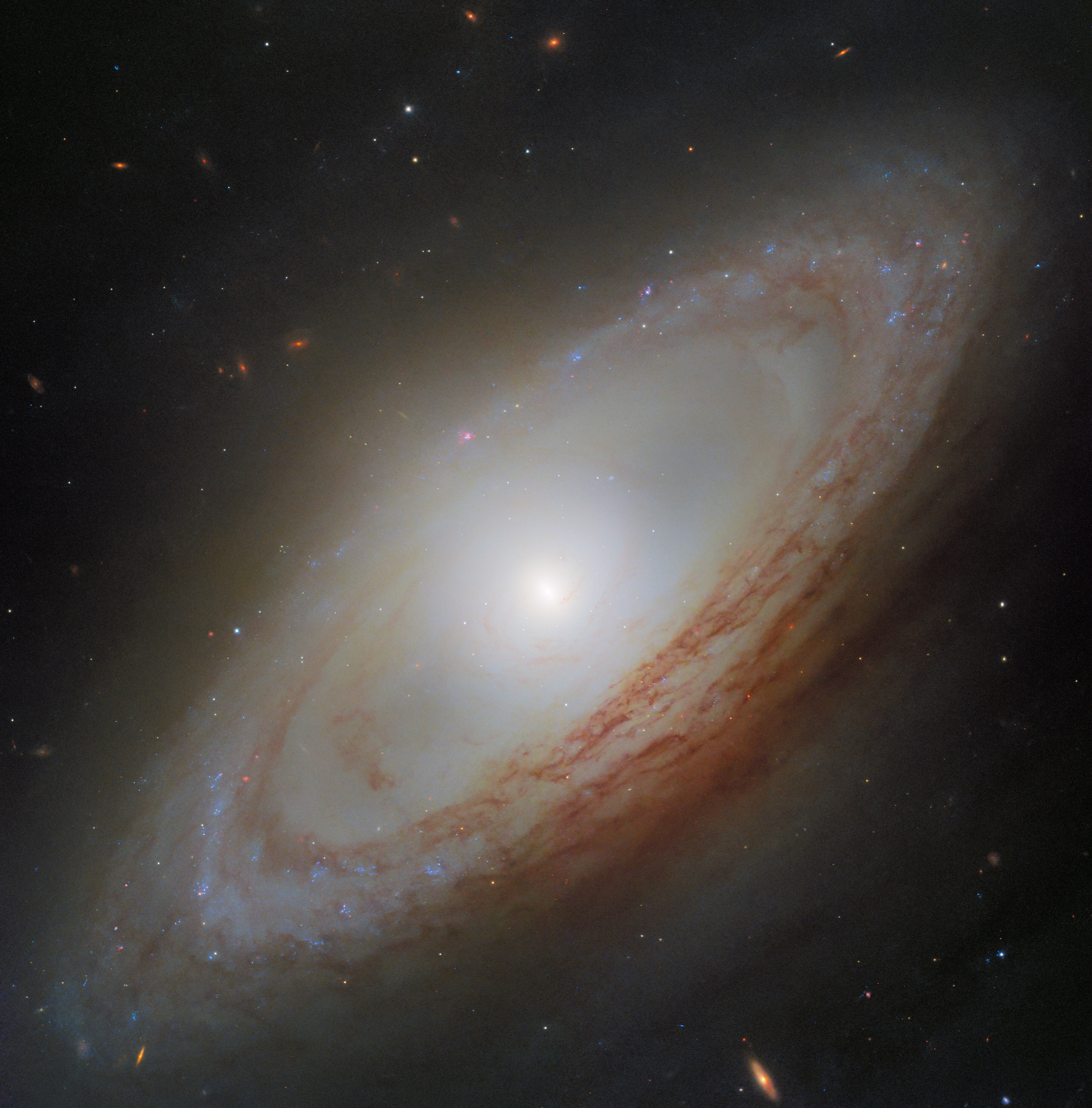
The spiral galaxy NGC 4698 shines in this image from the NASA/ESA Hubble Space Telescope.
ESA/Hubble & NASA, D. Thilker, the MAUVE-HST Team
Though the spiral galaxy in this new image from the NASA/ESA Hubble Space Telescope seems serene, it hides a chaotic secret. This galaxy is NGC 4698, and it lies about 55 million light-years away in the constellation Virgo. It’s one of over a thousand galaxies in the Virgo Cluster, the nearest large cluster of galaxies bound together by gravity.
As a spiral galaxy similar to our own Milky Way galaxy, NGC 4698 has spiral arms that curl around within a thin disk of stars, gas, and dust. These arms are marked by opaque clumps of brown dust and dotted with small collections of bright blue stars. Unlike many other spiral galaxies, like this one recently photographed by Hubble, NGC 4698’s delicate spiral arms are only prominent in the outer reaches of the disk; spiral arms often wind down to the very center of a galaxy, but NGC 4698’s spiral arms appear to shy away from its glowing center. The arms instead hover in a ring-like structure around the perimeter of the galaxy.
NGC 4698’s center is dominated by an elongated galactic bulge . The diffuse off-white glow of the galaxy’s bulge comes from stars smaller, older, and cooler than the massive blue stars that dot the galaxy’s outer disk. These tightly packed stars orbit a supermassive black hole containing millions of times the Sun’s mass. Scientists have found signs that this black hole is actively growing, drawing gas inward with its gravitational pull.
With a flat, starry disk and diffusely glowing center, NGC 4698 looks a lot like a typical spiral galaxy — but this galaxy is far from normal. NGC 4698 is one of only a few known spiral galaxies with a bulge that extends out from the disk at a right angle. The elongation is faintly visible in this Hubble image, which shows the ghostly glow of the starry bulge peeking above and below the dusty disk. What’s more, the stars and gas nearest the galaxy’s center rotate perpendicular to the rest of the disk!
What could cause a galaxy to be so out of sync? Astronomers have found that the culprit likely lies outside the galaxy. If NGC 4698 funneled in gas from an outside source, the newly collected gas could have formed a disk of gas and stars in the galaxy’s center, at an angle relative to the rest of the disk. Some observations suggest that this galaxy once experienced a minor galactic merger, as evidenced by a short ‘tail’ of hydrogen streaming from one side of the galaxy.
The data used to create this image come from an observing program focusing on galaxies in the Virgo Cluster. This program zooms in on the details of these relatively nearby galaxies, such as individual star clusters and nebulae. At the same time, researchers will use these data to take stock of the larger picture, learning how a galaxy’s journey through a cluster affects the galaxy’s evolution and ability to form new stars.
Text credit: ESA/Hubble
Facebook logo
Instagram logo
Media Contact:
Claire Andreoli
NASA's Goddard Space Flight Center, Greenbelt, MD
Explore More
Hubble's Galaxies
Our galaxy, the Milky Way, sits in a Local Group of more than 20 galaxies, but Hubble’s vision takes us far beyond our celestial neighborhood. Discover how Hubble's studies have transformed our understanding of galaxies near and far.
Hubble Focus: Galaxies through Space and Time
Explore the history of galaxies through Hubble's gaze in this free, downloadable e-book. Spectacular Hubble images and videos bring home the discoveries that have expanded our understanding of galaxies, how they formed, and what they contain.
Hubble Focus: Galaxies through Space and Time
Keep Exploring
Discover More Topics From Hubble
Hubble Space Telescope \\
\\
Since its 1990 launch, the Hubble Space Telescope has changed our fundamental understanding of the universe.\\
\\
 Hubble’s Beautiful Universe\\
\\
 Hubble Science Operations\\
\\
 Hubble Mission Operations\\
\\

Δ
Did you find what you were looking for?(Required)
Yes
No
Partly
What were you looking for?(Required)
0 of 1000 max characters
What were you hoping to accomplish by visiting our website?(Required)
0 of 3000 max characters
Submit
×
Notifications