NASA Report Validates Umbra SAR Data Quality
NASA evaluation reports confirm that Umbra's Synthetic Aperture Radar (SAR) data meet rigorous standards for Earth observation and scientific research applications.
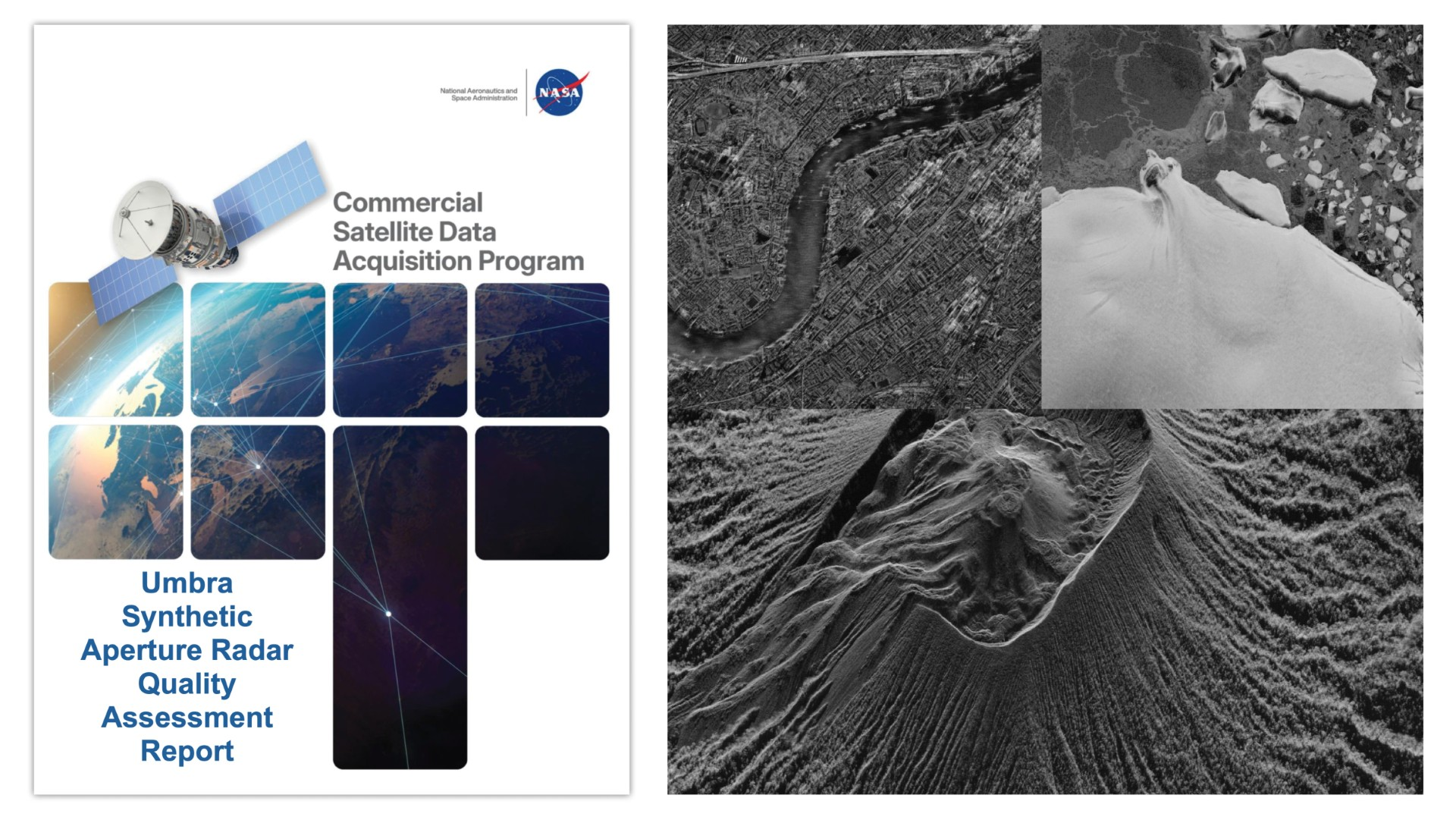
DATA OVERVIEW: SAR ACCIDATION
According to NASA Breaking News, the agency has formalized the results of Principal Investigator and Quality Assessment Reports regarding data acquired via Umbra’s Synthetic Aperture Radar (SAR) systems. These reports serve as a critical validation phase for the integration of private-sector constellations into the broader Earth science research ecosystem.
TECHNICAL EVALUATION
The assessment focused on the precision and reliability of SAR imagery in various environmental contexts. Unlike optical sensors, SAR utilizes microwave pulses to penetrate cloud cover, smoke, and darkness, providing a constant stream of high-resolution terrestrial data. NASA’s Quality Assessment Team scrutinized the dataset for radiometric and geometric accuracy, ensuring the telemetry remains consistent with existing global observation standards.
UTILITY AND IMPACT
The findings conclude that Umbra’s data products are suitable for advanced scientific inquiry, ranging from climate change monitoring and agricultural tracking to disaster response. By verifying these privately generated data streams, NASA identifies high-fidelity resources that can supplement governmental satellite missions, such as the International Space Station or specific Earth-observation probes.
PROTOCOL CLEARANCE
The validation process is a prerequisite for broader data dissemination across the scientific community. These reports confirm that Umbra’s SAR outputs align with NASA’s rigorous requirements for data integrity, paving the way for further research into planetary health and urban development. This collaboration underscores a growing reliance on commercial-to-government data transfers to maintain long-term orbital surveillance.