NASA Outlines Role in JAXA Martian Moons eXploration Mission
NASA will lead a specialized briefing to detail its critical hardware contributions to JAXA's MMX mission, which aims to return the first-ever samples from the Martian moon Phobos.
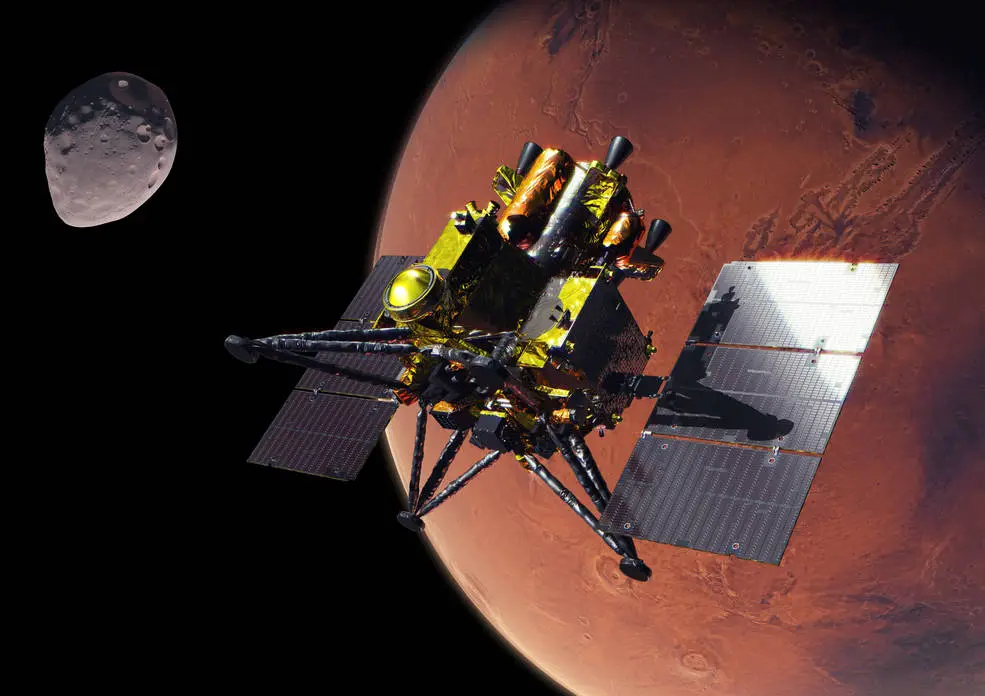
Mission Parameters: MMX Integration
According to NASA Breaking News, the agency is set to conduct a comprehensive technical briefing regarding its operational involvement in the Martian Moons eXploration (MMX) mission. The project, led by the Japan Aerospace Exploration Agency (JAXA), aims to decipher the origin of Mars’ satellites, Phobos and Deimos, and retrieve surface material for terrestrial analysis.
Core Hardware Contributions
NASA’s participation is centered on two primary scientific payloads designed to operate in the harsh Martian environment:
- MEGANE (Mars-moon Exploration with GAmma-rays and Neutrons): A high-resolution spectrometer developed to map the elemental composition of Phobos. It will assist in determining whether the moons are captured asteroids or the result of a massive planetary impact.
- Pneumatic Sampling System: A critical retrieval mechanism designed to secure regolith samples from the moon's surface for return to Earth.
Strategic Objectives
The briefing will address the logistics of the sample-return sequence and the inter-agency coordination required for deep-space maneuvers. By analyzing the chemical signatures of Phobos, the mission seeks to unlock the evolutionary history of the early solar system.
This collaborative effort underscores a unified international approach to planetary defense and resource identification. The data gathered by NASA-funded instruments will be essential for validating current models of planetary formation and informing future crewed trajectories toward the Martian surface.