NASA Finalizes Lunar Mobility and Cargo Logistics Contracts
NASA awards multi-million dollar contracts to Astrolab and Lunar Outpost for Next-Gen Lunar Terrain Vehicles as the agency formalizes delivery logistics for its upcoming Moon base.
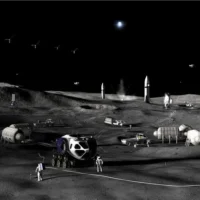
NASA has solidified its logistics framework for future lunar surface operations, announcing key contract awards for the development of Lunar Terrain Vehicles (LTV) and cargo delivery systems. According to Payload, the agency is pivoting toward a faster, more iterative development cycle for its lunar base infrastructure.
Mobility Assets
Two primary contracts were awarded for the LTV program, targeting vehicles capable of autonomous and crewed operations. These rovers, weighing approximately one metric ton, are designed for a 200km range with a cruise speed of 10km/h:
- Astrolab ($219M): Set to deploy its FLIP rover to the lunar surface this summer.
- Lunar Outpost ($220M): Will provide its recently unveiled Pegasus vehicle.
Notably, Intuitive Machines—previously a Phase 1 feasibility recipient—was excluded from these latest awards following a program shift in March that prioritized rapid deployment over high-complexity specs.
Logistics and Surface Delivery
Beyond mobility, NASA clarified its delivery manifest for the Moon base project. Blue Origin’s Mark 1 Endurance lander has been selected to transport both LTVs to the surface. Separately, JPL has tapped Firefly’s Elytra to carry the initial fleet of MoonFall drones.
Simultaneous to these developments, three Moon base missions managed by Blue Origin, Astrobotic, and Intuitive Machines under the CLPS program remain on track for launch later this year.
Forward Trajectory
Carlos García-Galán, Moon base program executive, indicated that June will bring the announcement of further CLPS mission winners. By late summer, NASA expects to shortlist eligible companies for CLPS 2.0. While the agency maintains focus on commercial domestic partners, international contributions to the base infrastructure are expected to be briefed at a later date, signaling future opportunities for the global space sector.