NASA Deploys FIREX-AQ to Track Smoke-Induced Cloud Dynamics
A new NASA-led aerial campaign, FIREX-AQ, is utilizing advanced sensor arrays to study pyrocumulonimbus clouds—massive smoke plumes that inject wildfire aerosols directly into the upper atmosphere.
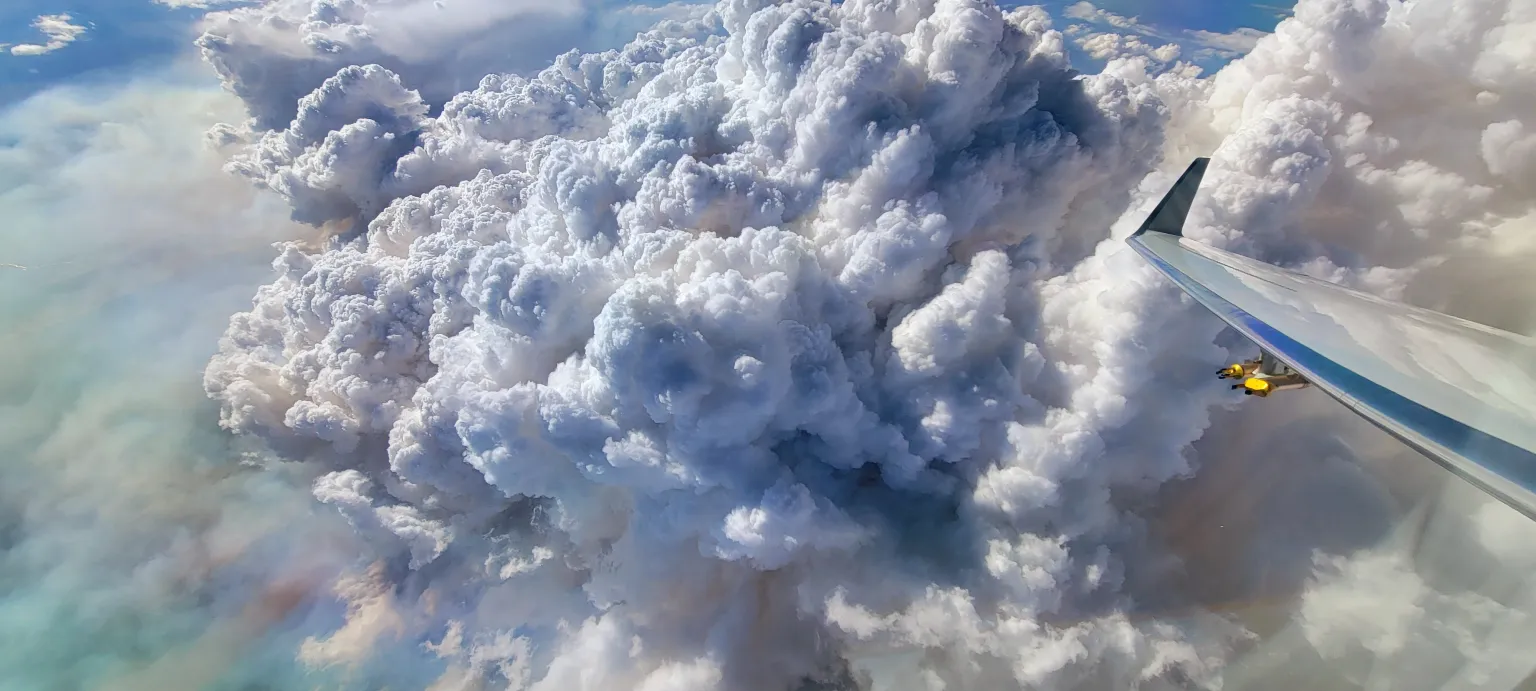
DATA OVERLAY: ATMOSPHERIC INJECTION
According to NASA Breaking News, the agency has initiated a specialized research campaign to examine the mechanics of pyrocumulonimbus (pyroCb) clouds. These extreme atmospheric events occur when intense heat from massive wildfires triggers convection, creating soot-laden clouds that act as chimneys, transporting smoke and chemical pollutants into the stratosphere.
OPERATIONS: FIREX-AQ
The Fire Influence on Regional to Global Environments and Air Quality (FIREX-AQ) mission employs a fleet of research aircraft, including the DC-8 flying laboratory and the ER-2 high-altitude platform. These assets are equipped with sophisticated lidar and spectrometer suites designed to sample aerosol concentration, chemical composition, and optical properties in real-time.
ANALYSIS: CLIMATIC FEEDBACK
Initial telemetry suggests these fire-spawned clouds can rival volcanic eruptions in their ability to distribute particulate matter globally. Standard meteorological models often fail to account for the unique buoyancy and radiative forcing of pyroCb events. By intercepting these plumes, NASA scientists aim to refine predictive capabilities regarding air quality degradation and long-term climate impact. The data gathered will provide a definitive look at how extreme heat events are fundamentally altering the chemistry of the upper troposphere and lower stratosphere.