NASA Confirms Orion Heat Shield Flight Readiness for Artemis II
Following exhaustive thermal analysis and destructive testing of the Artemis I recovery hardware, NASA has verified the Orion heat shield is safe for the upcoming crewed lunar flyby.
DATA LOG: THERMAL PROTECTION SYSTEMS
NASA has finalized its rigorous technical review of the Orion spacecraft’s heat shield performance. According to NASA Breaking News, the agency has confirmed the thermal protection system (TPS) is flight-ready for the Artemis II mission, which will carry the first crewed lunar flight in over half a century.
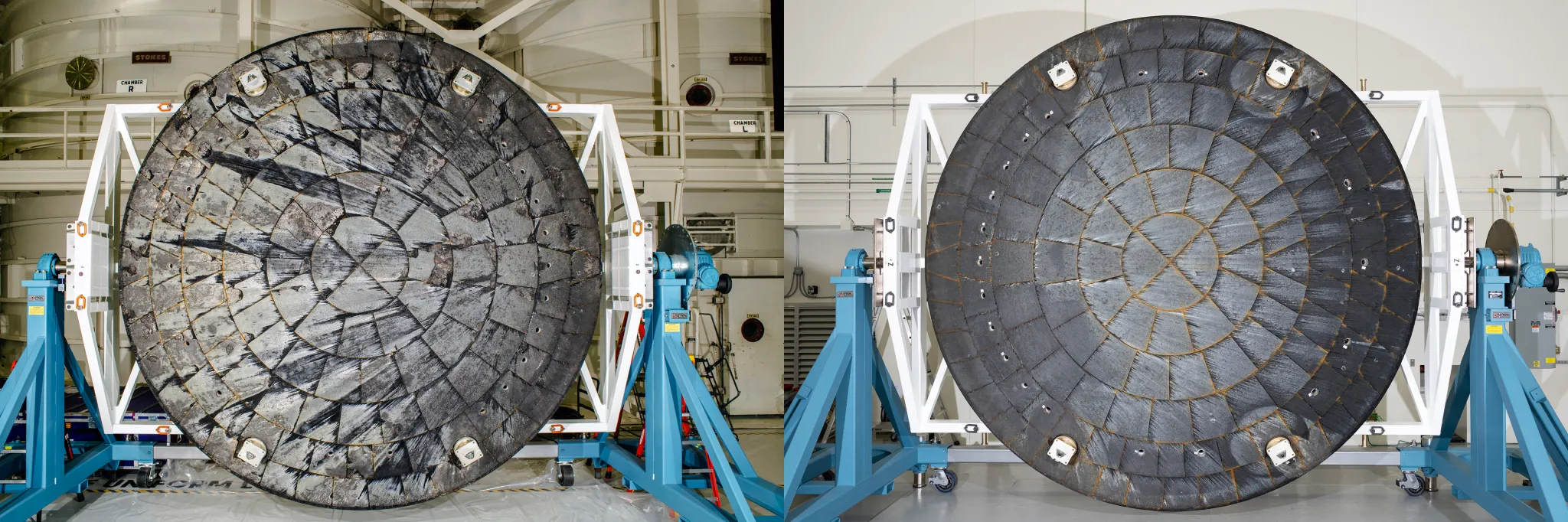
The investigation focused on the unexpected char loss—a phenomenon colloquially termed "liberation"—observed during the Artemis I re-entry in late 2022. While the uncrewed Orion capsule returned safely, the Avcoat ablator experienced localized pitting and material loss that differed from pre-flight computational models.
ANALYSIS SUMMARY
Engineers at NASA’s Johnson Space Center utilized a multi-disciplinary approach to reconcile the flight data. This included:
Destructive Testing: Dissecting the Artemis I shield to analyze subsurface structural integrity.
Thermal Simulation: Re-running atmospheric entry models at 40,000 km/h to simulate the friction of lunar return.
* Mechanical Stress Tests: Evaluating how the monolithic Avcoat structure handles the intense vibration of the SLS launch profile.
The findings conclude that while the charring pattern was non-standard, the remaining margin of safety was substantial. The agency determined that the shield maintained sufficient thickness to protect the crew cabin throughout the high-velocity descent into the Pacific Ocean.
MISSION STATUS
With the heat shield cleared, NASA and its international partners continue the countdown for Artemis II. This mission serves as the final orbital validation before the Artemis III lunar landing. Integration of the crew module and the European Service Module (ESM) is proceeding at the Kennedy Space Center, targeting a late 2025 launch window. The data confirms that no significant hardware redesign is required for the upcoming crewed lunar flyby.