NASA Analyzes Regolith Displacement in Lunar Landing Simulation
NASA engineers have initiated Plume-Surface Interaction (PSI) testing at Marshall Space Flight Center to mitigate risks associated with engine exhaust during Artemis lunar landings.
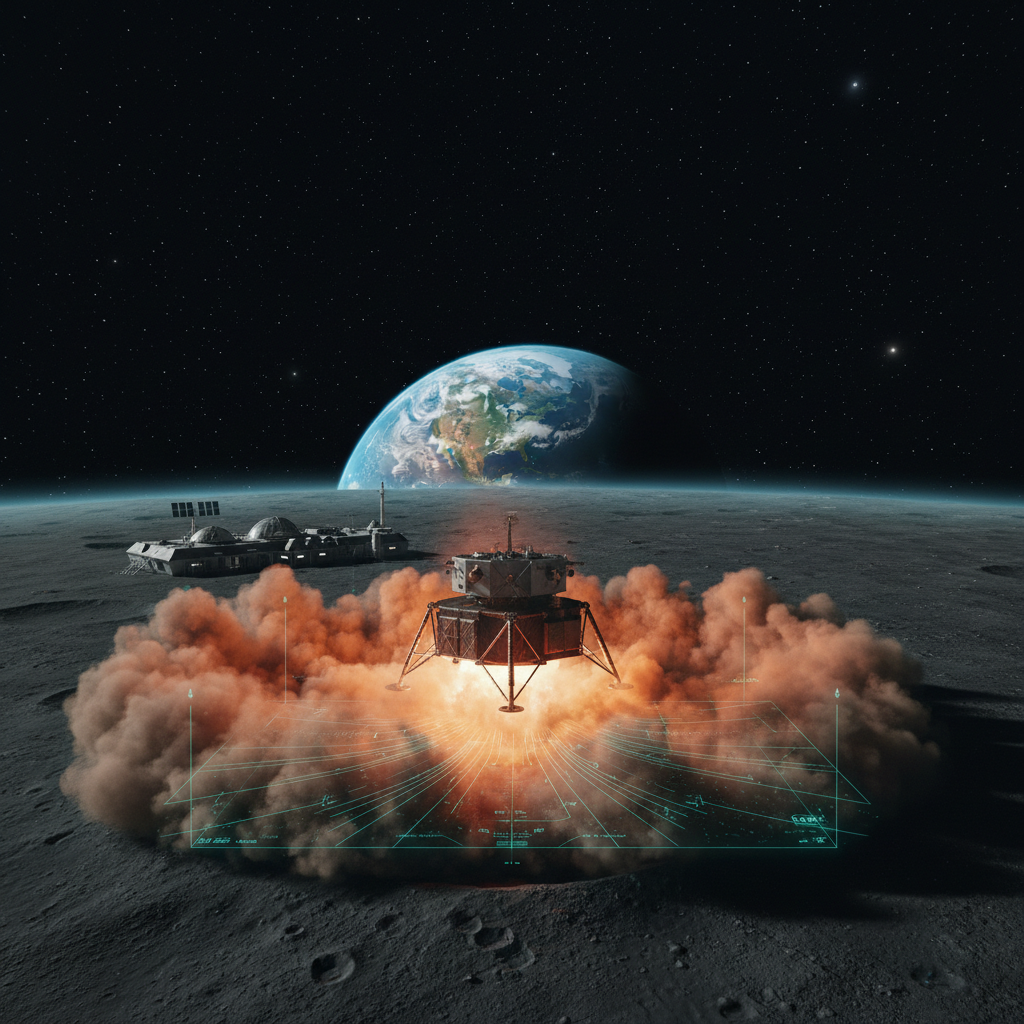
DATA INPUT: MARSHALL SPACE FLIGHT CENTER
Engineers have commenced a critical testing phase to solve a primary hazard of lunar descent: Plume-Surface Interaction (PSI). According to NASA Breaking News, the agency is currently utilizing specialized facilities at the Marshall Space Flight Center in Huntsville, Alabama, to simulate the high-velocity exhaust impact of Artemis landers on the lunar south pole.
//The Physics of Erosion
When a spacecraft descends toward the lunar surface, engine plumes displace significant volumes of regolith. This particulate matter—lunar dust and gravel—can be accelerated to extreme velocities, potentially sandblasting the lander's exterior or damaging nearby equipment and habitats. Given the vacuum environment, these particles travel unimpeded, creating a hazard zone that extends far beyond the immediate landing site.
//Test Parameters
The test series utilizes a vacuum chamber to mimic the atmospheric conditions of the Moon. Researchers are injecting gas into simulant lunar soil to map how craters form and how debris is ejected. The resulting data will be cross-referenced with computer models to predict the impact of larger, commercial human landing systems.
//Strategic Necessity
Understanding PSI is essential for establishing the Artemis Base Camp. Precise mapping of regolith displacement ensures that future infrastructure is positioned safely beyond the 'blast radius' of recurring logistics missions. This diagnostic work is foundational for the sustained human presence on the lunar surface. The results will influence both landing pad design and vehicle shielding requirements for the next generation of explorers.