NASA Activates Next-Gen Flight Dynamics Research Facility
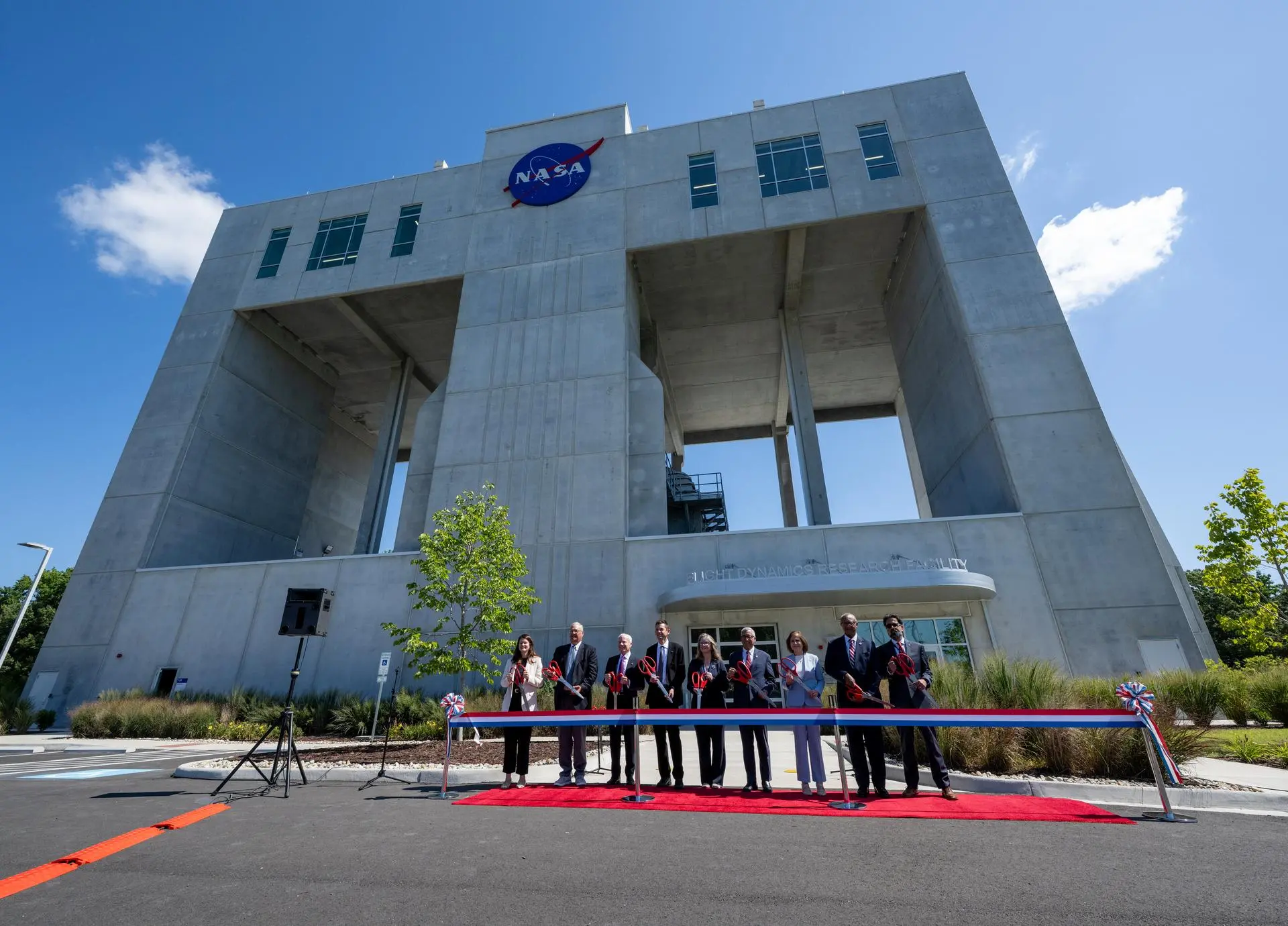
NASA Langley officially opens its new Flight Dynamics Research Facility, a cutting-edge vertical wind tunnel designed to refine flight stability for supersonic craft and planetary landers.
DATA UPLOAD: AERONAUTICS INFRASTRUCTURE
According to NASA Breaking News, the agency has officially inaugurated its new Flight Dynamics Research Facility (FDRF) at the Langley Research Center in Hampton, Virginia. This state-of-the-art laboratory represents a critical hardware upgrade for the agency’s aeronautics and exploration divisions.
Technical Specifications
The core of the FDRF is a 25-meter (80-foot) tall vertical wind tunnel. Unlike traditional horizontal tunnels, this vertical orientation allows researchers to analyze the free-flight characteristics of aircraft models. The facility is specifically engineered to test aerodynamic stability, control efficacy, and high-angle-of-attack maneuvers that are difficult to simulate purely through digital twinning.
Strategic Utility
The facility serves three primary mission sectors:
1. Planetary Entry: Testing parachutes and entry vehicle stability for future Mars and Titan deployments.
2. Advanced Air Mobility (AAM): Refining vertical takeoff and landing (VTOL) systems for next-gen urban transport.
3. Supersonic Flight: Developing low-boom technology for commercial atmospheric flight.
NASA officials noted that the FDRF replaces aging infrastructure, offering increased efficiency and lower operational costs. By consolidating these testing capabilities into a single, modern asset, the agency aims to accelerate the development of the Artemis lunar program and the next generation of sustainable aviation.
Status: Operational.