MTG-I2 LOGISTICS: SECOND IMAGED SATELLITE DEPLOYS TO KOUROU
Following the success of its predecessor, the MTG-I2 weather satellite has begun its transit to French Guiana for a scheduled 2026 launch.
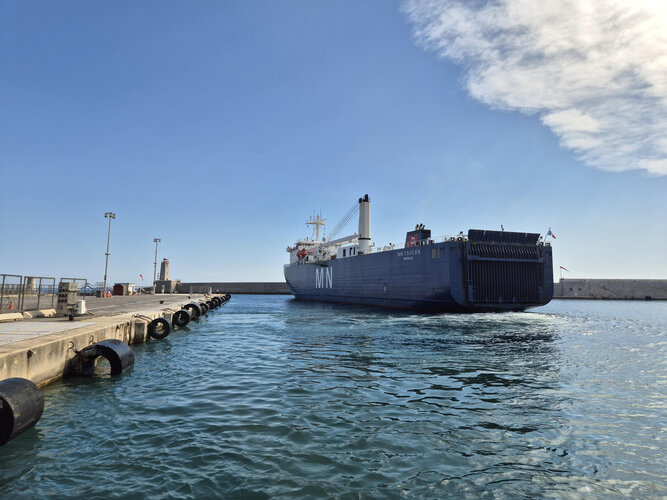
LOGISTICS UPDATE: MTG-I2 TRANSIT
The European Space Agency (ESA) has confirmed that the second Meteosat Third Generation Imager (MTG-I2) satellite has officially begun its transport sequence from Cannes, France, to Europe’s Spaceport in Kourou, French Guiana. This deployment marks a critical milestone in the ongoing modernization of European meteorological infrastructure.
Built by Thales Alenia Space, the satellite serves as the second "imager" in the MTG fleet. According to ESA, the spacecraft underwent a rigorous multi-year testing phase at Thales Alenia Space’s facilities to ensure electronic and structural integrity. The hardware is now secured in a specialized climate-controlled transport container to maintain cleanroom conditions during its transatlantic voyage.
MISSION PROFILE AND CAPABILITIES
Once operational in geostationary orbit, MTG-I2 will join MTG-I1 to provide high-resolution data on atmospheric conditions. The payload includes advanced imaging instruments designed to track the evolution of severe weather events across Europe and Africa with unprecedented speed and precision. Key mission objectives include:
- Enhanced Nowcasting: Detecting storm formations earlier than current systems.
- Lightning Monitoring: Operating the first European Lightning Imager to detect flashes between clouds and to the ground.
- Data Redundancy: Establishing a robust orbital network to ensure continuous weather service availability.
NEXT STEPS
Upon arrival at the Guiana Space Centre, the spacecraft will undergo a final battery of health checks and fueling procedures before being integrated with its launch vehicle. This mission is part of a collaborative effort between ESA and Eumetsat to secure the next two decades of weather forecasting capabilities for the continent.